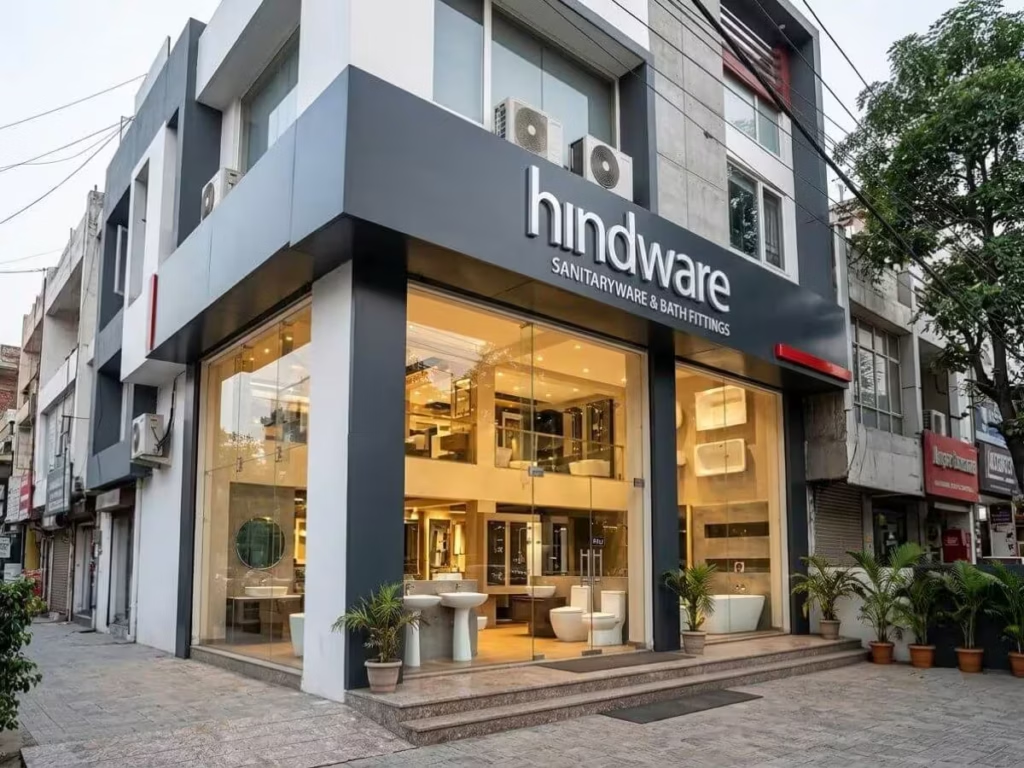
A Hindware dealership in India costs between ₹10 lakh and ₹50 lakh depending on the format you choose. An authorised dealer outlet needs a minimum of 400 sq ft and around ₹10–15 lakh to get started, while a full-scale exclusive brand showroom of 1,000–1,200 sq ft requires ₹25–50 lakh. Dealer margins on sanitaryware and faucets usually fall in the 20–30% range, with a net profit of 12–18% after operating costs. Most well-run Hindware dealerships in Tier 2 and Tier 3 cities break even within 18–24 months.
In this post,
For every construction project, you require Sanitaryware, faucets, showers, basins, etc. In most of India, the person deciding which brand goes in is not the builder, it is the plumber or the contractor who walks into your showroom. That is the quiet commercial reality behind a Hindware dealership.
Hindware is not a new brand. It has been around since 1960, holds roughly 23% market share in India’s organised sanitaryware segment, and derives about 70% of its bathware sales from Tier 2 and Tier 3 cities. For a small business owner, those numbers matter.
This article guides you on Hindware dealership costs, what you can earn, monthly expenses, hidden costs, and the process to become a dealer.
About Hindware Brand
Hindware operates under Hindware Home Innovation Limited and sells products across several sub-brands. The core “Hindware” label covers mainstream sanitaryware — toilets, basins, faucets and showers — at a price point that works for middle-class Indian homes. Above that sits the Hindware Italian Collection for premium buyers, and Queo for the luxury segment. There is also Truflo for plastic pipes and fittings, and Hindware Smart Appliances for kitchen chimneys and hobs.
As a dealer, you will primarily handle the core bathware range — sanitaryware and faucets — unless you sign up as a composite brand store that stocks appliances and tiles as well. The company runs around 550 exclusive brand stores alongside a broader dealer network of roughly 26,000 dealers across India.
Hindware Dealership Cost
Hindware offers two main formats for new dealers.
Authorised Dealer (Trade Dealer)
This is the simpler entry point. You operate from a commercial space of at least 400 sq ft, stock Hindware products, and sell to retail customers, contractors, and plumbers. The setup investment starts from around ₹10–15 lakh, covering basic display fixtures, opening inventory, and the initial security deposit to Hindware.
Exclusive Brand Showroom
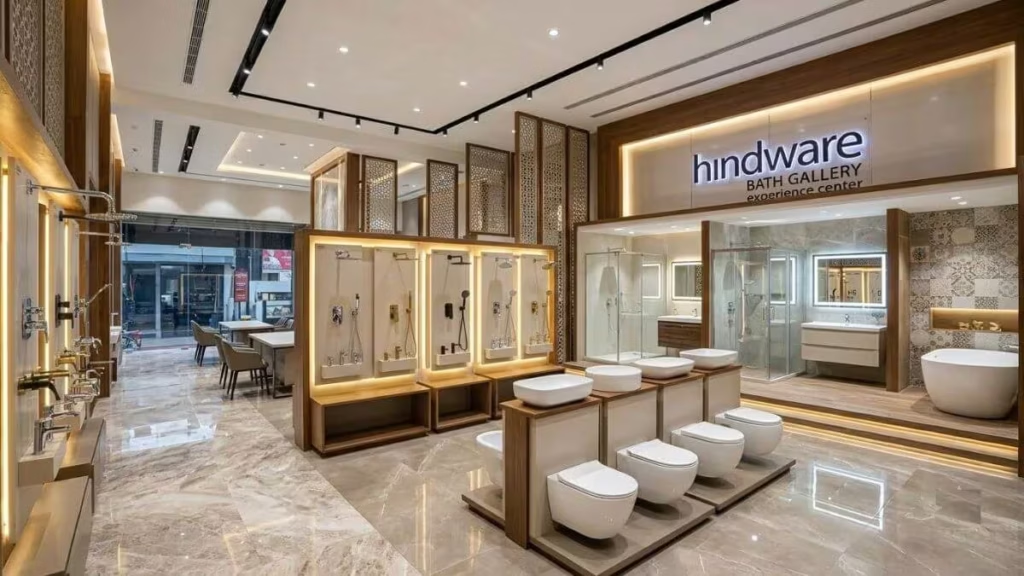
This is a larger, more visible format. You need a minimum of 1,000–1,200 sq ft, a fully fitted display environment with product demos, and a commitment to stock the full Hindware range. This format requires an investment of around ₹32 lakh, with an expected annual ROI of roughly 30% and base margins of about 35%. Once you factor in fit-out, inventory, rent deposits, and working capital, the all-in cost sits between ₹30 lakh and ₹50 lakh.
| Format | Min Space | Approx Investment | Royalty |
|---|---|---|---|
| Authorised Dealer | 400+ sq ft | ₹10–15 lakh | None |
| Exclusive Brand Showroom | 1,000–1,200 sq ft | ₹25–50 lakh | None |
Hindware does not charge a franchise or royalty fee in either format. Your earnings are not eroded by ongoing brand fees — which is a meaningful difference from many other franchise businesses.
Investment Breakdown
Here is a cost breakdown for a mid-sized Hindware showroom in a Tier 2 city, covering roughly 800–1,000 sq ft.
| Expense Head | Estimated Cost |
|---|---|
| Shop deposit (3–6 months’ rent) | ₹1.5–3 lakh |
| Interior fit-out and display panels | ₹3–6 lakh |
| Opening inventory (sanitaryware, faucets, accessories) | ₹5–10 lakh |
| Security deposit to Hindware | ₹1–2 lakh |
| Signage and branding | ₹50,000–1 lakh |
| GST, trade licence, Udyam registration | ₹10,000–25,000 |
| Working capital for first 2–3 months | ₹2–4 lakh |
| Total | ₹13–26 lakh |
In a metro city — Mumbai, Delhi, Bengaluru — expect rent and fit-out to push the total toward ₹35–50 lakh. In smaller towns where you own the commercial space, the same setup can come in well under ₹15 lakh.
Monthly Running Costs
Once you are operational, here are the monthly expenses for a mid-sized dealer outlet.
Rent runs from ₹15,000 in a small-town market to ₹60,000 or more for a good spot in a Tier 1 city.
Staff cost for one or two salespeople comes to ₹20,000–45,000 per month. Add electricity at ₹3,000–8,000, transport and delivery at ₹5,000–15,000, and local marketing — a few social media posts, perhaps a local hoarding — at ₹5,000–15,000. Miscellaneous costs like phone, stationery, and maintenance add another ₹3,000–5,000.
A monthly running cost sits between ₹55,000 and ₹1.5 lakh, with the higher end applying to metro showrooms on prime retail streets.
Profit Margin in Hindware Dealership?
Sanitaryware dealerships in India generally offer dealer margins of 20–30% on MRP for direct dealerships. Hindware’s own brand showroom data points to base margins in the 35% range, though this is gross margin before rent, staff, and logistics reduce it. Net profit after all expenses falls in the 12–18% range for a well-run outlet.
Here is a sample monthly picture for a Tier 2 city showroom selling ₹5–8 lakh per month in products. At a 25% gross margin, that gives you ₹1.25–2 lakh before costs. After paying running expenses of ₹70,000–1 lakh, you are left with a net profit of ₹30,000–1 lakh per month.
In busy residential markets — near new housing colonies, housing board townships or construction corridors — monthly sales can go significantly higher. Dealers who also work with contractors and builders on bulk orders often do two to three times the volume of purely walk-in retail shops.
Faucets and accessories tend to carry better margins than ceramic sanitaryware, so a showroom that sells complete bathroom packages outperforms one that stocks only WCs and basins.
The Break-Even Period for a Hindware Dealership?
For a Tier 2 or Tier 3 city dealership with an investment of ₹15–25 lakh, break-even happens within 18–24 months. In a metro with higher investment and rent, it can stretch to 30–36 months. The timeline shortens significantly if you own the commercial space and carry no monthly rent burden.
Hindware’s brand stores were quoted as targeting an annual ROI of around 30%, which suggests payback in roughly 3–3.5 years on the full showroom format. That is a realistic and not especially fast return for a capital-intensive retail setup — do not go in expecting overnight results.
Also Read:
Kohler Dealership Guide – Cost and Profit Margin
Hidden and Overlooked Costs
Several costs catch new dealers off guard.
Minimum purchase commitments.
Hindware, like most organised brands, expects dealers to meet monthly or quarterly purchase targets. If sales are slow in the early months, you may still need to lift a certain volume of stock, which ties up working capital.
Display refresh costs.
When Hindware launches new collections, brand showroom partners are expected to update their display, which adds an unplanned expense.
GST at 18%.
Sanitaryware attracts 18% GST. This affects cash flow because you pay GST when you purchase inventory and collect it from customers when you sell. Getting your input tax credit (ITC) claims right is important and worth discussing with your accountant from day one.
Ceramic breakage.
Sanitaryware is fragile. Breakage during delivery — yours or your supplier’s — is an ongoing cost that dealers consistently underestimate.
Slow-moving stock.
Premium or seasonal products that do not sell quickly sit in your showroom and lock up capital. Keeping your inventory lean and focused on bestsellers is not optional — it is what keeps your cash flow healthy.
How to Apply for a Hindware Dealership
The standard application process works in a few clear steps.
First, check whether Hindware already has an exclusive dealer or brand store in your target area. The company avoids placing two dealers in the same micro-market.
Next, contact the regional sales team through Hindware’s official website or by speaking to the area sales manager. Walking into an existing Hindware showroom in your city and asking for the ASM’s contact is often the fastest route.
After that, you submit your business proposal — location details, financial background, PAN, GST number, and a rough business plan. Hindware sends a representative to inspect the proposed space for size, visibility, and footfall potential.
Once the site clears, you sign the dealer agreement and pay the security deposit. The agreement is for one year and is renewable. No franchise fee is charged at this stage. Hindware then provides training at their head office and on-site before your opening inventory order is placed and the shop is set up.
The entire process from first enquiry to store launch can take 4–10 weeks, depending on the region and how quickly you have the space ready.
How to Start Small and Scale Up?
Yes, and many successful Hindware dealers did exactly that. The authorised dealer route with 400–600 sq ft and ₹10–15 lakh is a sensible way to test the market before committing to a large brand showroom. Build your contractor and plumber relationships over two to three years, then expand to a larger showcase store once you understand your local market’s demand.
If capital is a constraint, completing your Udyam MSME registration opens the door to business loans from PSU banks or NBFCs. The MUDRA scheme covers loans up to ₹10 lakh for new businesses without collateral. CGTMSE-backed loans work for slightly larger amounts and do not require the kind of property collateral that most small business owners find difficult to arrange.
A Hindware dealership suits someone with ₹10–25 lakh in starting capital and a commercial space in a market with active residential construction. The brand brings recognition, the sanitaryware category has demand that does not depend on seasonal trends or fashion cycles, and the absence of royalty fees keeps your unit economics cleaner than many other franchise options. Getting the basics right — disciplined inventory management, strong contractor relationships, and careful credit control — is what separates dealers who build a good business from those who struggle.
SmallBusinessHub.in is an independent informational website and is not affiliated with the brands or companies mentioned unless explicitly stated. Business, franchise, dealership, and investment information is provided for general informational purposes only and may change over time. Always verify details directly with the relevant company before making a business decision. We do not provide financial, legal, or investment advice. [Read our full Disclaimer].

Suraj Shetty
Suraj Shetty has over 8 years of experience in small business, startups, and business consulting. He shares practical insights and proven strategies to help entrepreneurs discover new opportunities and grow their businesses sustainably.

Kaushik Nitin
30 years of experience in business consulting across diverse industries