If you have been watching that empty plot near your colony and thinking, “isko turf kyon nahi bana dete.”
The turf business has become one of the fastest-growing small business opportunities in India.
With limited open spaces and a growing interest in fitness and sports, many entrepreneurs are investing in artificial turf grounds and generating steady rental income.
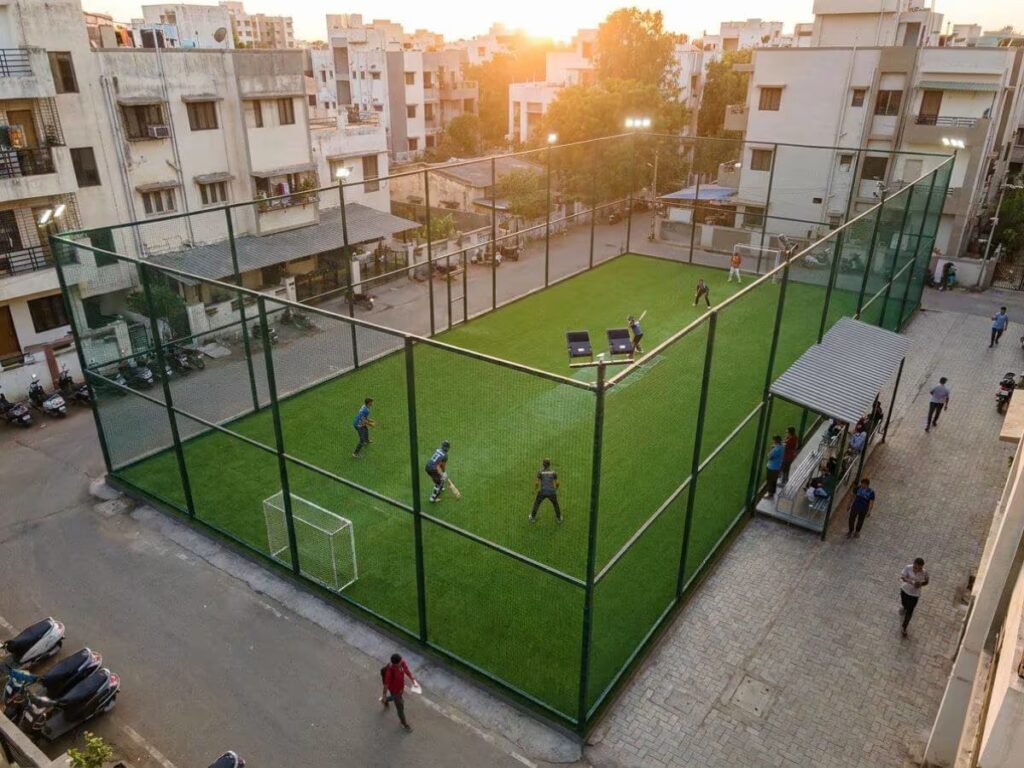
Whether it is football, cricket, box cricket, or multi-sport turfs, the demand for sports facilities is increasing in cities, towns, and even semi-urban areas.
Across India, from Bengaluru’s IT corridors to small-town lanes in Nashik and Coimbatore, turf businesses have become one of the most talked-about small business ideas of recent years.
And the demand is real. According to IMARC Group, India’s artificial turf market touched approximately USD 400 million and is only expected to grow through 2034.
But here is the question everyone wants answered, how much does a turf business cost in India?
The simple answer is “it depends.” So let us get into the real numbers.
In this guide,
How Much Does It Cost to Start a Turf Business?
Your total investment will largely depend on whether you are starting a box cricket setup, a 5-a-side football turf, or a full multi-sport facility. Here is an overview:
| Turf Type | Approximate Setup Cost |
| Box cricket (single pitch) | ₹10 – ₹22 lakhs |
| 5-a-side football turf | ₹25 – ₹30 lakhs |
| 7-a-side football turf | ₹35 – ₹45 lakhs |
| Multi-sport (football + cricket) | ₹40 – ₹50 lakhs |
| Full professional turf | ₹70 lakhs and above |
If you already own the land, your investment drops significantly. That single factor changes the entire equation for most people.
The Cost Breakdown
1. Land — Buy, Lease, or Already Own?
This is usually the biggest variable. If you are leasing land, expect to pay anywhere between ₹25,000 to ₹1,00,000 per month, depending on the city and location. A box cricket turf needs roughly 1,500 to 3,000 square feet. A 5-a-side football turf needs closer to 5,000 square feet.
In metro cities like Mumbai or Bengaluru, a prime plot on lease can cost ₹6–8 lakhs per year. In tier-2 cities like Mysuru, Nagpur, or Trichy, the same money can get you much more space and visibility. Many first-time turf owners either own the land or enter into a long-term lease with a landowner and share a percentage of revenue. That model works well too.
2. Turf Material Installation
The artificial grass itself — along with the base preparation and infill — is your second-biggest cost. Sports-grade artificial turf in India costs between ₹110 and ₹400 per square foot depending on quality.
To break it down clearly:
- Basic recreational turf: ₹110 – ₹180 per sq ft
- Mid-range sports turf: ₹180 – ₹250 per sq ft
- High-performance / FIFA-standard turf: ₹250 – ₹400 per sq ft
For a standard 5-a-side football turf (roughly 5,000 sq ft), the turf material and installation alone can come to ₹8 – ₹20 lakhs. Do not just look at the price per square foot — factor in the pile height (40mm to 60mm is standard for football), density, and how many years of lifespan you are getting. A good turf lasts 8 to 10 years with proper care. Divide the cost over 10 years and it starts making a lot more sense.
3. Netting, Fencing, and Structural Work
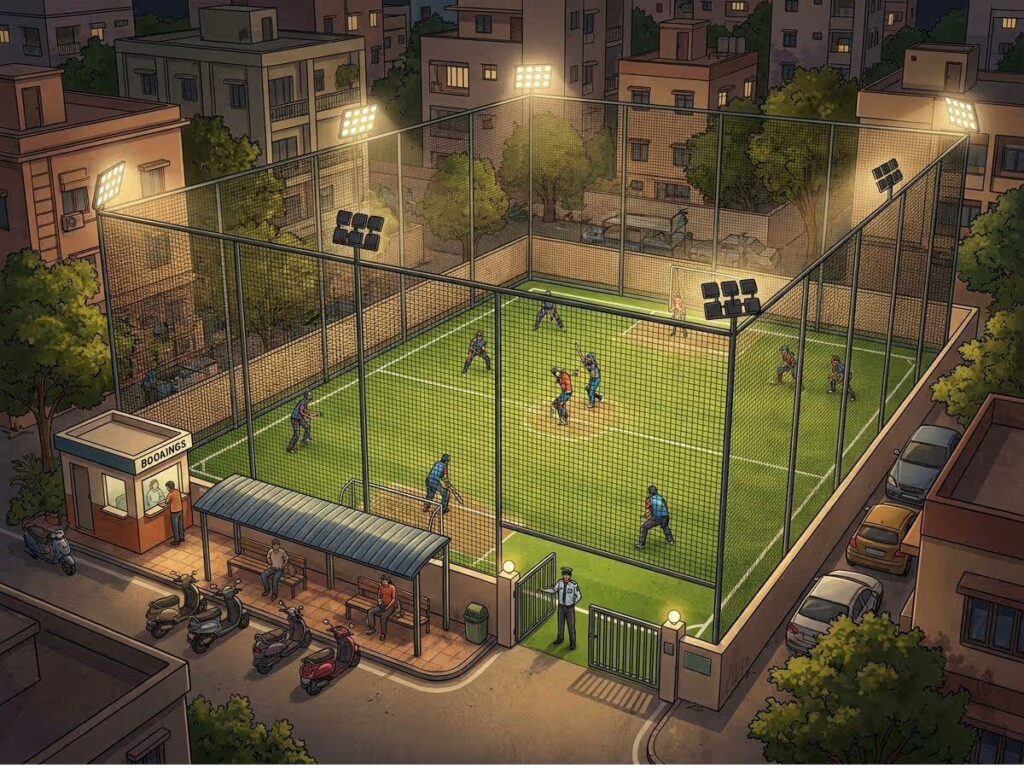
For box cricket turfs, the netting structure is non-negotiable — it takes a serious beating and needs to be strong. Budget ₹2 – ₹4 lakhs for netting and structural work for a box cricket setup. Football turfs with side netting and boundary fencing cost around ₹1 – ₹3 lakhs.
4. Floodlights and Electrical Work
This is where a lot of first-timers underestimate costs. Night slots are where the real money is — 6 PM to 10 PM is peak time everywhere in India. LED floodlights have become the industry standard now because they cut electricity bills by 50–70% compared to older metal halide lights. Budget ₹50,000 to ₹1.5 lakhs for LED floodlight installation depending on the ground size.
5. Other Infrastructure
Amenities like a small waiting area, toilets, CCTV cameras, scoreboard, basic parking space, and a changing room are optional — but they directly affect customer experience and repeat bookings. Set aside ₹1 – ₹3 lakhs for these, depending on your ambition and budget.
The Monthly Running Costs
Setting up is one thing. Running the turf month after month is a different conversation. Here is what you should realistically expect:
- Electricity (mostly floodlights): ₹10,000 – ₹25,000/month
- Land rent (if leased): ₹25,000 – ₹1,00,000/month
- Maintenance and cleaning: ₹5,000 – ₹10,000/month
- Staff salary (1-2 people): ₹10,000 – ₹25,000/month
- Digital marketing / social media: ₹3,000 – ₹10,000/month
On average, a mid-sized turf spends around ₹60,000 – ₹1.5 lakhs per month on operations. The good news is these costs are relatively stable and predictable — unlike many other businesses where your input costs are always moving.
Yearly turf maintenance (brushing, infill top-up, minor repairs) runs to about ₹1 – ₹1.5 lakhs a year. Do not skip this — neglected turf degrades faster and leads to injury risk, which kills your reputation quickly.
How Much Can a Turf Business Earn?
This is the part everyone wants to know, so let us be direct.
Hourly booking rates in India currently range from ₹800 to ₹3,000 per hour, depending on your city, the type of sport, and whether it’s a peak slot or not. Evening and weekend slots command premium rates everywhere.
A realistic monthly revenue scenario for a well-located 5-a-side football turf:
- 6–8 bookings per day at ₹1,500/hour = ₹9,000 – ₹12,000/day
- Monthly gross revenue: ₹2.5 – ₹3.5 lakhs
- After expenses: Net profit of ₹1 – ₹2 lakhs per month
For premium locations with 60%+ occupancy and strong weekend traffic, monthly gross can cross ₹4 – ₹6 lakhs. Box cricket turfs in good locations report ₹1.5 – ₹4 lakhs per month in gross bookings.
Beyond hourly bookings, smart turf owners are also adding revenue through:
- Membership plans (monthly packages for regular players)
- Tournament hosting — a single weekend tournament can earn ₹15,000 – ₹75,000
- Brand partnerships with sports brands or local businesses for ground advertising
Is the Turf Business Profitable? What About ROI?
The profit margins in this business are genuinely attractive — somewhere between 40% and 60% once you are past the first year and your occupancy stabilises. Most turf owners recover their full investment within 12 to 24 months, with well-run turfs in high-demand locations sometimes breaking even by month 10.
After that, cash flow becomes very favourable. You have no inventory depreciating, no perishable stock, no seasonal demand crash — just consistent bookings as long as you maintain quality and stay visible online.
Factors Impacting Your Turf Business Costs
✔︎ Location: A plot in a residential area with a young population beats a cheaper plot in an industrial zone every time.
✔︎ Land ownership vs lease: Owning the land can reduce your monthly outgo by ₹30,000 – ₹1,00,000 and dramatically improve your margins from day one.
✔︎ Turf quality chosen: Going for a cheaper turf to save ₹2 lakhs upfront might mean replacing it in 4 years instead of 8–10. Always compare the annualised cost.
✔︎ LED vs old lighting: This one decision saves thousands every single month on your electricity bill.
✔︎ Online booking management: Turfs that use a digital booking system fill more slots, avoid double bookings, and reduce the need for dedicated staff time on the phone.
For anyone with access to a reasonably located piece of land — owned or leased — the turf business is one of the more solid small business opportunities available in India right now. The youth sports culture is only getting stronger, cricket and football are not going anywhere, and corporate wellness culture has created demand even on weekday evenings.
The total investment is meaningful — ₹15 to ₹50 lakhs for a proper setup — but the returns are consistent, and the ongoing operational complexity is low compared to businesses like food or retail. You are not chasing trends or managing expiry dates. You are just making sure the lights are on and the ground is clean.
Start with a clear-headed cost plan, do not underestimate land and electricity, invest in good turf from the beginning, and get your Google Business Profile live from day one. That combination is what separates turfs that are thriving from the ones quietly struggling.

Suraj Shetty
Suraj Shetty has over 8 years of experience in small business, startups, and business consulting. He shares practical insights and proven strategies to help entrepreneurs discover new opportunities and grow their businesses sustainably.

Ravi Shankar
28 years of experience in business consulting across diverse industries