
Last Updated on June 28, 2026 by Suraj Shetty and Kaushik Nitin
Rajnigandha is one of India’s most recognised packaged products, sitting right next to the cash counter at practically every paan shop and kirana store.
Rajnigandha is the flagship pan masala brand of Dharampal Satyapal Limited (DS Group), a Noida-based FMCG conglomerate that’s been around since 1929.
If you are planning to start a Rajnigandha distributor or dealership, before you call the number on some “apply now” website, you need real figures. How much money goes in, what comes back. So, let’s get into it properly.
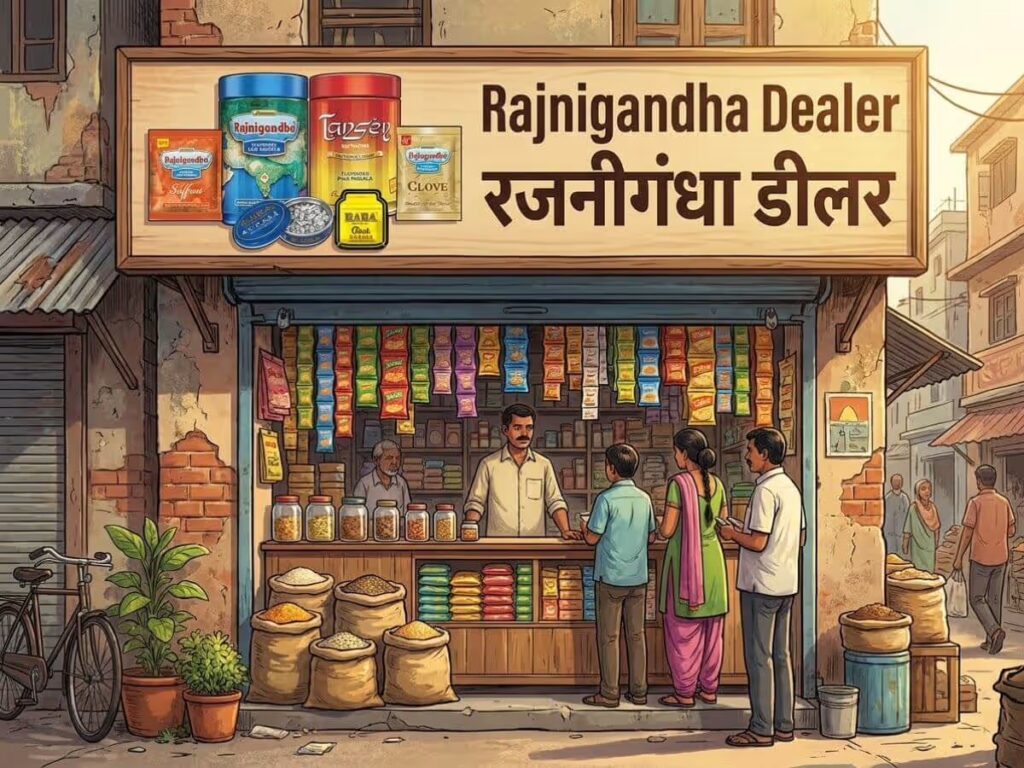
When people say “Rajnigandha dealership,” they usually mean becoming an authorised area distributor — someone who buys stock directly from the company (or its super-stockist) and supplies it onward to retailers, paan shops, and wholesalers in a fixed territory.
You’re not opening a “Rajnigandha showroom” the way you would for a bike or a car; this is a supply-chain role, and your real customers are local shopkeepers, not end consumers.
If you search “Rajnigandha dealership” you’ll find several third-party websites promising instant registration and exclusive territory rights. Treat these carefully. The safest application route is DS Group’s own business/contact channel — a genuine FMCG company verifies your background, your godown, and your finances before anything is finalised, and doesn’t typically collect a “processing fee” through a random web form.
In this post,
Rajnigandha Dealership Cost
There’s no single fixed price published by the company — your total outlay depends on your city’s population, how competitive the territory already is, and how much stock that area can realistically absorb. But based on how DS Group and similar pan masala distributorships typically structure things, here’s a fair breakup:
Security deposit to the company:
Usually refundable, ranging from around ₹50,000 in smaller towns to ₹2–5 lakh or more in dense urban territories with higher sales potential.
Initial stock purchase:
Your biggest line item. Pan masala moves on a cash-and-carry basis, so you’ll need working capital of roughly ₹1.5–4 lakh just to keep shelves and delivery carriers stocked at launch.
Godown/storage space:
A small, dry, well-ventilated room of 300–500 sq. ft. is enough to begin with. Rental deposits typically run ₹20,000–₹50,000 depending on the locality.
Delivery vehicle:
Many new distributors start with a hired e-rickshaw or tempo instead of buying one outright, keeping early costs down. A second-hand delivery vehicle, if you do choose to buy, can cost ₹1–3 lakh.
Licensing and registration:
GST registration itself is free, but CA/professional charges, FSSAI registration, and local trade licence fees together usually add up to ₹5,000–₹15,000.
Put together, most small-town and tier-2 city aspirants are looking at a total investment somewhere between ₹3 lakh and ₹8 lakh, while metro territories with bigger sales potential can easily cross ₹10–15 lakh once you factor in the larger security deposit and stock float.
Documents and Eligibility
Before you even get a callback, keep this checklist ready:
- PAN card and Aadhaar card
- GST registration certificate
- FSSAI licence (mandatory, since pan masala is classified as a food product)
- Proof of godown — ownership papers or a rent agreement
- Bank statements or a solvency certificate showing you can fund working capital
- Passport-size photographs and a local trade licence
- Arrangement for a delivery vehicle, owned or hired
Companies generally prefer applicants who already understand the local FMCG trade — prior experience as a retailer, sub-dealer, or salesperson in the kirana or paan trade genuinely improves your chances of getting shortlisted.
Profit Margin Rajnigandha Dealership
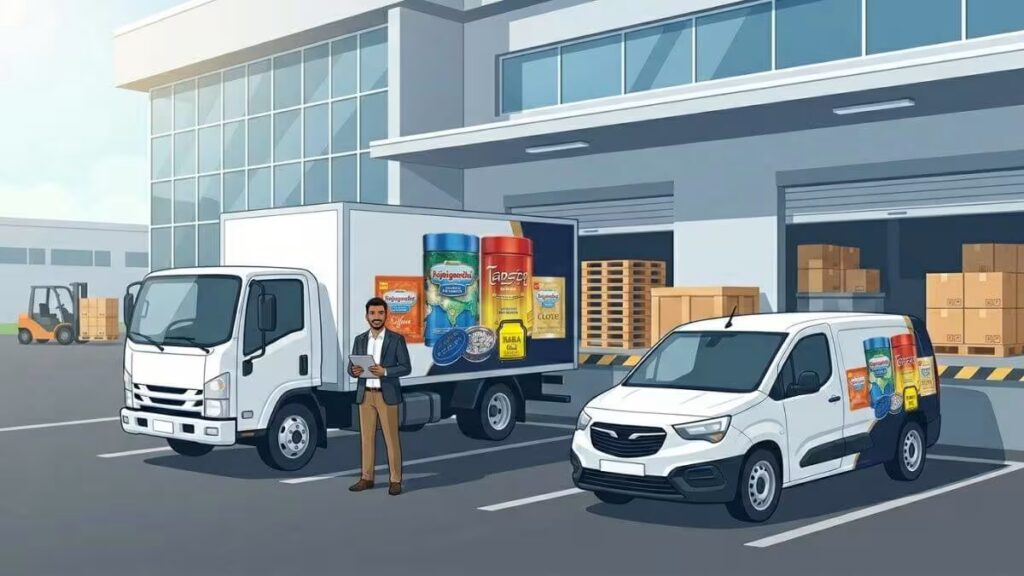
In the FMCG mouth-freshener category, distributor margins typically sit around 4–8%, while retailers further down the chain earn a slightly fatter 8–15%. That sounds thin, and it is — pan masala is a high-volume, low-margin business.
The real money comes from turnover, not percentage. A distributor moving stock through hundreds of retail counters daily, backed by a brand with a retail presence running into lakhs of outlets nationally, can build a steady monthly income — but only by managing the credit cycle tightly. Extending unlimited credit to shopkeepers without firm limits is the single biggest reason small distributors run into cash-flow trouble in this trade.
The GST Changes
This is genuinely important to know. From 1st February 2026, the government overhauled how pan masala and tobacco-adjacent products are taxed. The old 28%-plus-cess structure is gone — pan masala now attracts a flat 40% GST.
The earlier GST compensation cess has been scrapped and replaced with a new Health and National Security Cess, calculated on the basis of packing-machine capacity, layered on top of a freshly reintroduced central excise duty. Tax is now computed on MRP rather than the old transaction-value method.
What does this mean for you as a distributor? Simply put, your working capital requirement for the same physical quantity of stock has gone up, because the landed cost and MRP of every pouch are higher than they were before February 2026.
Budget accordingly — the ₹3–8 lakh range mentioned earlier assumes current post-reform pricing, but always confirm the latest stock rates with your area sales manager before committing capital.
The State Restrictions
Pan masala distribution isn’t equally legal everywhere in India, and this is non-negotiable homework before you invest a single rupee. Maharashtra, Tamil Nadu, and Kerala have had long-standing restrictions on certain pan masala and tobacco-linked products, and several DS Group trade schemes explicitly exclude these states.
More recently, Odisha imposed a complete statewide ban on the manufacture, storage, distribution, and sale of gutkha, pan masala, and all tobacco or nicotine-containing products in early 2026, following Supreme Court and food-safety directives — and similar action in other states cannot be ruled out.
So, before signing any distributor agreement, verify the current legal status of pan masala sale in your specific district, not just your state, since rules can shift with little notice.
How to Apply for a Rajnigandha Distributorship
1. Visit DS Group’s official business or contact page and submit your interest, mentioning your preferred territory.
2. Expect a call or visit from the area sales manager to discuss demand potential and verify your background.
3. Have your godown inspected — cleanliness, dryness, and ease of loading/unloading all matter.
4. Sign the distributor agreement and pay the security deposit (always get refund terms clearly stated in writing).
5. Place your first stock order and complete GST/FSSAI formalities if not already done.
Get oriented on pricing, schemes, and the local retailer network before your first delivery run.
Rajnigandha carries genuine brand trust and a distribution network that most regional pan masala brands simply can’t match. This makes the business model more stable than starting cold with an unknown brand.
That said, this business brings real headwinds — sharply higher taxation, a tighter margin-to-capital ratio, and a regulatory environment where an entire state can ban the category overnight. None of this means you should avoid the business outright, but it does mean going in with eyes open.
Talk to existing distributors in nearby towns, confirm real demand numbers for your specific pin code, and never commit your full investment before the company verifies your territory in writing. Treat the dealership cost as a business decision that needs due diligence, not a guaranteed income scheme.

Suraj Shetty
Suraj Shetty has over 8 years of experience in small business, startups, and business consulting. He shares practical insights and proven strategies to help entrepreneurs discover new opportunities and grow their businesses sustainably.
Kaushik Nitin
30 years of experience in business consulting across diverse industries