India wastes roughly 16% of its fruits and vegetables every single year — not because we don’t grow enough, but because we don’t store them well. That’s crores worth of produce rotting before it reaches a plate.
That right there is the business opportunity hiding in plain sight. If you’ve been thinking about starting a cold storage business, the first thing on your mind is probably the cost.
How much do you actually need? Is it really as expensive as people say? What does the government chip in? Let’s break it all down clearly.
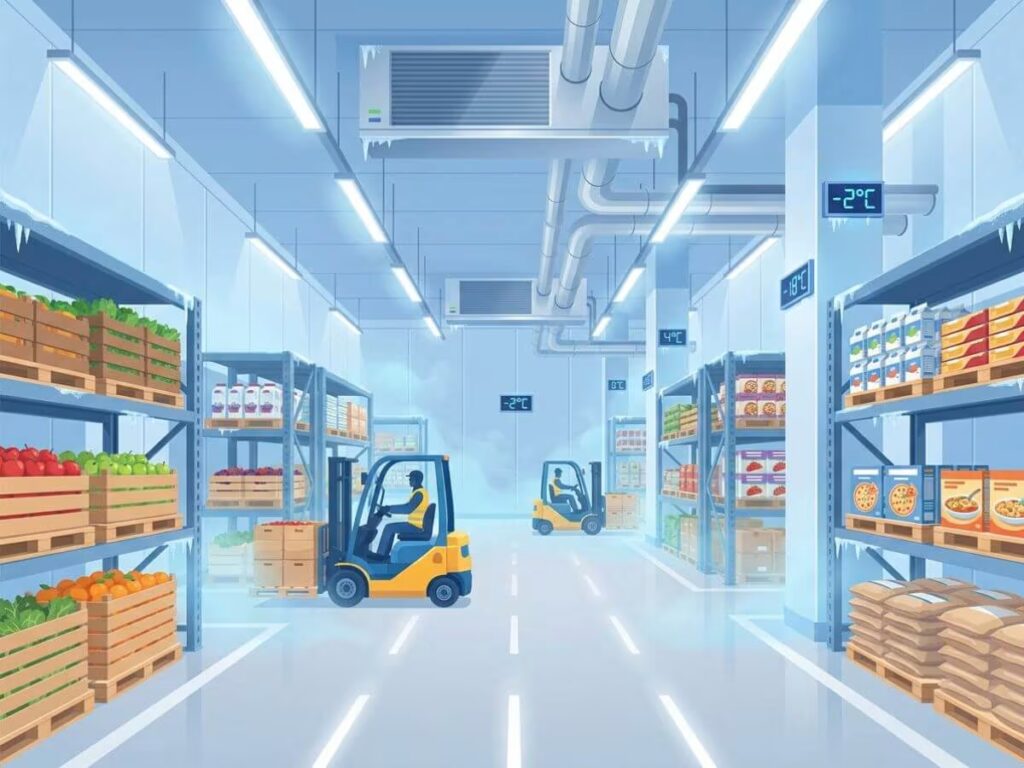
India produces enormous quantities of perishables — potatoes, onions, apples, dairy, seafood, medicines — and the infrastructure to store them is still nowhere near what’s needed.
Demand for cold storage is estimated to be 10 to 15 times higher than what currently exists. Also, the global cold storage market is growing at about 9.4% CAGR.
Closer home, the Indian government is pushing cold chain infrastructure hard through multiple subsidy schemes. So you’re not just entering a business — you’re entering a space where the government wants you to succeed.
In this post,
How Much Does It Cost to Start a Cold Storage Business in India?
This is the big question, and the answer is: it depends on the size you want to build.
Cold storage is capital-intensive — no point sugar-coating that. But the range is wide, and smaller setups are absolutely feasible.
Small Cold Storage (50–100 MT)
If you’re just starting out or targeting a specific niche — say, a local pharmacy cluster or a mandhi area — a compact unit of 50 to 100 metric tonnes is a realistic entry point. This will cost you anywhere between ₹10 lakh to ₹15 lakh . It’s manageable, especially with a small loan or family capital.
Medium Cold Storage (1,000–5,000 MT)
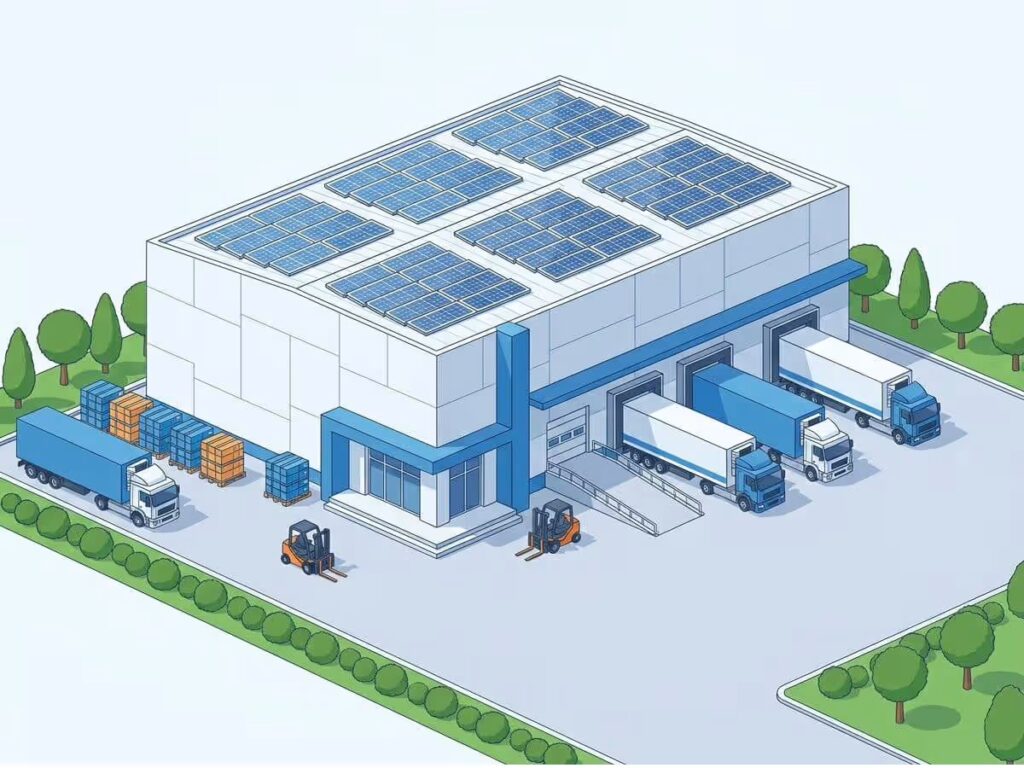
This is where most serious entrepreneurs are playing. A 5,000 MT facility — the most commonly referenced benchmark — will set you back roughly ₹5 crore to ₹10 crore before subsidies. Here’s a rough cost breakdown for a unit of this size:
- Land (approx. 1 acre): ₹20 lakh to ₹2 crore (varies hugely by location)
- Civil construction: ₹2,000–₹4,000 per sq. ft.
- Insulation and PUF panels: ₹300–₹500 per sq. ft.
- Refrigeration system (compressors, condensers, evaporators): ₹1.5 crore to ₹3 crore
- Power infrastructure (generator, transformer, wiring): ₹30 lakh to ₹80 lakh
- Licenses, registration, working capital: ₹10 lakh to ₹30 lakh
Large Cold Storage (above 5,000 MT)
High-tech, multi-chamber, or controlled-atmosphere cold stores for export-quality produce or pharma products can cost anywhere from ₹12 crore to ₹18 crore and beyond. These are typically funded through institutional financing and government grants.
What Are the Monthly Operating Costs?
Setting up is one thing; running it every month is another. Cold storage is energy-hungry — electricity alone can eat up 10% to 18% of your monthly revenues if you’re not careful about it.
For a 2,000 MT store, operating costs look something like this:
- Electricity bill: ₹70,000–₹6 lakh per month (depending on size and tariff)
- Staff salaries: Operator, security, manager — roughly ₹1.5 lakh to ₹2.5 lakh/month
- Maintenance and repairs: ₹30,000 to ₹1 lakh/month
- Miscellaneous (insurance, admin): ₹20,000–₹50,000/month
Electricity is your biggest variable. You should invest in good insulation, energy-efficient compressors, and solar panels if your location allows — the savings compound over time. One rupee saved in energy is worth more than ten rupees of additional revenue in this business.
What Revenue Can You Expect?
Income in cold storage comes primarily from storage charges per kg per month. Rates vary by commodity and region, but typically run between ₹2 to ₹4 per kg per month. A well-run 2,000 MT unit with high occupancy can generate revenues of around ₹60–80 lakh a season, primarily during peak harvest periods.
The business works well when you hit 70–90% occupancy consistently. Location matters enormously — a cold store near a potato belt in UP, an apple orchid in Himachal, or a seafood hub in coastal Andhra will stay full. If away from any produce cluster, then that’s a tough fight.
ROI, when managed properly, typically comes in the 5–7 year range, which is decent for infrastructure.
Is Cold Storage Profitable in India?
Yes — but not automatically. The businesses that struggle are usually the ones that built too far from a produce corridor, underestimated electricity costs, or didn’t pursue subsidies due to paperwork fatigue.
The ones that thrive are typically situated near high-volume agricultural zones, have locked in long-term clients (like potato traders, exporters, or FMCG companies), and treat energy efficiency as a core operating priority.
If you can hit consistent occupancy and keep your power costs in check, cold storage is one of those rare businesses where once you’re stable, the income is remarkably predictable. Farmers need you before the harvest. Traders need you during the season. Exporters need you year-round. The demand doesn’t go anywhere.
Available Government Subsidies
This is where it gets genuinely exciting for small business owners in India. The government doesn’t want perishables wasting away, and it has backed that intent with real money.
PMKSY – Pradhan Mantri Kisan Sampada Yojana
The Ministry of Food Processing Industries (MoFPI) runs this scheme, and it’s the most significant cold storage support programme in the country. Under the Integrated Cold Chain & Value Addition Infrastructure component, eligible applicants can get:
- 35% of the project cost as a grant-in-aid in general areas
- 50% of the project cost for projects in North-East, hilly regions, and projects by SC/ST promoters or FPOs
- Maximum grant: up to ₹10 crore
Individuals, companies, cooperatives, FPOs, LLPs, NGOs can apply for this— the eligibility is broad. Applications go through the SAMPADA portal (sampada-mofpi.gov.in) via an Expression of Interest process.
One important thing to know is that this is a back-ended subsidy. You arrange full funding first — your equity plus a bank loan — and the government reimburses after physical inspection. It takes 6 to 18 months in many cases, so plan your cash flow accordingly.
NABARD and Agriculture Infrastructure Fund (AIF)
NABARD provides direct lending for cold chain infrastructure at concessional rates. The Agriculture Infrastructure Fund goes one step further — it offers a 3% interest subvention on loans. The clever part is that you can stack AIF’s interest subvention with PMKSY’s capital grant on the same project. That’s a genuinely significant cost reduction.
Banks and NBFCs typically finance 60–75% of the project cost under NABARD’s refinancing, with repayment tenures of 6–9 years.
Hidden Costs in this business
No article on cold storage costs is complete without this list. These are the things that catch people off guard:
Pre-operative expenses: Detailed Project Reports (DPR), architect fees, soil testing, pollution NOC — budget ₹2 lakh to ₹5 lakh for this alone.
Power connection charges: Getting a heavy-duty commercial electricity connection in semi-urban or rural areas can take time and cost ₹5 lakh to ₹15 lakh, depending on the load requirement and state discoms.
DG Set: Power cuts are a reality across most of India. A reliable diesel generator for backup is non-negotiable. Budget ₹10–25 lakh depending on capacity.
Ammonia handling compliance: Most large cold stores use ammonia as a refrigerant. There are safety audits, fire NOC requirements, and periodic inspections involved. Don’t skip these — penalties and shutdowns are real.
Working capital gap: The subsidy arrives late. Your electricity bills, salaries, and maintenance don’t wait. Keep at least 6 months of operational expenses as a working capital reserve.
Starting a cold storage business in India in is not cheap — but it’s not out of reach either. A small 100 MT unit can be started for ₹15 lakh. A serious 5,000 MT facility will need ₹5–10 crore, and with PMKSY subsidies, your actual out-of-pocket cost can come down to ₹3–6 crore.
The real edge isn’t just capital — it’s location, relationships with farmers and traders, and ruthless attention to your electricity bill. Get those three right, and cold storage becomes one of the most dependable small businesses you can run in India today.

Suraj Shetty
Suraj Shetty has over 8 years of experience in small business, startups, and business consulting. He shares practical insights and proven strategies to help entrepreneurs discover new opportunities and grow their businesses sustainably.

Ravi Shankar
28 years of experience in business consulting across diverse industries