
In any timber or hardware market in India — from Kirti Nagar in Delhi to Chickpet in Bengaluru — there’s one brand you’ll spot almost everywhere. Greenply.
The green-and-white branding is practically synonymous with plywood in this country, and that’s not a coincidence.
It’s the result of decades of brand-building, a wide product range, and one of the most aggressive dealer networks in the building materials space.
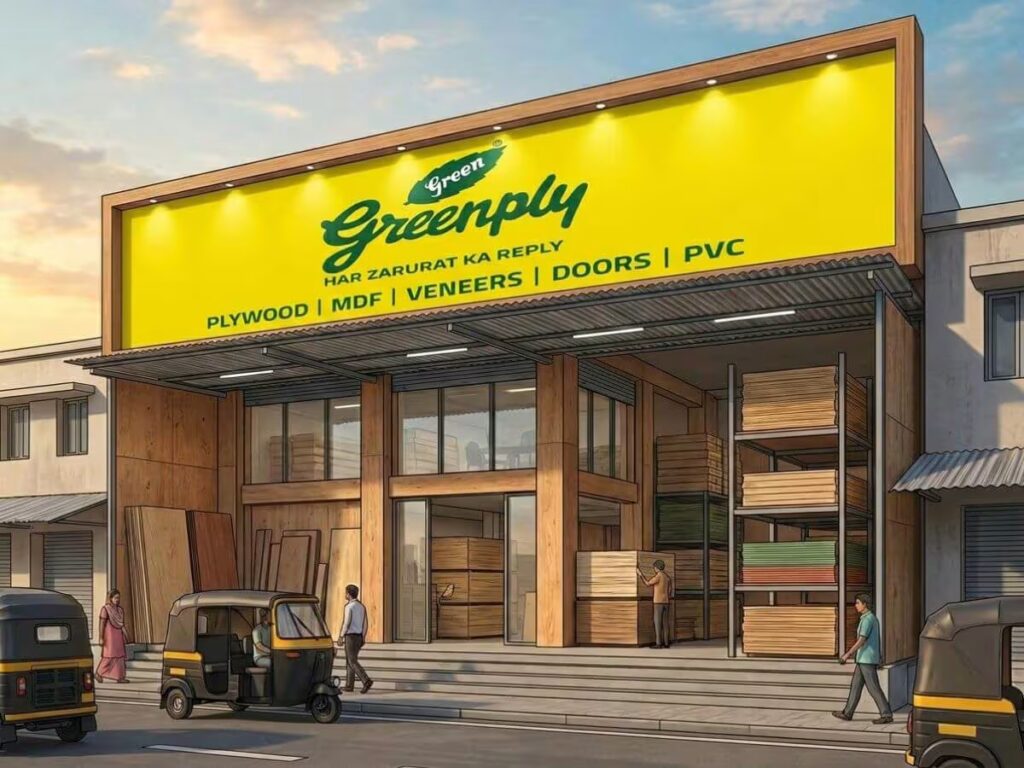
If you’ve been thinking about starting a plywood dealership and wondering whether Greenply is the right brand to partner with, you’re asking the right question.
In this article, we break down everything you need to know about Greenply dealership cost — what you’ll need to invest, what space is required, what documents you need, and what kind of profit margins you can realistically expect.
In this post,
Why Choose Greenply Dealership?
Greenply Industries Limited holds a 26% share of the organised plywood market in India — making it the single largest player in that segment. The company has manufacturing units in Nagaland, West Bengal, Uttarakhand, and Gujarat and operates through more than 55 branches and a network of over 12,000 distributors, dealers, sub-dealers, and retailers spread across 300+ cities in 21 states.
That kind of reach matters because, as a dealer, you’re essentially plugging yourself into an already-established supply chain with strong brand pull. When a carpenter, contractor, or interior designer walks into your shop and asks for “Greenply ki BWP sheet,” you don’t have to sell the brand. The brand sells itself.
The Indian plywood market is projected to grow at a robust CAGR of around 10% over the next five years. Schemes like Pradhan Mantri Awas Yojana (PMAY) have sanctioned over 1.12 crore homes, and urban housing construction is driving consistent demand. All of this flows directly to dealers on the ground.
What Does a Greenply Dealer Sell?
Before you calculate costs, it helps to understand the product breadth you’d be dealing with. Greenply’s product range is much wider than just plywood sheets. As an authorised dealer, you’d typically stock and sell:
Plywood and blockboards across grades — MR (Moisture Resistant), BWR (Boiling Water Resistant), and BWP (Boiling Water Proof) — in thicknesses ranging from 4mm to 25mm, under sub-brands like Green, Ecotec, Optima G, and Greenply Gold.
Flush doors and specialty plywood, including fire-retardant and marine-grade options under the 710 Marine Plywood range, which comes with a 25-year warranty and IS 710 certification.
Decorative veneers, MDF boards, PVC boards, and WPC products — all part of the company’s expanding portfolio beyond traditional ply.
This wide range is actually good news for a dealer. It means your customers — carpenters, contractors, builders, and homeowners — can often source multiple materials from you in a single visit.
Total Investment to Start a Greenply Dealership
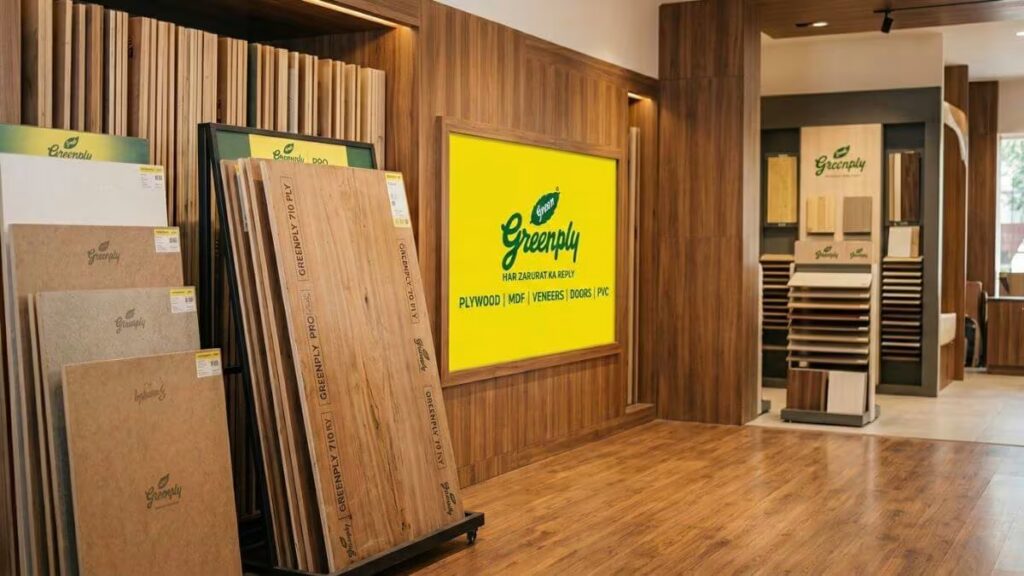
The total investment to start a Greenply dealership in India typically ranges from ₹10 lakh to ₹25 lakh, depending on your city, the size of your shop and godown, and how much inventory you want to open with. In tier-1 cities like Mumbai or Delhi, costs will be on the higher side. In tier-2 and tier-3 cities, you can get started with a more modest outlay.
Greenply does not publicly advertise a fixed franchise or dealership fee on its website — unlike some franchise businesses. The company operates on a direct dealer model where you reach out to the regional sales team, get evaluated, and terms are negotiated based on your location and the market potential there.
That said, here’s a realistic cost breakdown you can use for planning purposes.
Detailed Breakdown of Greenply Dealership Setup Costs
Security Deposit (Advance to Company): ₹1 lakh – ₹3 lakh
Greenply, like most branded building materials companies, typically requires a refundable security deposit before they begin supplying to you. Think of it as a trust deposit that demonstrates your seriousness. This amount is generally returned when you close the dealership, subject to outstanding dues.
Initial Inventory (First Stock Purchase): ₹5 lakh – ₹15 lakh
This is your highest upfront cost. Plywood moves in large sheets — standard 8×4 ft — and carpenters and contractors often buy in bulk. To maintain any credible dealership, you need a decent stock of popular variants. Different thicknesses, grades, and product lines. A first purchase in the range of ₹5-8 lakh will get you started. Scaling up inventory to ₹12-15 lakh gives you a stronger assortment and the ability to handle larger contractor orders without delays.
Shop / Showroom Setup: ₹1 lakh – ₹3 lakh
You’ll need a decent showroom to display sample sheets and attract walk-in customers. Even a 400-600 sq ft display space, fitted with basic racking and product samples, requires some initial setup investment. If the space is rented, factor in a few months’ advance rental and renovation cost here.
Godown / Storage: ₹50,000 – ₹2 lakh (or ongoing rental)
Plywood is bulky, and you’ll need a proper dry, covered storage space to avoid warping or moisture damage. A godown of 1,000–2,000 sq ft is typically needed, depending on your volume. If you don’t own the space, budget for monthly rent plus an advance deposit.
Working Capital (Day-to-Day Operations): ₹2 lakh – ₹5 lakh
Staff salaries, transport, utilities, and the credit you extend to carpenters and contractors all need to be funded. In the plywood trade, credit periods of 30-60 days to retailers are common, which means your working capital has to bridge that gap.
Total Realistic Investment: ₹10 lakh – ₹25 lakh
Profit Margin in Greenply Dealership
Plywood dealership is not a high-margin business — it’s a volume game. As a primary dealer buying directly from Greenply, the purchase discount typically ranges from 8–12% off the company’s list price. After accounting for logistics, storage, staff, and credit extended to customers, your net profitability tends to land in the 8–12% range, with well-diversified dealers hitting 12–15%.
To put some numbers to it, if your monthly sales are ₹5 lakh, a net 10% margin means ₹50,000 per month. At ₹10 lakh in monthly sales, that’s ₹1 lakh per month. High-volume dealers in tier-1 cities routinely do ₹20–30 lakh per month, and at that scale, the business becomes genuinely lucrative.
Stocking premium grades — BWP marine plywood, Greenply Gold, specialty fire-retardant sheets — typically fetches better margins than basic MR-grade commercial ply. So, building a diversified inventory across grades rather than competing on the cheapest options is the smarter strategy.
Space and Infrastructure You’ll Need
A Greenply dealership is not a small kirana-style shop. Plywood sheets are 8 feet by 4 feet — they’re large, heavy, and need specific storage arrangements. Here’s what you should plan for:
- Showroom: 400–800 sq ft, ideally on a main road or timber market-facing plot, to attract contractors and carpenters
- Godown: 1,000–2,500 sq ft of dry, covered storage space — ideally with a loading area accessible by mini-trucks
- Transport access: Your godown should be reachable by tempo or mini-truck for deliveries in and out
- Basic staff: You’ll typically need 1-2 salespeople and at least 1-2 loaders/helpers
Location matters a great deal in this business. Being close to a timber market, a hardware hub, or an area with active construction activity will directly impact your footfall and sales.
Documents Required for Greenply Dealership
Like any business in India, the documentation is fairly standard:
- PAN Card and Aadhaar Card (for identity and KYC)
- GST Registration Certificate (mandatory for any business dealing in building materials)
- Shop & Establishment Act Registration (for your place of business)
- Bank Account Details (current account in the business name, ideally)
- Photographs of the shop and godown (Greenply typically requires this during the verification process)
- Proof of ownership or a rental agreement for the shop/godown
- MSME Registration (not mandatory, but helps with loans and subsidies if you’re financing the dealership through a bank)
How to Apply for a Greenply Dealership
There’s no complicated portal or lengthy application form here. The process is relatively straightforward:
Call Greenply directly on their toll-free number: 1800-103-4050. Explain that you’re interested in a dealership and ask to be connected with the regional sales manager for your area.
Use the “Become a Dealer” inquiry form on the Greenply website. This routes your request to the appropriate regional team.
Expect a site visit. Greenply’s regional sales team will likely want to see your proposed shop and godown location before approving you. They’ll assess foot traffic, proximity to competitors, market potential, and your infrastructure readiness.
Negotiate terms and sign the dealer agreement. Once approved, you’ll pay the security deposit, place your first order, and receive your supply.
The entire process, from inquiry to first supply, typically takes 4–8 weeks.
Carpenters and smaller contractors often ask for credit. Extending 30–60 days’ credit to buyers is the industry norm, but defaults happen. If you’re not careful about who you extend credit to, a few bad accounts can wipe out your month’s profit.
Also, this business is cash-heavy at the start. Inventory sitting in your godown is money locked up. The faster you turn that inventory (ideally 4–6 times a year), the better your returns. Slow-moving stock is the enemy.
A Greenply dealership, done right, is a solid business opportunity — especially in cities and towns with active real estate and construction activity. The brand is trusted, the product range is wide, and the demand is there. With an investment starting around ₹10-15 lakh, it’s accessible to a serious entrepreneur, though you’ll need working capital and patience for the first 6–12 months as you build your contractor and retail customer base.
The first step is simple: call Greenply, speak to the regional team, and start the conversation. The rest follows from there.

Suraj Shetty
Suraj Shetty has over 8 years of experience in small business, startups, and business consulting. He shares practical insights and proven strategies to help entrepreneurs discover new opportunities and grow their businesses sustainably.
Kaushik Nitin
30 years of experience in business consulting across diverse industries