
A Vida electric scooter dealership in India requires a total investment of ₹50 lakh to ₹1.5 crore, depending on city, showroom size, and whether you are setting up a standalone Vida Experience Centre or adding the Vida range to an existing Hero MotoCorp dealership. The vehicle profit margin sits at 5 to 8 per cent per unit, and a dealer selling 15 to 20 scooters a month can expect a net monthly profit of ₹50,000 to ₹1.5 lakh. Break-even usually comes between 18 and 36 months.
In this guide,
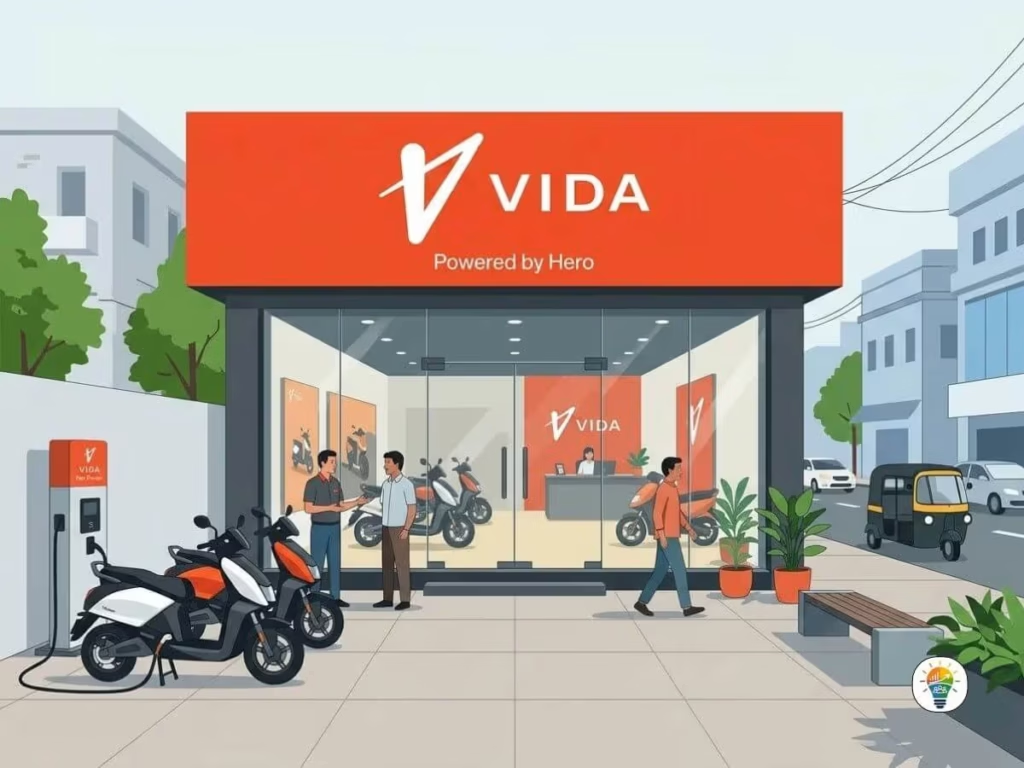
India’s electric scooter segment is no longer a niche. In the first half of 2026 alone, scooter sales hit 44.2 lakh units — the strongest first half ever recorded — and Vida, Hero MotoCorp’s EV brand, has gone from a slow start to selling over 22,000 scooters in a single month. If you are looking at an EV dealership, Vida has a genuine advantage that most rivals cannot match: the widest service and distribution backbone in Indian two-wheelers behind it.
But a trusted brand does not automatically make a profitable dealership. Before you put ₹50 lakh or more on the table, here is a clear look at what a Vida dealership actually costs, what you can earn, and what to watch out for.
About Vida Dealership
Vida is the electric mobility subsidiary of Hero MotoCorp. It sells under the “Vida Experience Centre” model, which is distinct from a regular Hero MotoCorp showroom, though many existing Hero dealers have added the Vida range to their outlets.
If you already own a Hero MotoCorp dealership, adding Vida is a relatively lighter investment — you are working within an existing space, staff setup, and customer base. If you are starting fresh, you will be setting up a standalone Vida Experience Centre, which involves a higher upfront cost and a longer road to break-even.
Both routes lead to the same products. As of late 2026, Vida sells the VX2 and the V2 range, with ex-showroom prices running from about ₹79,000 to ₹1.61 lakh depending on variant and battery option. The brand is also reported to have a sub-₹1 lakh fixed-battery scooter in the pipeline, aimed at first-time EV buyers.
Vida Dealership Cost
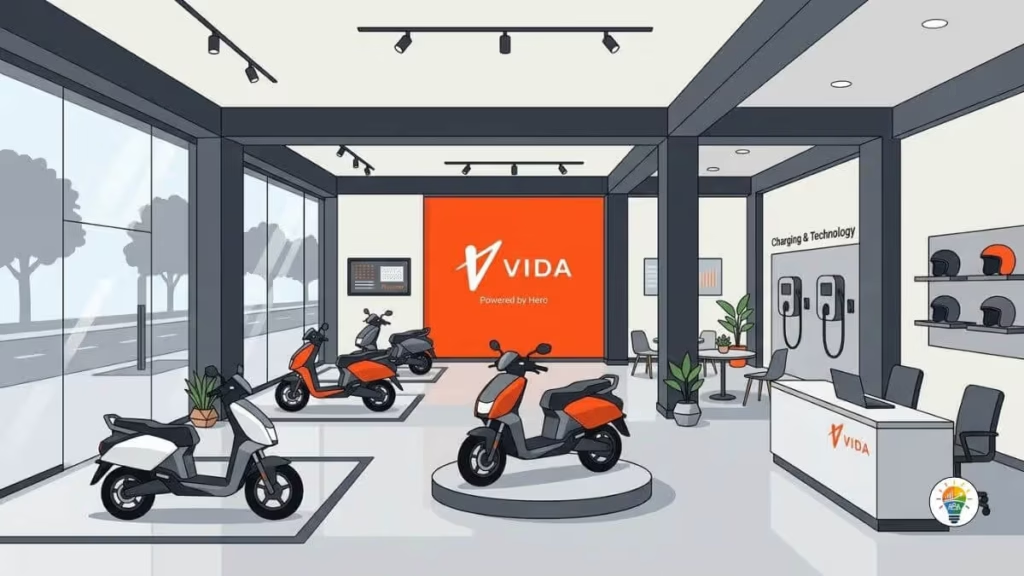
The total investment falls into three realistic bands.
Low end — ₹50 lakh to ₹70 lakh
This is possible if you own or already lease a commercial space, are adding Vida to an existing Hero dealership, and keep the initial stock lean. Infrastructure and interior work alone can stay around ₹5 to 7 lakh in this case.
Mid-range — ₹70 lakh to ₹1 crore
A standalone Vida Experience Centre in a Tier 2 city, with leased premises, a modest workshop setup and working capital to cover the first few months. This is the most common entry point for new applicants.
High end — ₹1 crore to ₹1.5 crore
A full-format showroom in a metro or large Tier 1 city, with a dedicated service centre, higher inventory holding, and staff costs that reflect bigger-city wages.
Vida Dealership Cost Breakdown
Here is where the money actually goes.
| Cost Head | Estimated Range |
|---|---|
| Franchise/dealership fee | ₹3 lakh to ₹5 lakh |
| Showroom interior & fit-out | ₹5 lakh to ₹12 lakh |
| Service centre equipment | ₹3 lakh to ₹6 lakh |
| Initial vehicle inventory (15–25 units) | ₹15 lakh to ₹35 lakh |
| Space deposit/advance rent | ₹2 lakh to ₹8 lakh |
| Signage, branding & tech setup | ₹2 lakh to ₹4 lakh |
| Licences and registrations | ₹50,000 to ₹1 lakh |
| Working capital (first 3 months) | ₹10 lakh to ₹20 lakh |
The minimum space requirement for a Vida Experience Centre is around 1,000 to 1,500 square feet for the showroom. If you include a workshop, plan for 2,000 to 4,000 square feet in total. In a Tier 1 city, this much commercial space in a visible, accessible location will push your rent to ₹50,000 or more per month. In smaller cities, ₹20,000 to ₹35,000 is more realistic.
Monthly Running Costs
Once you open, the fixed costs run regardless of how many units you sell. A rough monthly outgo for a mid-size Vida dealership looks something like this.
Rent will be your highest fixed cost — ₹25,000 to ₹80,000 depending on city and location. Staff for a small dealership (two sales executives, one service technician, and one admin person) will cost ₹60,000 to ₹1,20,000 in combined salaries. Electricity, internet, and general overheads add another ₹10,000 to ₢25,000. Local marketing and promotions — test-ride events, Google ads, social media — are easy to underestimate but matter a lot in the early months. Budget ₹15,000 to ₹30,000 for this.
In total, monthly running costs for a standalone outlet will fall somewhere between ₹1.2 lakh and ₹2.5 lakh.
Profit Margin in Vida Dealership?
The vehicle margin on Vida scooters is 5 to 8 per cent per unit. On a scooter priced at ₹1 lakh ex-showroom, that is ₹5,000 to ₹8,000 in gross margin per vehicle sold. You also earn on accessories, financing tie-ups, and insurance, which can add another ₹1,000 to ₃,000 per unit.
Service and spare parts are where the recurring money sits. As your customer base grows, the workshop becomes a steady income stream that does not depend on monthly sales.
At 15 units a month, gross vehicle income is roughly ₹75,000 to ₹1.65 lakh. After running costs of ₹1.2 lakh to ₹2 lakh, a new dealer in the early months may barely break even or see a thin profit. Once volume crosses 20 to 25 units a month and the service backlog builds up, net monthly profit of ₹60,000 to ₹1.5 lakh is a realistic steady-state.
Break-even on the total investment, assuming mid-range costs, comes between 24 and 36 months.
Hidden and Overlooked Costs
A few costs tend to surprise new dealership owners.
Holding cost on inventory is one that few people calculate upfront. If ₹20 lakh of scooters is sitting in your showroom for 45 days before they sell, that capital is locked up and earning nothing. Slow months stretch this further.
Mandatory display and branding standards set by Hero Vida will require specific fixtures, display boards, and digital screens that you cannot cut corners on. If a surprise audit or dealer visit leads to mandated changes, you bear the cost.
Early-stage marketing is another overlooked spend. Without footfall, you cannot sell. The first three to six months often need heavier promotion than the monthly budget accounts for.
Demo vehicles or test-ride units may need to be maintained at your cost. And if your service centre handles battery servicing or replacement for the Battery-as-a-Service (BaaS) customers, make sure you understand the cost-sharing arrangement with Vida clearly before you commit.
How to Start a Vida Dealership on a Smaller Budget?
The most practical low-budget path is to apply as a sub-dealer or a Vida add-on partner under an existing Hero MotoCorp dealer. This cuts out the standalone showroom cost entirely and lowers the entry to ₹15 lakh to ₹30 lakh in some cases, though your territory and margins may also be smaller.
A MUDRA loan under the Tarun category (up to ₹20 lakh) or a term loan from your bank can supplement personal capital. The business’s asset base — equipment, inventory, fit-out — can often be pledged as collateral to support a loan of ₹15 lakh to ₹30 lakh.
Starting in a Tier 2 or Tier 3 city also makes significant financial sense. Rents are lower, Hero Vida is actively expanding into smaller cities, and you face less competition from established EV dealers than you would in a metro.
Also Read:
Ather Dealership Cost and Complete Guide
Licences and Registrations
Running an authorised vehicle dealership in India requires more paperwork than most people expect. The core requirements are GST registration, a trade licence from the local municipal corporation, a dealership authorisation certificate from Hero Vida (Form 16A), and an RTO Trade Certificate under the Central Motor Vehicles Rules. The trade certificate is valid for five years and is mandatory before you can move unregistered stock.
You will also need Shop and Establishment registration, Udyam registration if your investment qualifies as an MSME, and business insurance. If you have more than a handful of employees, EPF and ESI registrations apply as well.
The dealership agreement with Hero Vida will spell out their specific requirements, so read it carefully before signing.
Frequently Asked Questions
How do I apply for a Vida dealership in India?
You can apply through the Hero MotoCorp official website by filling out the dealership enquiry form. After an initial screening, a company representative contacts you to evaluate your location, financial capacity and proposed premises. The full process from application to launch takes 3 to 6 months in most cases.
Can I get a loan to fund a Vida dealership?
Yes. Vehicle dealerships are recognised business ventures, and most banks offer term loans against showroom assets and inventory. A MUDRA Tarun loan covers up to ₹20 lakh. For larger amounts, a formal business loan from a public sector or private bank against collateral is the common route. Having a strong CIBIL score and a detailed business plan will improve your chances.
What is the minimum space needed for a Vida Experience Centre?
A standalone Vida Experience Centre needs at least 1,000 square feet for the showroom. If a workshop is included, total space should ideally be 2,000 to 4,000 square feet. The premises must be on the ground floor with clear road frontage so customers and vehicles can move in and out easily.
Is it better to take a Vida add-on under an existing Hero MotoCorp dealership or start fresh?
If you already own or manage a Hero MotoCorp dealership, adding Vida is almost always the smarter move. The incremental cost is much lower; you already have customers, staff, and a service setup. A standalone Vida Experience Centre makes sense when no existing Hero dealer in your area wants or qualifies to add the EV line, or when you want to build a dedicated EV-first identity in a high-potential city.
Vida has a clear advantage over pure-play EV startups in one area that matters enormously to a dealer: ‘service infrastructure’. Customers are more willing to buy a Vida scooter partly because Hero workshops are everywhere. That same network is your support system.
That said, dealer margins in the two-wheeler business have always been tight. This is a volume game. A Vida dealership is not the right choice if you are expecting quick or outsized returns on a small investment. It works well if you are willing to build over 3 to 5 years, have the capital to absorb early losses, and are in a location where EV adoption is growing.
The margins per unit are modest, but the brand is backed by India’s largest two-wheeler company and sits in one of the fastest-growing segments in the auto industry. For someone with the right location, some capital, and a long-term view, it is a credible business. For those with limited capital, starting as an add-on under an existing Hero dealer is the more sensible first step.
SmallBusinessHub.in is an independent informational website and is not affiliated with the brands or companies mentioned unless explicitly stated. Business, franchise, dealership, and investment information is provided for general informational purposes only and may change over time. Always verify details directly with the relevant company before making a business decision. We do not provide financial, legal, or investment advice. [Read our full Disclaimer].

Suraj Shetty
Suraj Shetty has over 8 years of experience in small business, startups, and business consulting. He shares practical insights and proven strategies to help entrepreneurs discover new opportunities and grow their businesses sustainably.

Anoop Dewan
20 years of experience in Entrepreneurship