
There is something quietly powerful about a brand whose slippers you find in a Kozhikode street shop, a Tier 2 town market in UP, and a modern retail outlet in Bengaluru — all at the same time.
That brand is Walkaroo, and it did not get there by accident. From its roots in the VKC Group, which started with humble hawai chappals in the 1980s, Walkaroo has grown into one of India’s most recognised non-leather footwear brands.
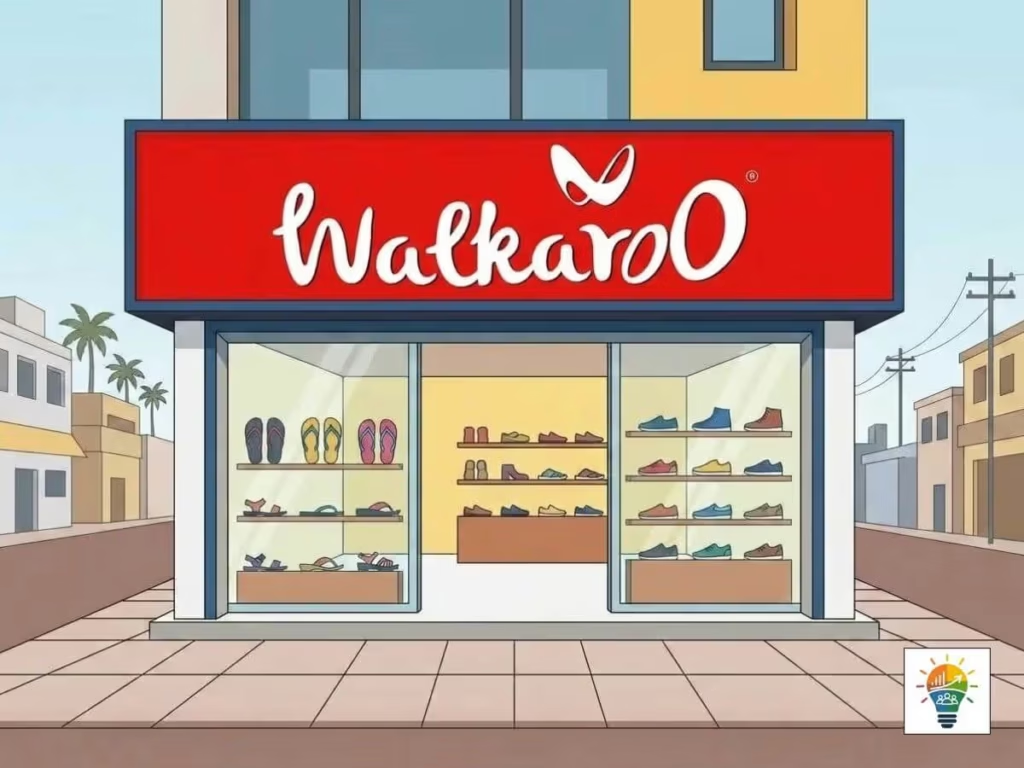
It reaches more than 1.5 lakh retail outlets through a network of around 750 distributors. That is the kind of distribution muscle that makes a business opportunity genuinely worth looking at — and that is exactly what this article breaks down for you.
If you are thinking about becoming a Walkaroo dealer or distributor in India, the first question on your mind is simple — how much will this cost me? Let us get into it properly.
In this post,
What Is Walkaroo?
Walkaroo International Private Limited is based in Coimbatore, Tamil Nadu, and operates over 12 manufacturing units across Kerala, Tamil Nadu, Karnataka, Gujarat, and Rajasthan.
The company makes PU (polyurethane) footwear — sandals, slippers, casual shoes, sports shoes, formal footwear, and kids’ footwear — across more than 1,200 styles.
The product sits at the sweet spot of the Indian market: affordable, decent-looking, and functional. Walkaroo’s biggest sellers are slippers priced around ₹300–₹800, which means the product moves fast and the customer base is enormous. India consumes roughly 200 crore pairs of footwear every year, and Walkaroo has carved out close to 5% of that market — a number the company is actively pushing higher as it expands its northern India presence.
For a dealer, this means you are not creating demand from scratch. The brand already has recognition, advertising support (they have roped in Bollywood names like Aamir Khan and Varun Dhawan for campaigns), and a product range that suits Tier 2 and Tier 3 towns as much as metro areas.
The Two Business Models You Can Choose
When people say “Walkaroo dealership,” they usually mean one of two things, and the investment figures are very different for each.
Retail Dealer / Shop Owner:
You stock Walkaroo products at your existing footwear store or open a new outlet. You source from a Walkaroo distributor in your area and sell directly to the end customer. This is the lower-investment route and the more common entry point.
Distributor / Territory Distributor:
You cover a specific district or region, supply to multiple retail shops, and manage your own warehouse and delivery. This requires a higher investment but gives you a recurring B2B income stream as retailers keep reordering.
Both are legitimate paths, and many people start as retailers and later grow into distributors as their volumes increase.
How Much Does a Walkaroo Retail Dealership Cost?
Shop Space and Deposit
You will need a minimum of 200–400 sq ft for a focused footwear outlet. In a Tier 2 city, rent on a good main-road location ranges from ₹15,000 to ₹40,000 per month. In a metro or large city, expect ₹50,000 to ₹1.5 lakh monthly. On top of rent, landlords typically ask for a security deposit equal to 6 to 12 months’ rent. So if your monthly rent is ₹25,000, your deposit alone could be ₹1.5 lakh to ₹3 lakh upfront — before you even begin.
Shop Interior and Fixtures
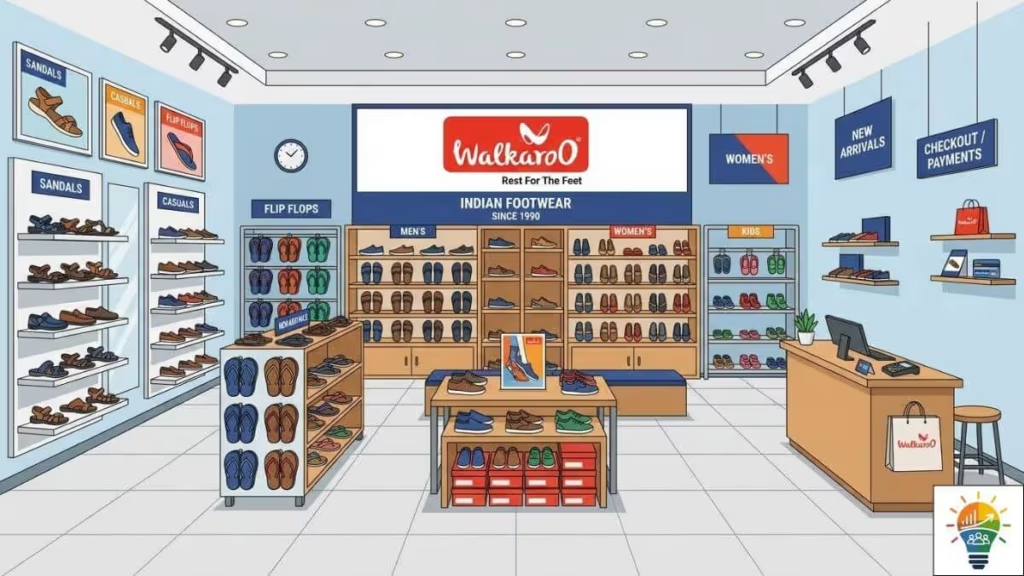
A footwear outlet needs shoe display racks along the walls, a sitting arrangement for customers, good lighting (bright white light, not yellow — it shows product colours accurately), and proper flooring. A clean, functional fit-out for a 300 sq ft shop typically costs between ₹1.2 lakh and ₹3 lakh. If you want brand signage or a slightly premium look, add another ₹50,000 to ₹1 lakh for that.
Initial Inventory (Stock)
This is the biggest cost in any footwear business — and the most important to plan correctly. For a retail dealership, your opening stock should cover multiple categories (men’s, women’s, kids’), multiple price points (entry-level ₹200 items through ₹1,000+ shoes), and multiple sizes. Understocking kills footwear businesses because a customer who doesn’t find their size walks out and may not return.
For a mid-sized Walkaroo retail outlet, a realistic opening inventory investment is ₹3 lakh to ₹8 lakh. If you are targeting a smaller town with a focused range, ₹2.5 lakh may be sufficient. In a larger outlet, ₹10 lakh or more is not unusual.
Licensing and Registration
Getting your paperwork right from day one saves you a lot of trouble later. You will need a GST registration (mandatory once annual turnover crosses ₹40 lakh, and practically necessary from day one since you are buying stock with GST applied), a Shop and Establishment Act licence from your local municipal body, and a Trade Licence from the local municipal corporation. Registration and compliance costs for a fresh setup typically run between ₹15,000 and ₹50,000.
Billing Software and Hardware
A simple billing system with GST-compliant invoicing and size-colour inventory tracking is not optional anymore — it helps you manage reorders intelligently. A basic setup with a desktop or tablet, a receipt printer, and a barcode reader costs around ₹40,000 to ₹1 lakh depending on the software subscription you choose.
Dealership Agreement / Margin Deposit
Walkaroo does not operate a traditional franchise model with a heavy franchise fee. However, when tying up with a distributor or the company directly, some form of a security deposit or advance purchase minimum is usually expected. This varies by territory and distributor, but a rough working capital buffer of ₹1 lakh to ₹2 lakh is sensible to keep aside.
Total Investment
| Cost Head | Tier 2 City Estimate | Metro / Large City Estimate |
|---|---|---|
| Shop Deposit (6–12 months rent) | ₹1.5 – ₹3 lakh | ₹4 – ₹10 lakh |
| Interior and Fixtures | ₹1.2 – ₹2.5 lakh | ₹2.5 – ₹5 lakh |
| Opening Inventory | ₹3 – ₹6 lakh | ₹6 – ₹12 lakh |
| Licensing and Registration | ₹15,000 – ₹30,000 | ₹30,000 – ₹50,000 |
| Billing and Hardware | ₹40,000 – ₹70,000 | ₹60,000 – ₹1 lakh |
| Working Capital Buffer | ₹1 – ₹1.5 lakh | ₹2 – ₹3 lakh |
| Total Estimate | ₹7 – ₹14 lakh | ₹15 – ₹32 lakh |
These numbers are realistic ranges, not guarantees. Your actual cost will depend on your city, the size of the outlet, and whether you own or rent the space.
How Much Can You Earn as a Walkaroo Dealer
The margin structure in footwear retail is one of the more attractive ones in the fast-moving consumer goods space. Retailers dealing in brands like Walkaroo, Paragon, and VKC typically earn gross margins of 25% to 35% on retail prices. Distributors earn lower per-unit margins — usually 10% to 20% — but compensate through volume.
To put it in concrete terms: if a pair of Walkaroo sandals retails at ₹500 and you bought it at ₹350 from your distributor, your gross margin is ₹150 per pair. Sell 200 pairs a month and you are looking at ₹30,000 gross margin — before rent, staff costs, and electricity. A well-run outlet in a decent location can realistically hit ₹1.5 lakh to ₹3 lakh in monthly revenue once it gets going, which translates to ₹40,000 to ₹80,000 in gross profit monthly. Break-even on a Tier 2 investment is typically achievable within 12 to 24 months if the location is right.
How to Apply for a Walkaroo Dealership
Walkaroo does not run an open public franchise portal like some other brands. The standard path is to reach out directly through the company’s official website.in and use the contact or business enquiry section. You can also approach an existing Walkaroo distributor in your region and register as a retail dealer under them — this is actually how most new retail dealers start.
For distributor-level partnerships, the company’s regional sales team evaluates your territory, storage capacity, financial capacity, and market reach before signing you on. Having prior experience in FMCG distribution or footwear retail clearly helps your case.
Location is everything in footwear retail. A shop on a school-facing road, near a market, or close to a bus stand will consistently outperform one tucked into a residential lane. Footfall, not just rent, drives this business.
Seasonal demand also matters. In North India, open footwear slows post-Diwali as the weather shifts to closed footwear — which Walkaroo also offers. Plan your stock mix accordingly, especially in the first year.
Finally, Walkaroo’s product range is strongest in the mass-market segment. If your local area skews toward premium buyers looking for Bata or Liberty-priced products, you may want a multi-brand approach with Walkaroo as one of the anchor brands rather than the sole focus.
The Indian footwear retail market is growing at a CAGR of nearly 5% through 2028, and Walkaroo is one of the brands actively building its distribution network across non-southern markets. For an entrepreneur with ₹8–15 lakh ready to deploy, a Walkaroo dealership in the right location is a grounded, realistic small business with clear income potential and the backing of a ₹2,000+ crore brand.

Suraj Shetty
Suraj Shetty has over 8 years of experience in small business, startups, and business consulting. He shares practical insights and proven strategies to help entrepreneurs discover new opportunities and grow their businesses sustainably.

Ravi Shankar
28 years of experience in business consulting across diverse industries