Mattresses are one of those things people do not think about — until they do. When they do, a lot of them end up on Wakefit’s website.
That is exactly what makes this brand interesting from a business point of view.
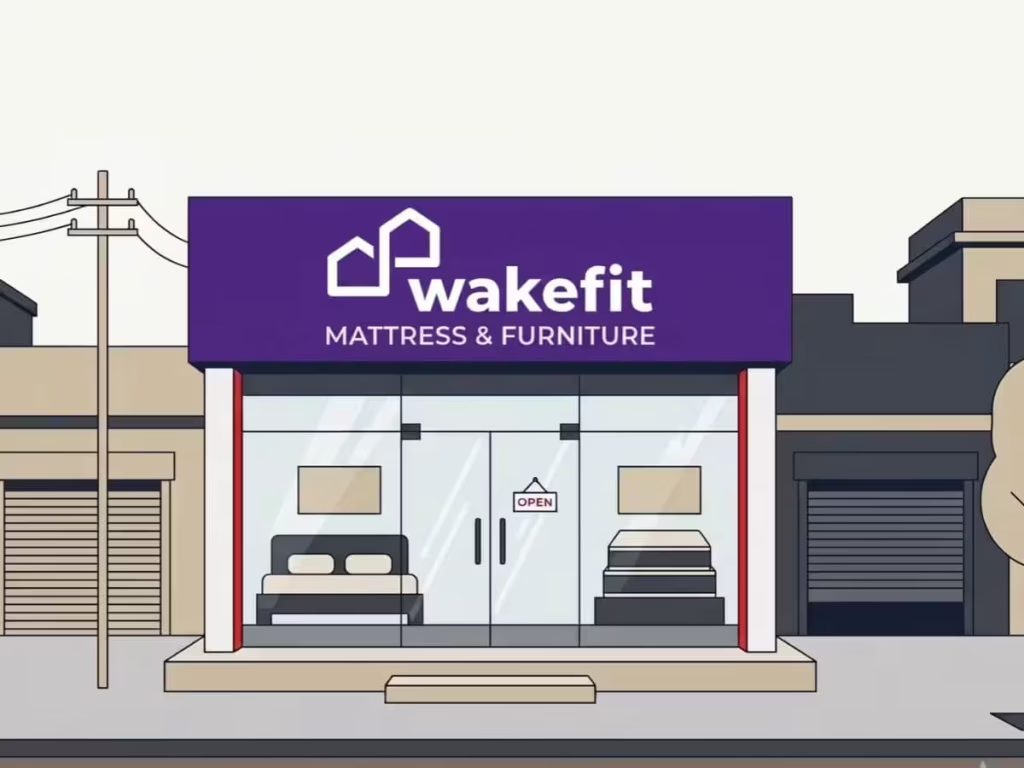
If you have been thinking about starting a business in the home furnishings or mattress space, Wakefit must have crossed your mind at least once. It is a brand people actually know, actually search for, and — more importantly — actually buy from.
That is not nothing. In a country where brand trust is hard to build, Wakefit has managed it in under a decade.
Now the question is, can you become a part of this business as a dealer or franchise partner? If yes, how much investment does it require?
So, let us get into it.
In this post,
What Kind of Business Model Does Wakefit Follow?
First, you need to understand how Wakefit distributes its products — because this directly affects your opportunity as a potential dealer or franchise partner.
Wakefit started in 2016 as a pure online, direct-to-consumer (D2C) brand. No middlemen, no distributors, just the company selling directly to customers through its own website. That was their whole identity.
Historically, Wakefit’s own website was the biggest pillar of its business. But increasingly, the heart of the company’s business is shifting to its expanding network of “company owned, company operated” (COCO) stores.
That word — COCO — is important for anyone looking at a dealership opportunity. It means Wakefit runs its own stores, with its own staff, under its own management. They are not handing keys over to independent franchise owners the way a traditional FMCG brand might.
The company has 72 Exclusive Brand Outlets (EBOs) across metros and Tier 2 cities, operated under the FOCO (Franchise-Owned, Company-Operated) model. This means that, under FOCO, you own the property and put up the capital, but Wakefit runs the operations.
You are essentially a property partner, not a traditional franchise owner running your own show.
Wakefit Franchise Cost
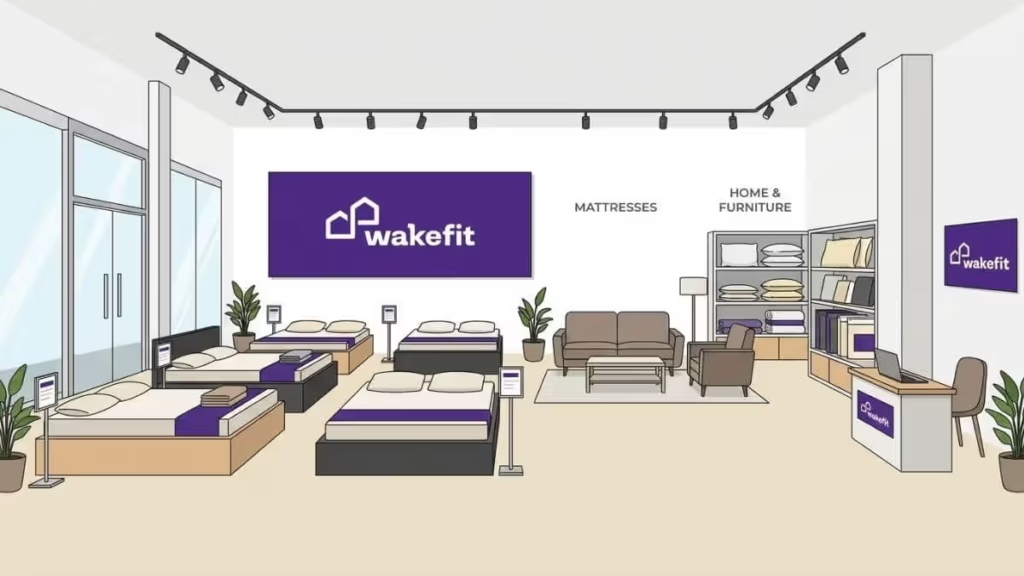
Does Wakefit Offer a Franchise at All?
Yes — but with conditions.
Wakefit requires a minimum investment of ₹20 lakh in a 600+ sq ft commercial space under its Wakefit Brand Store model. Wakefit currently operates 100+ outlets across India.
Here is a breakdown of the costs:
| Component | Amount |
|---|---|
| Setup CapEx (interiors, branding, fixtures) | ₹20 lakh |
| Franchise Fee | ₹3 lakh |
| Royalty on Revenue | 4% |
| Minimum Space Required | 600+ sq ft |
| Total Upfront Commitment | ~₹23 lakh |
Adding setup, franchise fee, working capital, and deposit, the total upfront commitment starts around ₹23 lakh. The franchise fee alone is about 13% of that.
So if you have a decent commercial space in your city and around ₹23–25 lakh to put in, you are in the ballpark. This is actually quite accessible compared to other furniture or home brands that ask for ₹50 lakh and above.
What Are You Getting Into as a Wakefit Partner?
This is where you need to think carefully — not just about the brand, but about the business model behind it.
Wakefit has been on an aggressive expansion drive. The company launched its first store in March 2022 in Lucknow and expanded to 98 stores by December 31, 2024. Going ahead, Wakefit plans to open 117 additional COCO stores across cities including Mumbai, Noida, Bengaluru, Ghaziabad, Bhubaneswar, Lucknow, Gurgaon, Tumkur, Vizag, Kozhikode, Thanjavur, Ambala, and Sonipat.
Wakefit’s offline retail business grew 21% year-on-year, supported by the addition of 27 new company-owned and company-operated stores. With these additions, Wakefit’s retail network expanded to 165 stores, up from 138 outlets in the previous quarter.
That kind of growth tells you the brand is serious about offline retail. People are walking into these stores, feeling the mattresses, testing the sofas — and then buying. That physical experience is proving valuable for a brand that built its name entirely online.
What Does Wakefit Actually Sell?
If you are putting ₹23 lakh into a store, you want to know what you will be selling and whether it moves.
Wakefit is no longer just a mattress brand. It is the only D2C home furnishings brand in India that has scaled all three categories — mattresses, furniture, and furnishings — with each crossing ₹100 crore in annual revenue. Mattresses make up 61% of sales, furniture accounts for 28%, and furnishings contribute 11%.
For a store, this is actually a strong product mix. Mattresses bring in regular footfall (people upgrade every 7–10 years), furniture adds higher ticket sizes, and furnishings give customers a reason to return more often. You are not dependent on one product.
Who Can Apply for a Wakefit Franchise?
The requirements are not very complicated. You will need capital of at least ₹20 lakh and a site of 600+ sq ft. The business model is retail-based furniture sales, which does not require specialised professional credentials in India.
So to put it simply, if you have the money, the space, and the commitment to run a retail outlet, you can apply. No specific educational qualification or industry background is mentioned as mandatory.
How to Apply for a Wakefit Franchise?
The official way to explore a partnership is through Wakefit’s website. Head to wakefit.co and look for their Become a Dealer or franchise inquiry section. You can also reach their business development team through the contact options available on the site.
Since Wakefit is now a listed company with a professional management structure, expect the process to be fairly structured — they will evaluate your location, space, and financial readiness before approving a store.
What You Should Think About Before Signing Up
A ₹23 lakh investment is not pocket change. Before you move forward, here are a few things worth weighing:
Location matters enormously.
Wakefit’s data shows that their strategy for adding new stores is data-driven, focusing on identifying locations with higher business potential and pinpointing underserved areas that could benefit from the store. If your city or area already has a Wakefit outlet nearby, it may affect your viability.
Understand the FOCO structure.
Under the FOCO model, operations are handled by Wakefit. That means you will have limited say in how the store is run day-to-day. If you are the kind of entrepreneur who wants full control, this model may feel restrictive.
Online-first brand meets offline reality.
Wakefit’s strength is its online reputation — customers already trust the brand before entering the store. This means your store benefits from pre-existing brand equity, which lowers your marketing effort significantly.
The royalty cut is 4%.
On a monthly revenue of, say, ₹10 lakh, you pay ₹40,000 as royalty. Factor this into your profitability calculations.
If you have the right location — a Tier 1 or strong Tier 2 city, with decent footfall from the kind of customers who spend on quality home products — a Wakefit Brand Store can be a solid investment at ₹23 lakh all-in.
The brand has strong recall, a growing product line, and a parent company that is now publicly listed and profitable. Offline retail is clearly their next big bet, and as a franchise or dealer partner, you get to ride that wave without building the brand from scratch.
That said, go in with clear eyes. This is not a passive investment — you will need to drive footfall, engage local customers, and make the store experience worth the visit. Wakefit brings the brand and the product; you bring the hustle.
For a small business investor in India looking at the home furnishings space, it is one of the more credible options available today.
Always verify the latest terms directly with Wakefit before making any financial commitment, as franchise terms can be updated periodically.

Suraj Shetty
Suraj Shetty has over 8 years of experience in small business, startups, and business consulting. He shares practical insights and proven strategies to help entrepreneurs discover new opportunities and grow their businesses sustainably.
Anoop Dewan
20 years of experience in Entrepreneurship