
If you run a hardware or building-material shop in a small town, you have probably heard dealers talk about Haisha Paints.
This paint brand is owned by Pidilite, the same company that owns Fevicol, Dr. Fixit, and M-Seal.
Haisha is a decorative paint brand from Pidilite Industries. It was launched in select geographies in 2023, and the range has since grown to cover interior emulsions, ceiling emulsion, wall primer, floor coat, and more.
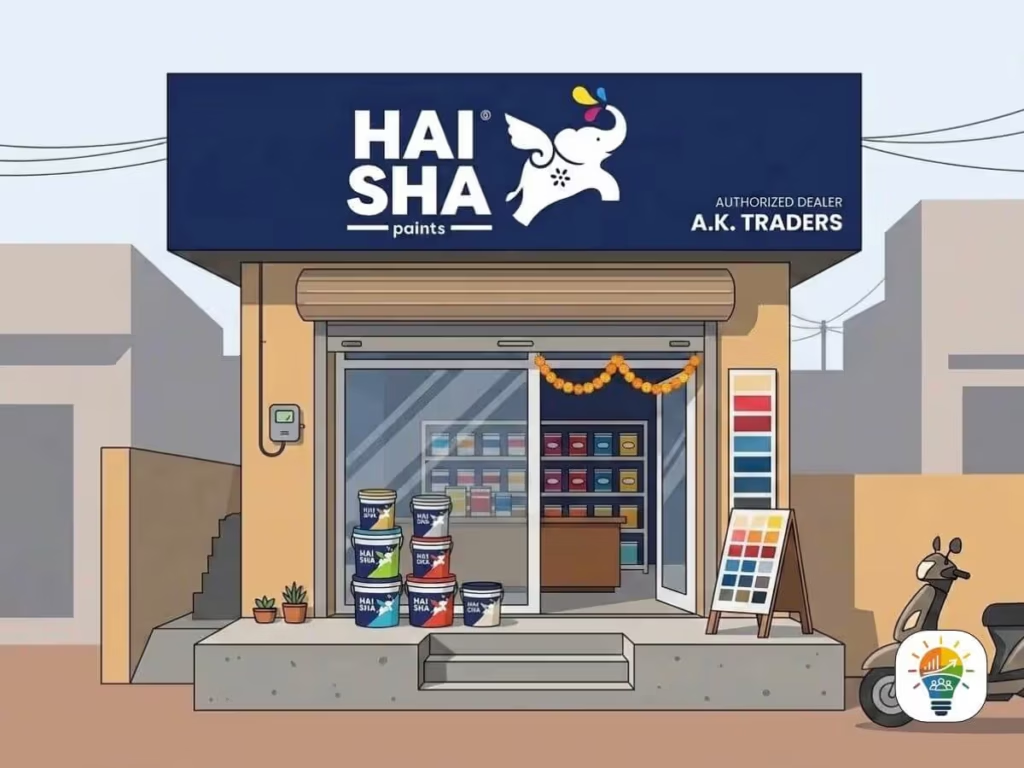
The brand has positioned its products to fill price gaps and benefit gaps in the market, which is a smart way to enter a category dominated by older giants.
The real advantage for a dealer is Pidilite’s existing network. Hardware shops, building material stores, and contractors already buy Fevicol and Dr. Fixit. Haisha rides on that trust, so a dealer does not have to start from zero when talking to a painter or contractor.
How Much Does a Haisha Paints Dealership Cost?
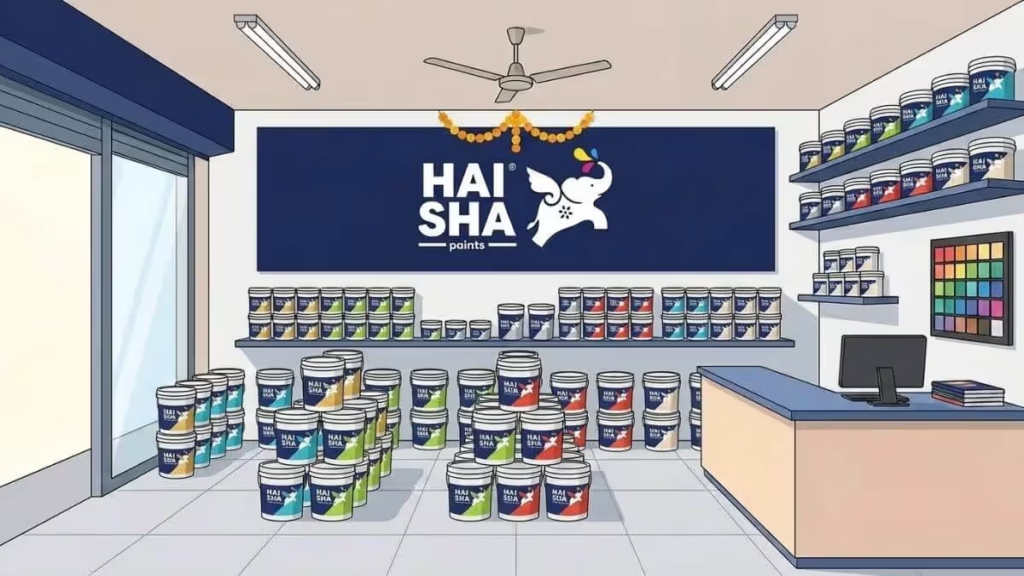
Like most paint dealerships in India, Haisha does not work on a heavy franchise fee. Your money goes into your own shop, opening stock, and working capital. For a small-town shop of around 300 to 500 sq ft, the approximate budget looks like this.
| Expense | Approximate Cost |
|---|---|
| Opening stock | ₹2,00,000 to ₹4,00,000 |
| Shelving, racks and counter | ₹30,000 to ₹80,000 |
| Signage and display | ₹10,000 to ₹25,000 |
| GST and shop registrations | ₹2,000 to ₹5,000 |
| Working capital buffer | ₹1,00,000 to ₹2,00,000 |
| Total without tinting machine | ₹3.5 lakh to ₹7 lakh |
Shop rent or deposit comes on top. In smaller cities, it usually runs around ₹15,000 to ₹40,000 per month, and metros cost far more.
If you already own a shop or godown, your cash need drops sharply. If you are starting in a rented space, plan for the higher end. A reasonable all-in figure for most new dealers is about ₹5 lakh to ₹8 lakh.
Do You Have to Buy the Tinting Machine?
This is the biggest swing factor in your budget. On other brands, a semi-automatic tinting machine costs about ₹1.5 lakh to ₹2 lakh, and a fully automatic one about ₹2.5 lakh to ₹3.5 lakh.
With Haisha, the offer is friendlier. A sector report said Pidilite has been giving free tinting machines, higher dealer margins and incentives, and 10% free paint to attract dealers. That report is a couple of years old, so confirm what is on offer today and get these points in writing.
- Is the machine free, on deposit or on rent?
- Who pays for repairs and colourant refills?
- What happens to the machine if you stop dealing in Haisha?
A tinting machine is worth having. Installing one can raise a dealer’s sales throughput by about three times, and Indigo Paints has reported a 2.5x jump. A shop that can mix any shade on the spot sells far more than one stocking only ready colours.
Haisha Paint Products Pricing
You will be competing with Asian Paints, Berger and Birla Opus, so price matters. Analysts say Haisha is positioned at a 5 to 10 per cent discount to peers. Approximate retail prices for a 20-litre pack are as follows, and they vary by city.
- Classic Interior Emulsion at about ₹2,850
- Select Emulsion at about ₹3,800
- Interior Wall Primer at about ₹3,360
- Ceiling Emulsion at about ₹4,650
- Luxury Emulsion at about ₹10,060
In smaller towns, the Classic and Select ranges will bring most of your volume. Luxury emulsion moves slowly, so stock it in small quantities.
The Profit Margin in Haisha Paints Dealership?
Established paint dealers typically earn around 10 to 15% margin on sales. Haisha is reported to offer more than that to attract dealers, so a margin of about 12 to 18% is a fair planning range. Confirm the exact slab with your distributor.
Here is a simple example. Say your shop sells ₹3 lakh of paint a month at a 12% margin. That gives you ₹36,000 before expenses. After rent of ₹15,000, a helper’s salary of ₹8,000, electricity, and transport, little is left.
At ₹6 lakh of monthly sales, the same margin gives ₹72,000, while fixed costs barely move. Sales volume turns a paint shop profitable, and a tinting machine plus a loyal painter network is how you get there. On a ₹6 lakh investment, a payback period of about 18 to 30 months is realistic for a well-run shop.
The Possible Risks in this Business
The cheque you write to the company is rarely the problem. These costs are.
Painter credit.
Painters and contractors often pay after the job is done. Working capital is the real investment in a paint shop. If ₹80,000 is stuck with painters for 45 days, you still have to restock and pay rent.
Slow-moving shades.
A new brand means customers ask for shades you did not stock. Keep fewer SKUs and sell more of each.
Brand awareness.
Haisha is not yet a household name like Asian Paints. Expect to spend time and some money on painter meets, demos, and local advertising, roughly ₹10,000 to ₹30,000 in the first few months.
Price undercutting.
As more dealers enter an area, undercutting at the dealer level can start. Know your local competition before you sign.
Haisha vs Asian Paints vs Berger, Which Costs Less?
Haisha is likely to need the lowest upfront amount if the free-machine offer still holds. Here is how the established brands compare.
- Asian Paints needs roughly ₹6 lakh to ₹8 lakh for an entry-level setup and ₹10 lakh to ₹15 lakh for a mid-size showroom
- Berger Paints runs about ₹2.5 lakh to ₹5 lakh without a tinting machine and ₹4.5 lakh to ₹9 lakh with one
- Indigo Paints sits at about ₹2 lakh to ₹5 lakh
The trade-off is clear. A big brand gives you instant customer pull but needs heavy investment and follows tighter rules. Haisha gives you a lower entry cost and better terms, but you must build the demand yourself.
How to Apply for a Haisha Paints Dealership
The practical route is simple.
- Contact your nearest Pidilite distributor or sales officer. If you already stock Fevicol or Dr. Fixit, start with your existing distributor.
- Confirm that Haisha is available in your district.
- Arrange GST registration, a trade licence and a shop with decent storage.
- Ask for a written list of margins, schemes, machine terms and the minimum opening order.
- Visit one or two existing Haisha dealers in your region and ask how their sales and payments have gone.
If you already run a hardware or building materials shop, adding Haisha takes far less capital than starting a standalone paint store.
For an entrepreneur with ₹5 lakh to ₹8 lakh and a shop in a small town, Haisha deserves a serious look. The parent company is financially strong, the range now covers primers, emulsions and ceiling paints, and the entry cost is lower than at the big three.
It is a poor fit if you need quick returns or cannot carry painter credit. A new brand in a pilot phase can also change its terms. Never pay money without a written agreement, and never stock more than your area can sell in two months.
Run the numbers with your own rent, your own local painters, and the actual margin slab you are offered. A good paint shop is built over the years, one trusted painter at a time.

Suraj Shetty
Suraj Shetty has over 8 years of experience in small business, startups, and business consulting. He shares practical insights and proven strategies to help entrepreneurs discover new opportunities and grow their businesses sustainably.

Ravi Shankar
28 years of experience in business consulting across diverse industries