
Last Updated on October 19, 2026 by Suraj Shetty and Kaushik Nitin
Your neighbour’s house renovation is happening. The builder arrives, and without much deliberation, he heads straight to the Johnson tiles showroom down the road.
That is the kind of brand pull that makes H&R Johnson one of the most sought-after tile dealerships in India right now.

Since 1958, H&R Johnson — a division of Prism Johnson Limited — has been the pioneer of ceramic tiles in India.
Today, the brand has around 900 authorised dealers and over 10,000 sub-dealers across the country, covering everything from ceramic wall tiles to glazed vitrified, industrial, and even antimicrobial tiles. For someone looking to get into the building materials trade, this dealership sits in a sweet spot.
If you are planning to start a tiles dealership business in India, you can partner with a reputable brand like H&R Johnson and run a successful dealership.
This article contains all the information related to the H&R Johnson tiles dealership, which includes H&R Johnson tiles dealership cost, profit margin, monthly expenses, break-even time, hidden costs, shop space required, etc.
In this guide,
H&R Johnson Tiles Dealership Cost
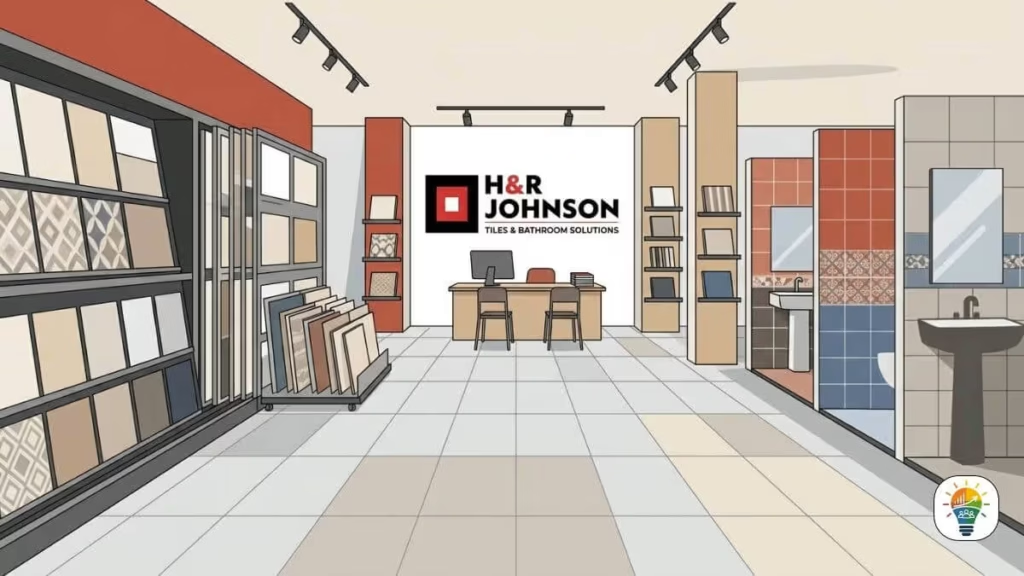
The total investment to open a brand-exclusive H&R Johnson dealership falls between ₹35 lakh and ₹55 lakh. Here is how that breaks down.
| Cost Head | Estimated Amount |
|---|---|
| Security deposit to the company | ₹2 lakh |
| Initial inventory purchase | ₹25–32 lakh |
| Showroom interiors and display setup | ₹3–5 lakh |
| Miscellaneous (signage, billing system, etc.) | ₹1.5–2 lakh |
| Shop advance + first 2 months’ rent (if rented) | ₹2–6 lakh |
| Working capital buffer | ₹5–8 lakh |
The single biggest variable here is inventory. H&R Johnson expects dealers to carry a broad product range across their catalogue — floor tiles, wall tiles, Marbonite vitrified tiles, Endura industrial tiles, and bathware. The more you stock, the better your sales potential, but that also means a higher upfront commitment.
If you own a commercial space, you can cut out the rent deposit and save ₹2–6 lakh right away. In a Tier 2 or Tier 3 city, shop rents are lower, and setup costs run toward the ₹35–40 lakh end. In metros or premium commercial areas, expect to hit ₹50–55 lakh easily.
The Monthly Running Costs
Once you are open, these are the monthly expenses for a mid-sized setup in a Tier 2 city:
| Monthly Expense | Estimated Cost |
|---|---|
| Shop rent (if applicable) | ₹20,000–₹60,000 |
| Staff salaries (2–3 people) | ₹30,000–₹60,000 |
| Electricity | ₹6,000–₹12,000 |
| Transport and delivery | ₹8,000–₹15,000 |
| Restocking and working capital | ₹1–3 lakh |
| Miscellaneous overheads | ₹5,000–₹10,000 |
Total monthly operating costs, excluding restocking, land somewhere between ₹70,000 and ₹1,60,000, depending on your city and scale.
In a metro city, rent alone can push this to ₹2–3 lakh per month. A dealer who owns the shop clearly has a structural cost advantage that compounds over time.
Profit Margin in H&R Johnson Tiles Dealership
The gross margin on H&R Johnson tiles for authorised dealers runs between 10% and 15% on average. If you push volumes and hit the company’s monthly sales targets consistently, the brand also offers additional bonuses and scheme benefits — typically kicking in after the first six months — that can take your effective margin closer to 14–16%.
Let us put that in real numbers. Say your showroom does ₹6 lakh in monthly sales (a reasonable mid-range figure for a Tier 2 city dealership after the first year):
- At 12% margin, you net ₹72,000 in gross profit
- Deduct ₹80,000–₹1,00,000 in monthly overheads
- Net profit at this scale is modest — around ₹0 to ₹20,000
For the numbers to make proper sense, you need monthly sales of at least ₹8–12 lakh. At ₹10 lakh in sales with a 13% margin, you gross ₹1,30,000 — enough to cover overheads and pocket ₹30,000–₹50,000 net. Builders or contractors who buy in bulk can make a significant difference to your monthly run rate.
Dealers who tap into project sales — housing societies, commercial buildings, hotels — often see monthly revenues in the ₹15–25 lakh range, where margins start looking more attractive.
The Break-Even Time
A realistic break-even period for an H&R Johnson dealership is 18 to 30 months. This assumes:
- You start generating consistent sales from month three or four
- Overheads stay controlled
- You are not paying metro-level rent
Dealers in smaller cities with lower overheads and good local contractor relationships have reported breaking even in 15–18 months. In a competitive metro area with high rent, 30–36 months is more realistic.
Hidden and Overlooked Costs
A few expenses that first-time dealership applicants often underestimate:
Tile breakage and returns. Tiles chip and crack during transit and storage. Budget for 3–5% loss on inventory.
Slow-moving stock. Some tile designs go out of trend faster than expected. Dead inventory is a real cash flow trap.
Marketing and local advertising. The H&R Johnson brand itself helps, but local visibility — banners near construction sites, WhatsApp groups with interior designers, tie-ups with architects — requires your own spend. Budget at least ₹5,000–₹15,000 per month.
Seasonal slowdowns. The tiles business is closely tied to construction activity, which slows during monsoon months. Plan your working capital for a 2–3 month lean period each year.
GST working capital. You pay GST upfront on inventory purchases but collect it from customers later. This gap eats into your cash flow.
Also Read:
Kajaria Tiles Dealership – Complete Guide – Cost & Profit Margin
Somany Ceramics Dealership Cost & Profit Margin – Complete Guide
What Space Do You Need?
The company expects a minimum of 2,000 square feet in total, split roughly as follows:
- Showroom area (for display tiles, sample boards, customer walk-ins): 800–1,000 sq ft
- Warehouse or stockroom (for inventory and boxes): 1,000–1,200 sq ft
A clean, well-lit showroom matters a lot in the tiles business. Customers want to see what a tile looks like in different lighting before they buy, so the display area must reflect that. Some dealers also invest in 3D visualisation screens or large-format tile panels, though these are optional upgrades for the budget-conscious starter.
Can You Reduce Initial Investment?
Yes, there are a few ways to lower your entry cost.
One is to start as a sub-dealer under an existing H&R Johnson authorised dealer. This lets you operate with significantly less capital — sometimes just ₹8–15 lakh — and learn the trade before committing fully. Sub-dealers typically earn a slightly thinner margin (7–10%), but the risk is lower.
Another option is to combine the H&R Johnson line with non-competing accessories like grouts, adhesives, and tile trims. This improves per-customer revenue without adding complex inventory.
If the full dealership format feels like too large a commitment, the company also has a House of Johnson format, which is a smaller-format showroom with a curated product range. Entry costs for this can be lower, though the company’s requirements for this specific format vary by region.
Also Read:
Simpolo Ceramics Dealership – Complete Guide – Cost & Profit Margin
RAK Ceramics Dealership Cost & Profit Margin – Complete Guide
The Market Opportunity
Tier 2 and Tier 3 cities are driving a significant chunk of growth for H&R Johnson Tiles, fuelled by rising real estate development, affordable housing demand and increased renovation activity.

H&R Johnson sells products under multiple sub-brands — Johnson Tiles, Johnson Marbonite, Johnson Endura, Johnson Porselano — giving dealers a wide product ladder to offer customers at different price points. This range helps you serve both the mass-market customer looking for simple floor tiles and the premium buyer looking for large-format glazed vitrified options.
That said, competition is real. Kajaria, Somany, Asian Granito, and local Morbi-based brands give buyers plenty of alternatives. Your location, your relationships with local contractors, and the quality of your showroom experience will decide how much of the pie you actually win.
Things That Can Go Wrong
Be aware of a few genuine risks before signing on.
The tiles business is capital-intensive and inventory-heavy. If construction activity slows in your city, so do your sales. Margins are modest at the start, and the break-even timeline is long compared to many other trade businesses.
There is also the question of location. A showroom tucked away on a back street, away from hardware markets or construction zones, will struggle regardless of brand. Footfall and visibility matter enormously.
Finally, managing credit to builders and contractors is a common headache. Many buyers in the construction industry ask for 30–60 day credit. Running a dealership on thin margins with large outstanding amounts can get stressful quickly.
An H&R Johnson tiles dealership is a credible long-term business with a strong brand behind it. The entry investment is not small — expect ₹35–55 lakh — and the returns in the early phase will be modest.
But for someone with an interest in the building materials trade, good local connections, and a willingness to build relationships with contractors and builders over time, this is a business with real legs. The key is to go in with realistic expectations, keep overheads lean in the early months, and focus on project-linked sales as quickly as possible.
SmallBusinessHub.in is an independent informational website and is not affiliated with the brands or companies mentioned unless explicitly stated. Business, franchise, dealership, and investment information is provided for general informational purposes only and may change over time. Always verify details directly with the relevant company before making a business decision. We do not provide financial, legal, or investment advice. [Read our full Disclaimer].

Suraj Shetty
Suraj Shetty has over 8 years of experience in small business, startups, and business consulting. He shares practical insights and proven strategies to help entrepreneurs discover new opportunities and grow their businesses sustainably.

Kaushik Nitin
30 years of experience in business consulting across diverse industries

Comments are closed.