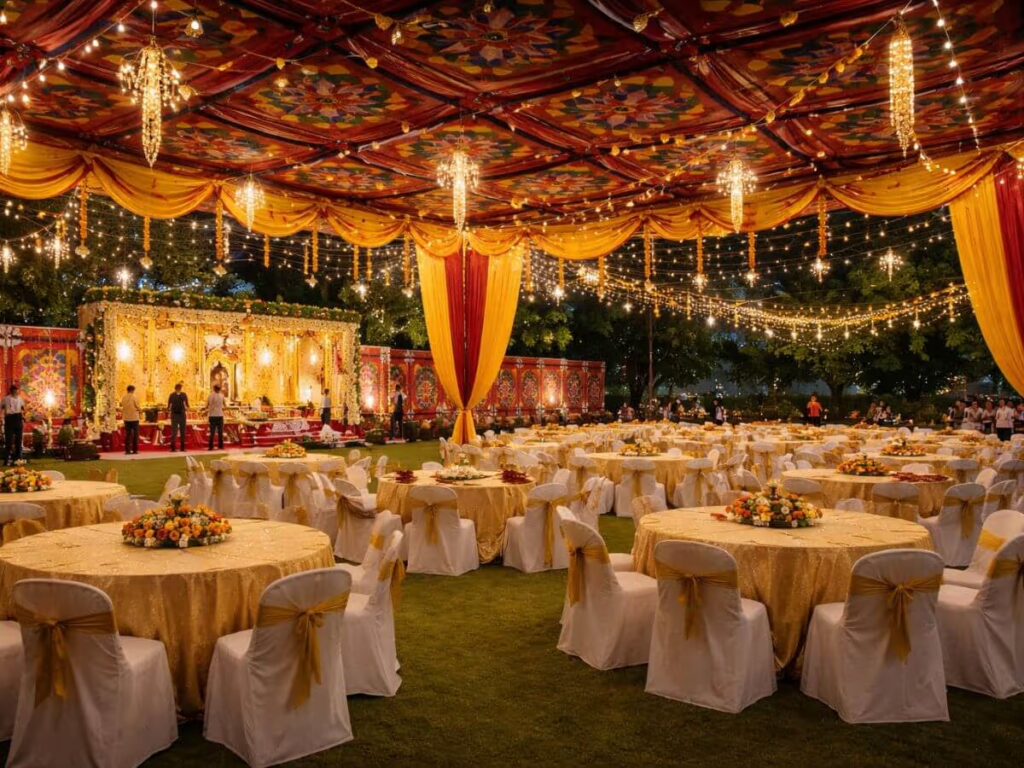
Walk into any wedding, birthday party, village function, or political gathering in India, and you’ll almost always see a colourful tent setup.
Tent houses play a huge role in making events possible. Because celebrations happen all year round in India, the tent house business has become a reliable small business option for many entrepreneurs.
One of the biggest reasons people consider this business is the relatively flexible investment. You don’t always need a huge showroom or expensive machinery to get started.
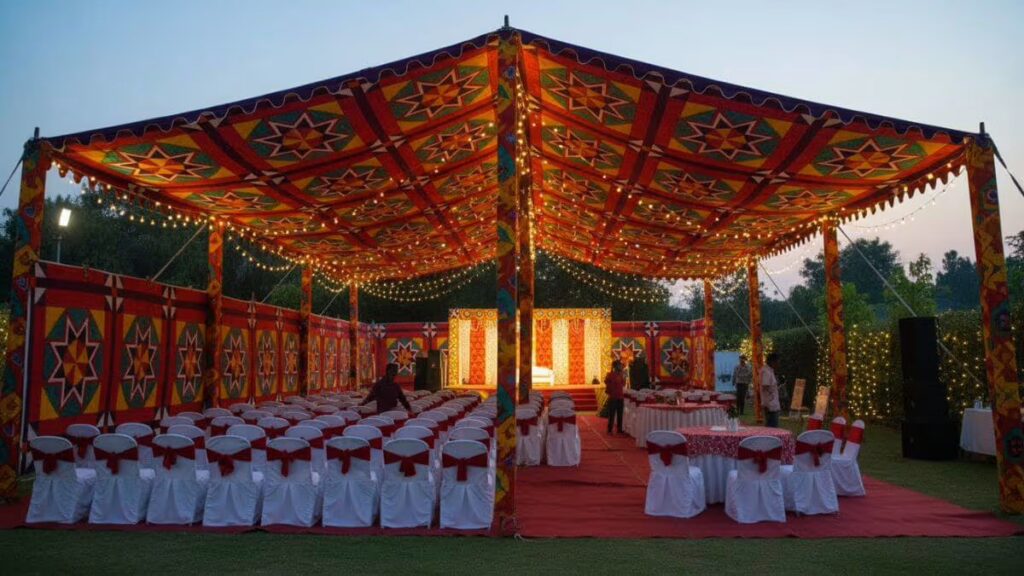
The right equipment, a few workers, and good local connections, even a small setup, can start getting bookings for weddings, festivals, school events, and community functions.
In this article, we will explain everything about the tent house business, including the investment required, equipment needed, monthly expenses, and the profit margin you can expect from this business.
Why the Tent House Business Is Still One of India’s Most Reliable Small Business Ideas
India celebrates. That is simply who we are. Weddings, birthdays, anniversaries, pujas, political rallies, religious functions, corporate events — the calendar never really empties out.
Even in the smallest towns and villages, people want their events to look good, and renting tent house equipment is the most practical way to make that happen.
What makes this business particularly attractive is the one-time investment model. Once you buy your equipment — tents, chairs, lights, fans, utensils, carpets — you are set for the next 10 to 15 years without major reinvestment.
You simply rent it out, collect your money, and repeat. No perishable inventory, no daily production costs, no complicated supply chain.
And unlike many seasonal businesses, a tent house generates income throughout the year. Wedding seasons do bring in the highest revenue, but birthday parties, school functions, puja pandals, and community events keep bookings coming in even during the off-season.
Total Investment Required to Start a Tent House Business in India
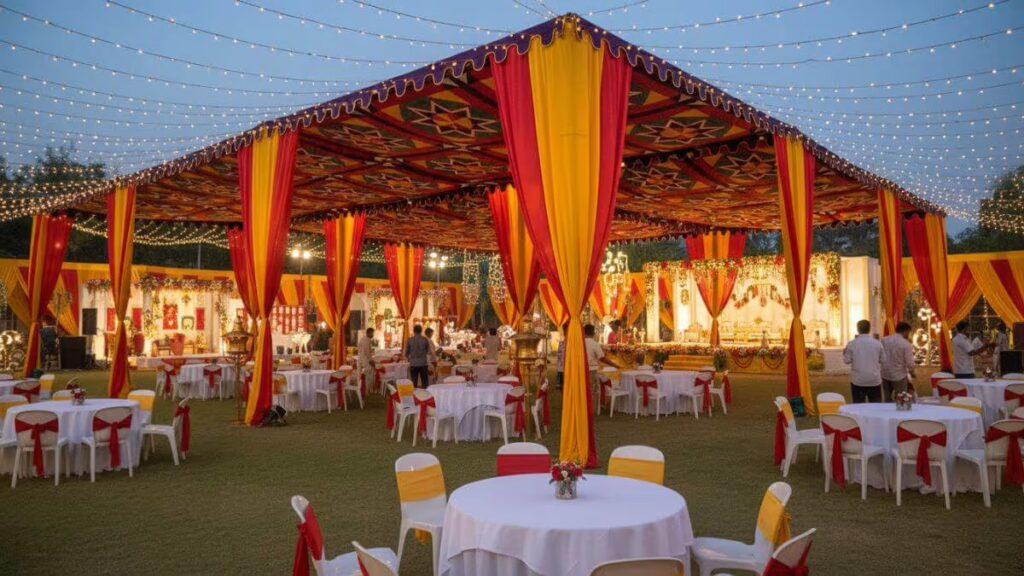
This is the most important question, and the honest answer is: it depends on the scale you want to start at.
Small-scale setup
₹1.5 lakh to ₹4 lakh
This is ideal if you are just getting started, operating in a small town or semi-urban area, and want to test the waters before going all in.
With this budget, you can buy a basic set of shamiyanas, around 100–150 chairs, fans, a few lights, basic utensils, and essential decoration items.
Khadi and Village Industries Commission (KVIC) officially estimates that a tent house can be started for around ₹4 lakh, with ₹1 lakh going toward a 500 sq. ft. storage shed and ₹3 lakh toward equipment purchase.
Medium-scale setup
₹5 lakh to ₹10 lakh
If you are in a tier-2 city or a dense town with regular event bookings, this range gives you a solid inventory — multiple tent sizes, 300+ chairs, better lighting and decoration options, a DJ-compatible sound system, and enough variety to handle two or three bookings simultaneously.
Large-scale or premium setup
₹15 lakh to ₹60 lakh
For those targeting big-fat-Indian-wedding clientele in metro areas or larger cities, the investment goes up significantly. This includes LED lighting setups, designer shamiyanas, premium cutlery, generator sets, and a dedicated transport vehicle.
Most beginners do well starting in the ₹2 lakh to ₹5 lakh range and scaling up as bookings grow.
Equipment Cost Breakdown
Here is an item-wise breakdown to help you understand where your money goes.
Shamiyana and tent material
The tent fabric, iron pipes, bamboo poles, ropes, and the structural frame for setting up the canopy. A basic set for a medium-sized event can cost anywhere from ₹40,000 to ₹1.5 lakh, depending on quality and quantity.
Chairs and tables
Plastic chairs are the standard, and you will need at least 200–300 pieces to start. Expect to spend ₹30,000 to ₹60,000. Tables add another ₹15,000 to ₹30,000.
Fans and lighting
Ceiling fans, pedestal fans, fairy lights, LED panels, and stage lighting. Budget ₹30,000 to ₹80,000 for a decent setup.
Carpets and floor coverings
Essential for indoor-style tent setups. Cost ranges from ₹15,000 to ₹40,000.
Utensils and kitchen equipment
Large-sized cooking vessels, serving trays, plates, glasses, and water drums. If you plan to include catering services, add a large gas stove as well. This can run between ₹20,000 and ₹60,000.
Sound system and DJ equipment
A basic sound system costs ₹25,000 to ₹70,000. A premium DJ setup with subwoofers and a mixing console will cost more.
Decorative items
Curtains, artificial garlands, stage backdrops, and entrance arches. Budget ₹20,000 to ₹50,000 here.
Storage space
You will need a place to store everything. If you do not own a space, renting a godown or shed reduces your upfront cost significantly. If you build or buy storage, factor in ₹1 lakh or more.
Transport
A tempo or mini-truck is essential for delivery and pickup. You can either hire one per booking or buy your own for around ₹3 lakh to ₹6 lakh as you scale.
Where to Source Your Tent House Equipment in India
Buying tent house equipment from the right place can save you 20% to 30% of your total investment.
Wholesale markets are your first and best option. Cities like Delhi (Sadar Bazaar), Mumbai (Dharavi and Bhendi Bazaar), Surat, Ludhiana, and Kolkata have dedicated wholesale markets where tent house equipment is sold in bulk at significantly lower prices than retail.
If you are buying chairs, shamiyanas, or lighting in large quantities, visiting these markets in person — even once — is worth the trip.
Local fabricators and workshops are great for iron-pipe tent structures, bamboo frameworks, and customised shamiyanas.
Getting your structural material made locally instead of buying it pre-assembled almost always works out cheaper, and you can specify the exact dimensions and strength you need.
Online B2B platforms like IndiaMart and TradeIndia are genuinely useful when you cannot travel. You can compare suppliers, request quotes, read reviews, and often negotiate prices directly through the platform.
Many tent house equipment suppliers on these platforms also offer bulk discounts and can deliver to your city. Just make sure to verify the seller’s ratings and ask for samples before placing a large order.
When you are just starting, approach an established tent house owner in a neighbouring area (not a direct competitor in your locality) and ask where they source their materials. Many will help, and this shortcut can save you months of trial and error.
How Many Workers Do You Need — And How to Manage Them?
This is the part of the tent house business that most beginners underestimate. The equipment is the investment, but the workers are the engine that makes it run.
A tent house is physically demanding work. Setting up a shamiyana requires carrying heavy iron poles and fabric, hammering stakes into the ground, managing ropes, laying carpets, and positioning furniture — all within a few hours before an event.
Then it all has to come down and be packed up afterwards. This is not office work.
For a small event (a birthday party or a small puja), two to three workers, along with you, can manage comfortably.
For a medium wedding setup, expect to need eight to twelve workers on the ground for a full day.
For large setups or multiple simultaneous bookings, you may need fifteen to twenty or more people working in shifts.
The challenge here is that you cannot and should not keep all these workers on a fixed monthly salary when you are starting out — the booking volume will not justify it.
The standard practice in the tent house business across India is to maintain a core team of two to three trusted, permanent workers who handle storage, maintenance, and bookings on slower days, and then hire daily wage workers on demand when an event comes in.
Daily wage labourers for tent house work typically earn between ₹400 to ₹700 per day, depending on your city, the nature of work, and the local labour market.
In bigger cities, this can go up to ₹800 to ₹1,000 per day for experienced setup workers. Per order, if you have ten workers for a day, your labour cost comes to roughly ₹5,000 to ₹7,000 — and this is normally factored into your event pricing.
Once you hire a few good workers for an event and they see you pay on time, they will come back and bring others. Over time, you build an informal pool of five to fifteen people you can call when you need them.
How Much Can You Earn from a Tent House Business?
On a regular month (non-wedding season), a small to medium tent house business in India can generate ₹25,000 to ₹40,000 in net income. During peak wedding months — typically November to February and May — that number can jump to ₹80,000 to ₹2 lakh or more per month, depending on how many bookings you handle.
Per order, once you account for labour costs of ₹5,000 to ₹7,000 and transport costs of around ₹3,000 to ₹5,000, your profit margin on a ₹1 lakh event order is typically ₹75,000 to ₹80,000. That is a margin most businesses can only dream of.
A well-established tent house can realistically earn ₹4 lakh to ₹5 lakh per year, with peak season alone accounting for a significant portion of that. If your total investment is ₹4 lakh, you recover it in under three years — and after that, nearly everything is profit.
Government Support and Loan Options
Under the Pradhan Mantri Mudra Yojana (PMMY), you can apply for a Shishu loan (up to ₹50,000), Kishore loan (₹50,000 to ₹5 lakh), or Tarun loan (₹5 lakh to ₹10 lakh) without heavy collateral.
Khadi and Village Industries Commission (KVIC) also supports tent house startups under its self-employment project reports. Banks are required to facilitate these loans, so if you have a solid business plan, getting ₹5 lakh to ₹9 lakh sanctioned is entirely realistic.
The tent house business may look simple from the outside, but it can become a strong and steady income source when managed properly. With
India’s growing demand for weddings, social functions, and outdoor events, the need for tents, seating arrangements, and event setups continues to remain high.
The good part is that you can start small and expand gradually. Many successful tent house owners began with just a few tents, chairs, and basic lighting. As their bookings increased, they slowly added more equipment, decorations, and services to attract bigger events.
Like any business, success depends on good planning, proper equipment maintenance, and strong local networking with caterers, event planners, and decorators.
When you build a reputation for reliability and quality setups, customers often come through word-of-mouth.
For entrepreneurs looking for a service-based business with consistent demand, the tent house business can be a profitable opportunity.

Suraj Shetty
Suraj Shetty has over 8 years of experience in small business, startups, and business consulting. He shares practical insights and proven strategies to help entrepreneurs discover new opportunities and grow their businesses sustainably.

Ravi Shankar
28 years of experience in business consulting across diverse industries