India’s roads are not exactly forgiving. From a waterlogged underpass in Mumbai during the monsoon to a broken-down truck on the Delhi-Agra Expressway, vehicle emergencies are a daily reality for crores of Indian drivers.
Yet, if you look around, there still aren’t enough professional towing services to handle the demand — especially outside the metros.
That’s the gap. And that’s your opportunity.
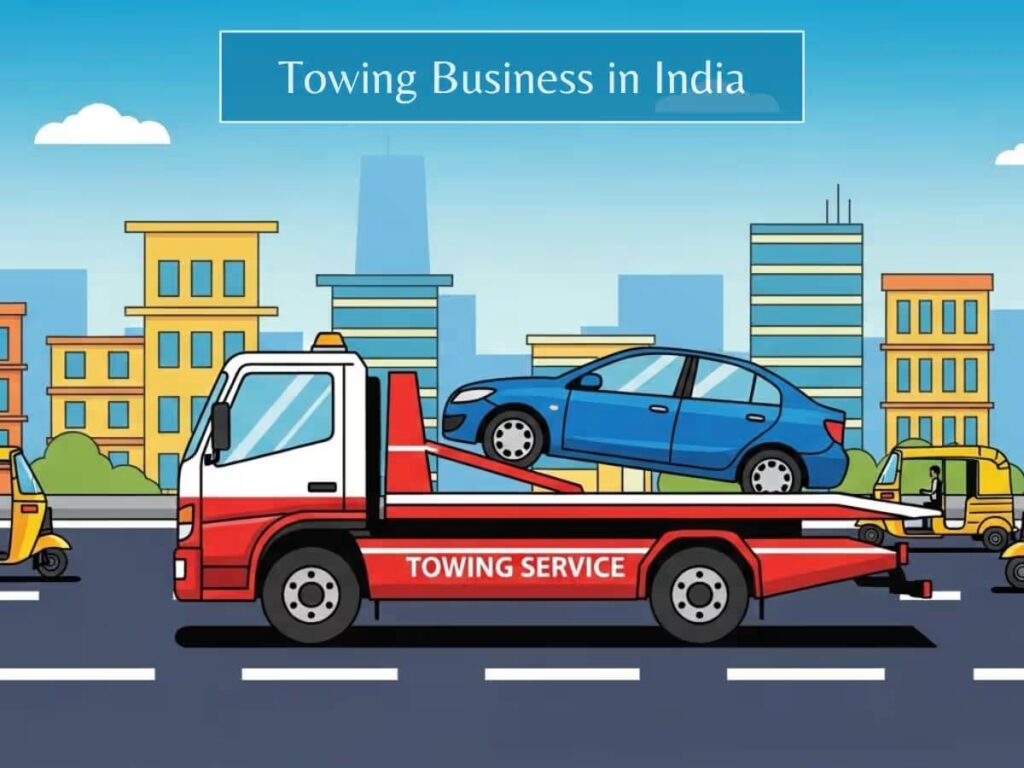
India’s vehicle roadside assistance market is projected to reach USD 2,853 million by 2030, growing at a CAGR of 7.9%.
More importantly, towing was the single largest revenue-generating service type in the last year, bigger than tyre replacement, battery assistance, or fuel delivery.
So if you’re thinking of starting a towing business in India right now, the timing genuinely couldn’t be better.
Let’s get into the details.
In this post,
Does the Towing Business Have Demand in India?
Most people assume towing is a slow, boring business. In India, it’s anything but. Commercial vehicle sales in India are surging, adding lakhs of new vehicles on the road every year. More vehicles mean more breakdowns, more accidents, more illegal parking situations — and more calls for towing services.
Unlike a restaurant or a retail shop, a towing business doesn’t go out of fashion. It’s an evergreen venture that is largely free from recessionary impacts. People don’t stop breaking down just because the economy slows down.
The margins are decent, too. The average net profit margin for a towing and roadside assistance business typically ranges between 10% and 20%, and well-managed operations can push closer to 25-30%.
What Type of Towing Business Can You Start in India?
Before you spend a single rupee on a truck or paperwork, you need to be clear about the type of towing service you’re going to offer. In India, there are broadly three categories worth considering:
Car and two-wheeler towing
Car and two-wheeler towing is the most common starting point. This involves recovering broken-down or accident-hit cars and bikes from highways, city roads, or parking lots and taking them to workshops. This is where most beginners start because the equipment cost is manageable and demand is everywhere.
Heavy-duty towing
Heavy-duty towing means dealing with trucks, buses, and commercial vehicles. The demand is consistent on national highways, but the investment is significantly higher — you’re looking at heavy recovery vehicles that cost much more than a standard flatbed truck.
Police and municipal contracts
Police and municipal contracts involve towing illegally parked vehicles under government contracts. Cities like Delhi, Bengaluru, Mumbai, and Chennai regularly contract private operators. These contracts give you steady, predictable income — but getting them is competitive and involves a proper bidding process.
For most first-timers in India, starting with car and two-wheeler breakdown recovery is the most practical entry point.
Towing Business Cost
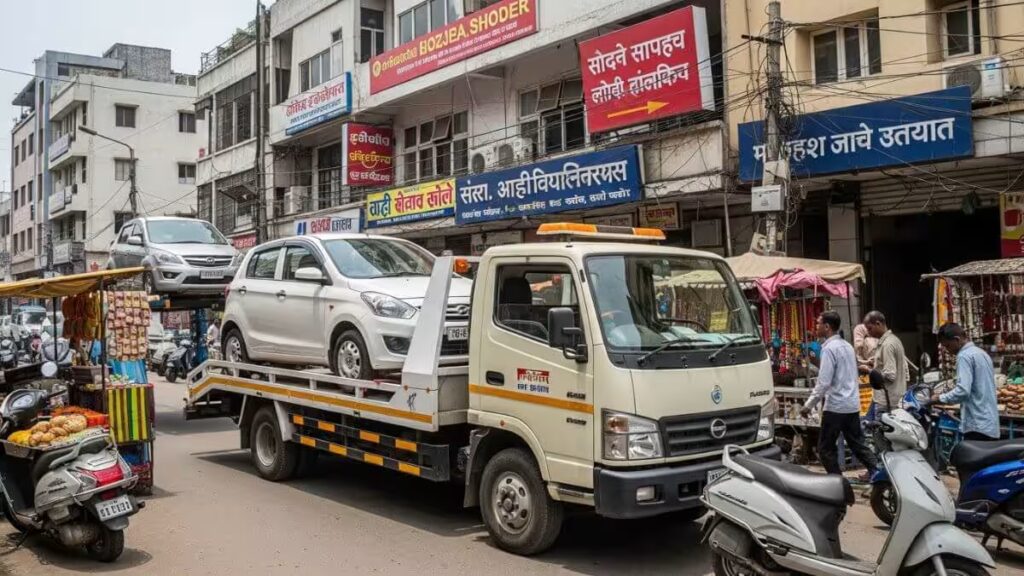
The biggest investment in a towing business is the vehicle and equipment. Here’s a realistic picture for the Indian market:
A basic flatbed tow truck (built on a commercial chassis from Tata, Ashok Leyland, or Eicher) will cost you anywhere between ₹8 lakh and ₹18 lakh, depending on the base vehicle and the recovery body.
Basic underlift recovery vehicles designed to lift cars are priced at approximately ₹7 lakh, while flatbed tow trucks range from ₹4 lakh to ₹9 lakh for the recovery attachment alone, which you then mount on a commercial chassis.
For heavy-duty recovery vehicles capable of towing trucks and buses, costs jump significantly — you’re looking at ₹25 lakh and above.
Beyond the vehicle, you’ll need towing chains and straps, wheel lifts, warning lights and reflectors, a basic toolkit, and a reliable GPS device or smartphone mount. Budget an additional ₹1-2 lakh for this.
Then there are recurring costs.
Diesel, vehicle maintenance, tyres, insurance premiums, and driver salaries if you’re hiring. These can run to ₹60,000-₹1,20,000 per month for a single-truck operation in a city.
A practical way to begin is by buying a used commercial truck with a good service history and getting the recovery body fabricated locally. Many fabricators in cities like Coimbatore, Chennai, and Delhi do excellent work at reasonable prices.
How Much to Charge for Towing Services
Pricing in India is driven by vehicle type and distance. A typical breakdown of rates looks like this:
Two-wheeler towing within a city: ₹500–₹900 per job.
Car towing within city limits: ₹1,200–₹2,500 depending on distance.
For highway jobs or long-distance towing, a per-kilometre rate works better — typically ₹50–₹100 per km for cars, higher for commercial vehicles.
You can also offer monthly or annual subscription plans to corporate clients, fleet operators, and individual frequent drivers. Plans bundling towing + roadside assistance (battery jump-start, tyre change, fuel delivery) are increasingly popular in India and command a premium.
This is a model that companies like TowMan and GoMechanic have already started adopting, and the response from urban customers has been positive.
Licences and Registrations Required for a Towing Business
This is the part most people find intimidating, but it doesn’t have to be. Here’s what you actually need:
Business Registration:
Register your business as a Sole Proprietorship, Partnership, or Private Limited Company, depending on your scale. For a single-operator start, proprietorship works just fine. You’ll also want to register on the Udyam portal as an MSME — it opens up loan benefits and government schemes.
Goods and Services Tax (GST):
If your annual turnover is likely to cross ₹20 lakh, GST registration is mandatory. For a towing service operating in a metro, this threshold gets crossed relatively quickly.
Commercial Vehicle Registration:
Under the Motor Vehicles Act, 1988, every commercial vehicle must be registered with the Registering Authority in the district where the owner resides or has their place of business. Your tow trucks need to be registered as commercial transport vehicles, not private ones. Don’t cut corners here — operating an unregistered commercial vehicle leads to hefty fines and legal trouble.
Transport Permit:
Your vehicles need a valid transport permit issued by the Regional Transport Office (RTO). This is non-negotiable.
Commercial Vehicle Insurance:
Standard car insurance won’t cover a tow truck. You need a commercial vehicle insurance policy that also covers third-party liability. Given that tow trucks are on the road constantly — often in stressful, high-risk situations — comprehensive insurance is not optional.
Trade Licence:
Obtain a trade licence from your local municipal authority. The process varies by city but is generally straightforward.
How to Market Your Towing Business
This is the real challenge. Your truck is ready, your paperwork is done — now what?
Tie up with local garages and workshops.
Mechanics are your best referral partners. When a vehicle breaks down and needs to be towed to a workshop, garages often call their preferred towing operator. Building even five or six such relationships in your area will get you steady work in the first few months.
Register on platforms like Just Dial, Google My Business, and Sulekha.
When someone in your city searches “car towing service near me” at midnight on the highway, you want to show up. A fully filled Google Business profile with your phone number, service area, and working hours is non-negotiable.
Approach car insurance companies and motor clubs.
ICICI Lombard, HDFC ERGO, and other insurers empanel towing operators as part of their roadside assistance networks. Getting on even one insurer’s panel gives you a steady flow of calls.
Social media presence matters more than you think.
A simple WhatsApp Business account, an active Facebook page with photos of your vehicle, and regular posts about services you offer can build local trust faster than you expect.
Consider local cab and transport operators.
Ola, Uber drivers, local taxi operators, and school van owners need towing occasionally. A business card with your number, left with these communities, can generate surprising results.
How to Grow and Scale a Towing Business
In India’s towing industry, your reputation is built on one thing- response time. When someone’s car breaks down on the highway at 2 AM, they don’t care about your logo or your Instagram page. They care about how quickly you show up.
Keep response times under 45 minutes for city jobs whenever possible. Be transparent about pricing — quote the rate before starting the job, not after. Treat the stranded driver with dignity; they’re already having a terrible day.
Businesses in high-demand urban areas often achieve net margins above 20% due to consistent demand and higher pricing power. But margins come only when customers call you back — and refer you to others. In this business, one happy customer at 3 AM is worth a hundred Facebook posts.
Starting a towing business in India isn’t glamorous. It means late nights, diesel smell, and the occasional difficult customer. But it’s a real, essential service that this country badly needs more of — and it can support a family comfortably within the first year if you execute smartly.
Start with one truck. Master one area. Build relationships. Then expand.
The road is long. But someone has to help the people who get stuck on it.

Suraj Shetty
Suraj Shetty has over 8 years of experience in small business, startups, and business consulting. He shares practical insights and proven strategies to help entrepreneurs discover new opportunities and grow their businesses sustainably.

Ravi Shankar
28 years of experience in business consulting across diverse industries