
If you’re thinking of starting a tile dealership, Qutone is a good brand to consider. They’re an organized, India-based tile maker with a growing national footprint and dealer support.
So it is easier to start a dealership with such brands than to try to sell an unknown brand.
In this article, I’ll explain to you the steps to becoming a Qutone dealer, dealership costs, profit expectations, and also provide you with some tips to grow your dealership.
In this post,
Why Choose Qutone Dealership?
Qutone is a modern ceramics company — manufacturing wall, floor, and vitrified tiles. They have a nationwide marketing and distribution network with dedicated dealers, regional offices, and company-owned showrooms.
Qutone has a large manufacturing facility in Gujarat and also has multiple smaller plants.
Their portfolio has ceramic wall tiles, glazed vitrified tiles, polished marble / large-format vitrified tiles, non-slip and outdoor tiles, GVT/DGVT, stoneware, and designer collections.
This helps you target regular homeowners, premium renovations, and small commercial projects alike.
Is the tiles business worth your time?
The short answer is yes.
The tile market in India is large and fragmented. In our country, the branded players and regional names both sell well.
A well-run retail or sample-based tiles showroom can be a steady source of income. In this business, the tiles don’t spoil, and margins on branded tiles are often predictable.
The demand for tiles is linked to housing, renovation, and commercial projects. There are big organized players in the field, but if you focus on design, service, and contractor relationships, you can do well with a small dealership, too.
Qutone Tiles Dealership Cost
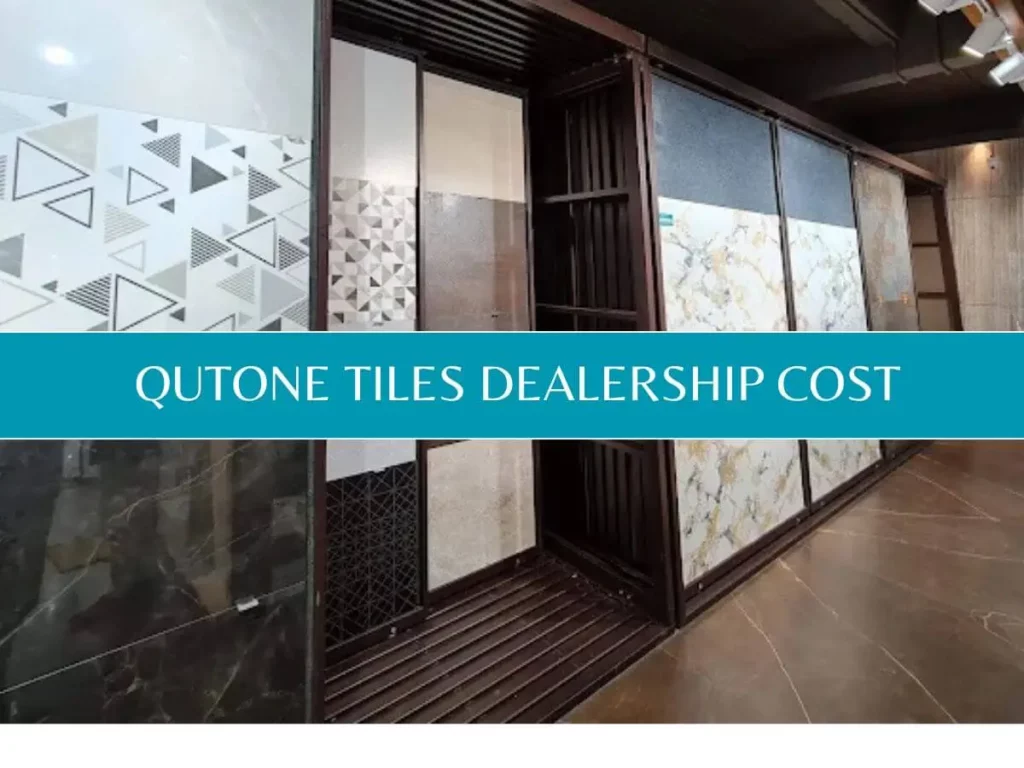
The investment required for a Qutone dealership varies widely depending on whether you run a sample-based outlet or a full stockist showroom.
These are the approximate price ranges you can use when planning a dealership.
Micro/samples model (low capital):
Investment required: ₹50,000 – ₹2,00,000 (approx.)
(sample boards, small showroom setup, initial marketing, and registration). Some distributor platforms list entry investment ranges in that low bracket for tile distributors, which is realistic if you keep inventory minimal.
Small showroom with modest stock (medium capital):
Investment required: ₹3,00,000 – ₹10,00,000 (approx.)
(shop rent or deposit, interior display panels, 3–6 sample stacks, initial stock for popular SKUs, staff). Industry write-ups for starting a tile store commonly suggest that a sample-based store can start with a few lakhs, while a stocked operation needs substantially more.
Full stockist / large showroom (high capital):
Investment required: ₹20,00,000+ (approx.)
(warehouse, heavy inventory across sizes and finishes, bigger showroom, delivery vehicle). Stock-heavy dealers generally need tens of lakhs to offer immediate delivery for multiple projects.
Qutone has a nationwide marketing network and experience centres. So a new dealer can start with sample showrooms and scale inventory once orders pick up.
Profit Margin in Qutone Tiles Dealership
The profit margins in the Qutone dealership business depend on product mix (basic ceramic vs premium vitrified/porcelain), your bargaining power, volume, and whether you offer installation or value-added services.
Typical retail gross margins: Roughly 8% – 15% on branded tiles is commonly reported for sample/retail dealers. Premium or custom products and add-on services can earn you higher margins.
To improve the profit margins, you should focus on upselling premium tiles, offering design consultancy, and providing bundle services (like cutting, delivery, and installation).
Give discounts to contractors so that you can get repeat bulk orders. Buying in bulk during manufacturer promotions also lifts your margin.
The margins for individual tile manufacturers and retailers vary by region and product. You should plan using conservative (lower) margin estimates during your first year.
Inventory, logistics & cash flow
✔︎ In the beginning, start with a curated selection of bestsellers and trending sizes (e.g., large format vitrified tiles). Don’t stock too many SKUs. This will tie up your cash.
✔︎ Don’t overstock low-turn SKUs. Yes, tiles are durable, but they are capital-heavy too.
✔︎ You can offer sample boxes to designers and builders in your area. So, they can take a look-and-feel home.
✔︎ Don’t compete only on price. The branded tiles sell on design, finish, and warranty as much as on price.
✔︎ When a customer purchases, keep delivery times clear in writing. The late delivery is a common complaint in construction segments. This can help you build trust.
✔︎ You should negotiate payment terms with both the manufacturer and customers. Always maintain a small working capital buffer for seasonal slowdowns.
Also read:
How to become a Qutone dealer (Step-by-step)
1. Research and preparation — Visit Qutone’s official site. Note the local dealer presence and the range they offer, so you don’t duplicate in an overcrowded area.
2. Contact the company — Call their corporate office or use the contact form to express interest in dealership/distributorship. You should have documents like business registration, PAN, GST, address proof, and bank details.
3. Choose your model — Sample-based (show samples, order stock on demand) or stockist (maintain inventory). The sample model needs less capital; the stockist needs more.
4. Negotiate commercial terms — Payment terms, credit days (if any), MRP vs dealer price, sample costs, minimum order quantities (MOQ), territorial exclusivity.
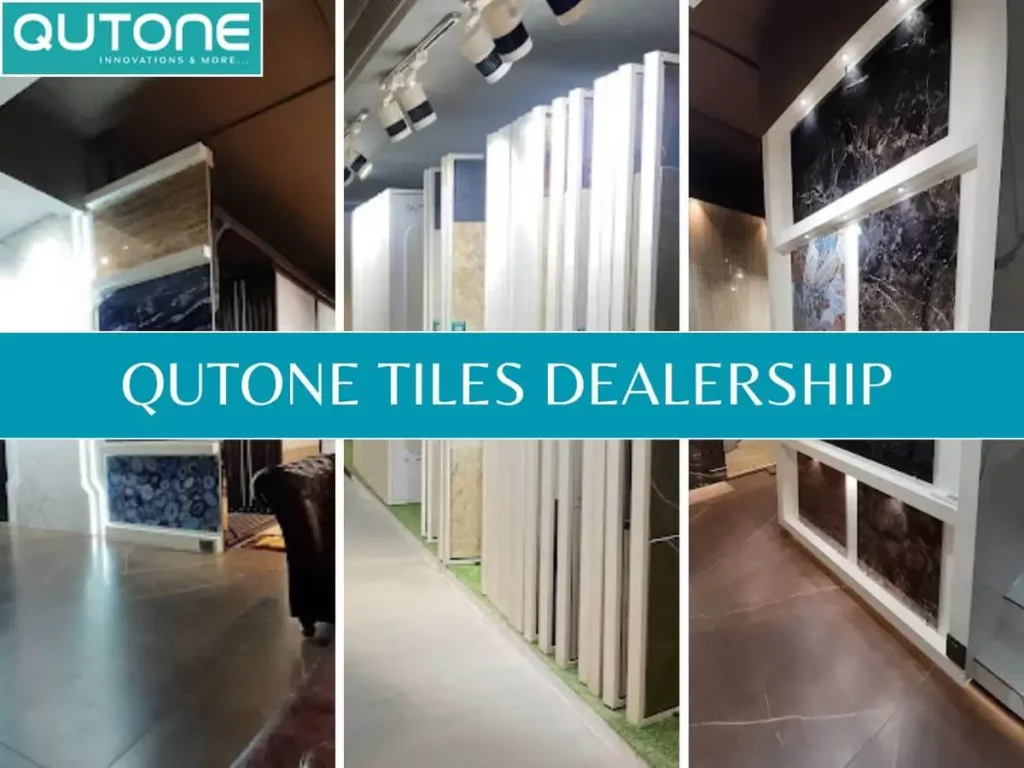
5. Set up showroom & displays — Invest in curated sample displays, lighting, and a small catalogue library. Designers and contractors visit showrooms; first impressions count.
6. Onboard systems — If Qutone provides a dealer app/portal, get trained on it (quotations, product data, ordering).
7. Build local networks — Connect with builders, contractors, interior designers, and local architects. You can offer them sample packages and quick quotations.
A typical organized-brand dealer relationship includes:
- Formal dealership/distributor agreement and KYC.
- Access to official catalogs, samples, and pricing.
- Periodic credit or inventory support (depending on company policy).
- Marketing material, dealer app/portal, and occasional dealer training.
Qutone specifically lists dealer support structures and has dedicated sales offices and experience centres across India. So you can expect structured support.
Marketing & Showroom Ideas
✔︎ In your showroom, you can create mood boards (like bath, kitchen, living, etc.). This helps customers to visualise a finished look.
✔︎ Find 2–3 top interior designers in your area and tie up with them on a referral fee basis.
✔︎ To send quotations, you can use WhatsApp catalogues and also the dealer app (if provided). You can send quotes quickly.
✔︎ You can host small “design days” where homeowners can drop in for free consultations.
A tile dealership is not just about product price and design. You should give focus to the service too. To help you with word of mouth. The Qutone’s branded presence and dealer support make it easier to start the dealership.
But your success will come from how well you display designs, how quickly you turn around quotes, and how professionally you handle contractors and homeowners. These things are very important in any dealership business.
If you have less capital, you can start with a neat sample-focused showroom. Once you are comfortable, you can scale into larger stocking operations.

Suraj Shetty
Suraj Shetty has over 8 years of experience in small business, startups, and business consulting. He shares practical insights and proven strategies to help entrepreneurs discover new opportunities and grow their businesses sustainably.