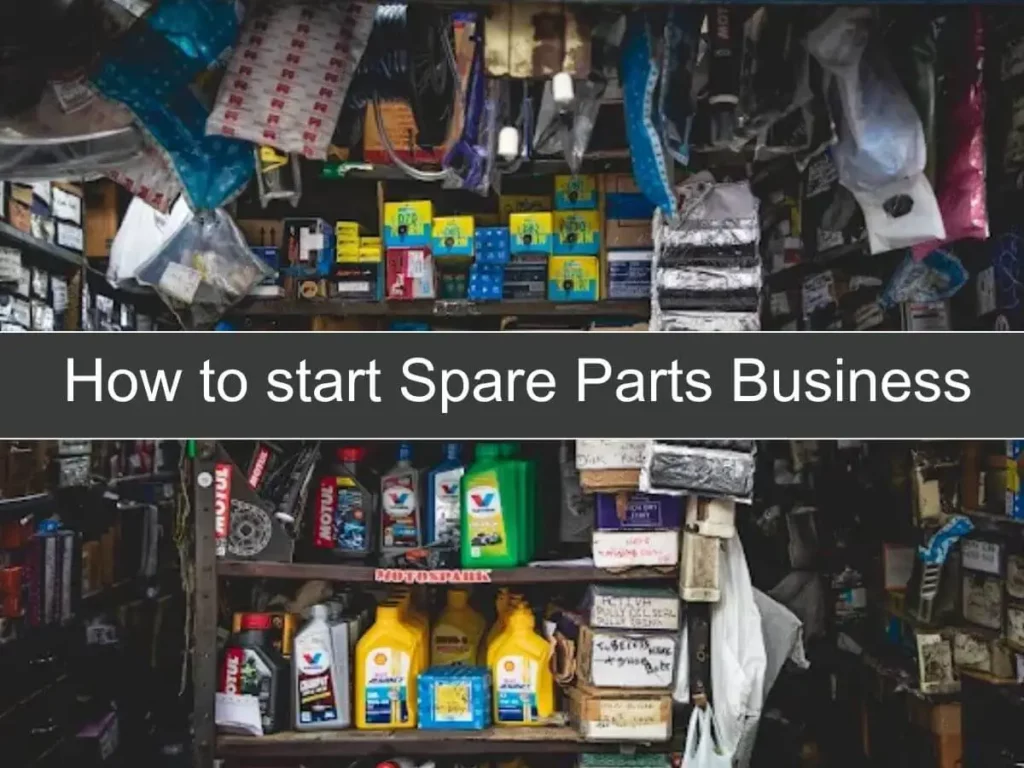
A spare parts shop can have different types of customers. It can be a bhaiya who comes in for a headlight, or the office-goer waiting for a new battery, or a garage owner.
If you closely look at the flow of customers in this business, you will notice one thing- here, the parts are sold again and again.
This is not a one-off purchase. The spare parts business is based on repeat business. This is why a spare parts shop is a wonderful small-business idea, without heavy risk.

In this article, we will explain to you how to start a spare parts business with details, including picking a niche, starting with the right stock, handling suppliers, registration and taxes, the investment requirement, the profit margin to expect, and much more.
In this post,
Why Choose Spare Parts Business?
As we said earlier, the spare parts shop is a steady business. Vehicles age, and roads in our country are very harsh. So every vehicle owner becomes a repeat customer — sooner or later.
The auto components and aftermarket sector in India is large and still growing. Vehicle ownership is rising every year, which means increased servicing.
Also, the fast-growing online channel for parts. The e-commerce side of spare parts has been growing quickly. This means a small seller who uses both a local presence and an online reach can do very well.
So in the spare parts business, the demand always exists, and there are multiple ways to reach customers. The walk-ins, garages, fleets, and online buyers.
Types of spare parts businesses
There are different types of spare parts businesses in India. You can choose a business type that suits you best.
Retail Shop (General)
This is a small shop selling consumables and fast-moving parts to owners and walk-in customers. This requires low setup and has a quick cash flow. This is a good option if you are familiar with local mechanics.
Niche Specialist Retail
Here you sell products focused on a particular segment, like a vehicle type (only two wheelers, or 4 wheelers). You can also focus on particular products, like selling only batteries, only brakes, or selling tyres.
You can read our detailed post on starting a two-wheeler spare parts business and a Car spare parts business.
Wholesale Distribution
This requires a bigger inventory and more focus on B2B clients, like supplying to garages, small shops. Wholesale distribution requires more capital and logistics.
Online Retailer
Here you list products on online marketplaces and can also run local delivery. This business requires low rental costs, but should have good product listings. Returns management is a challenging task in online selling.
Authorised Dealer/Franchise
You can tie up with a brand for guaranteed supplies and become an authorised dealer or a franchise. If you choose a good, established brand, you can gain the customer’s trust very fast. This business type requires good investment, upfront commitments with the brand, and rules
Used parts/Dismantler
Here you can sell salvaged or refurbished parts. You can get good margins on rare items. You can choose a business type depending on your interest and investment capacity.
Spare Parts Business Investment

The investment required to start a spare parts business depends on the type of business you choose. Here I have given some price ranges so you can choose what fits your budget:
Spare parts retail shop (starting small):
- Shop fit-out and racks: ₹50,000 – ₹2,00,000
- Initial inventory (fast-moving SKUs): ₹1,50,000 – ₹4,00,000
- Working capital (for 2–3 months): ₹50,000 – ₹2,00,000
- Billing/POS & small online listing: ₹20,000 – ₹50,000
Approx total: ₹2 lakh – ₹8 lakh (many small operators begin in the ₹2–6 lakh band).
Medium (retail + wholesale or larger footprint):
- Larger shop/warehouse + bigger inventory: ₹8 lakh – ₹25 lakh. Inventory is the major cost here.
Bigger wholesale/franchise / specialised setup:
- Could be ₹40 lakh and above, depending on stock, warehouse size, and franchise fees.
In this business, the inventory is usually the single largest outlay. If you have a tight budget, then you can start with a dropship or marketplace model to avoid heavy stock investment. Later, you can move into holding stock once you understand demand.
Profit Margin in the Spare Parts Business
The profit margins in the spare parts business depend on item type, level of competition, and whether you sell OEM or aftermarket parts:
✔︎ Retail margins: Typically 15%–30% on many spare parts. Fast-moving consumables (oils, bulbs, filters) are usually lower; specialised or rare parts can have much higher margins.
✔︎ Wholesalers generally operate on smaller percentage margins per item but make volume profits through bulk orders and credit terms.
✔︎ In online selling, the margins can be thinner due to marketplace fees and price competition. But here you have a large market reach, so you can sell large volumes.
In the beginning, you can aim to cover operating costs (rent, staff, delivery) and shoot for at least 10% net profit in the first year. As you build relationships and buy in larger quantities, margins will improve.
How to Start a Spare Parts Business (Steps)
Now you know the types of businesses you can start with the auto spare parts. You have to be clear about what exactly you want to sell. Once your business niche is clear, it becomes easy to take the next steps.
1. Talk to Mechanics and Garages
The very first step is to visit at least 8–10 garages and observe what parts they frequently replace. Ask mechanics about the brands they trust, the parts that sell out quickly, and the items customers complain about or ask for repeatedly.
Also, check online marketplaces and compare prices; this will help you understand competition.
Using all these, make a list of 20–30 essential SKUs (filters, brake pads, spark plugs, bulbs, oils, belts, etc) that move fast. This research step saves a lot of guesswork and prevents dead inventory later when you start.
2. Location and Shop Space
For a physical shop, choose an area where garages, car/bike service centres, and tyre shops are located. Even a 150–300 sq ft shop is enough if your display is neat and storage is well organised.
If you want to focus more on online sales, you don’t need a premium location. You can start with a small warehouse or even a spare room. For an online sale, quick dispatch, good packaging, and good courier partners matter more than your shop space.
Most of the sellers nowadays choose a hybrid model. They will have a compact shop for walk-in customers with a small storage space for online orders.
3. Business Registration & GST
You can begin as a sole proprietorship if you want a simple setup. Once your sales grow, you may upgrade to LLP or Pvt Ltd — but in the beginning, keep things straightforward.
The spare parts business involves B2B sales with garages. So if you have the GST registration is required.
It builds trust, and you can easily sell to businesses that prefer proper invoices. Also set up a current account and basic billing system so your transactions stay organised from day one.
4. Sourcing & suppliers
In this business, you must have strong supplier relationships. It is the backbone of this business. Meet local distributors, authorised dealers, and wholesale markets in your city.
Also, compare prices and enquire about return policies, replacement warranties, and credit options.
In your shop, try to keep a mix of:
- OEM parts (Original) for premium buyers,
- Quality aftermarket brands for budget-friendly customers,
- Fast-moving consumables for daily sales.
Never buy products from unknown, extremely cheap sources. If you sell counterfeit parts, it can destroy your shop’s reputation.
5. Managing Inventory
Even if you start with a small with little inventory, organise your stock with proper labels, shelves, and a simple SKU numbering system. A Google Sheet or basic POS software is enough initially.
Record how many units you bought, how many sold, and when to reorder. Over time, you’ll clearly see which products move fastest, which ones give you good profit, and which ones to avoid stocking again.
If you follow good inventory management, it will prevent your money from getting stuck in slow-moving parts.
6. Deciding Pricing & Margins
To understand product pricing, check your competitor prices (both offline and online) and position yourself wisely. Fast-moving items like bulbs and filters usually have thin margins, so sell them competitively.
For rarer items, higher-quality brands, or slow-moving parts, you can keep healthier margins. Also consider offering bundle pricing for garages — for example, “oil + oil filter + air filter combo.” This increases your average bill value and encourages mechanics to prefer your shop.
7. Hire Staff (If Required)
If you’re running a shop, one knowledgeable salesperson or helper is enough at the start. You should give more importance to customer interaction. Your staff should understand the basic parts of common two-wheeler and car models.
If your staff can quickly identify what part a customer needs — just by listening to their problem — it can boost your sales. Also, train them on handling customers politely, maintaining stock properly, and billing accurately.
8. Marketing Your Shop
Start with simple marketing tricks like,
✔︎ Create a strong Google Business Profile with photos of your shop and inventory.
✔︎ Post your daily stock updates or offers in local mechanic WhatsApp groups.
✔︎ Use small signboards or stickers in garages saying “Parts available at XYZ shop, 200m away.”
✔︎ For online selling, list your products clearly with correct model numbers and good photos.
In the spare parts business, visibility of your shop is very important. The more people see your shop name, the more they visit and phone orders you receive.
9. Customer service & local delivery
Normally, local garages prefer suppliers who can deliver parts quickly. So if you offer same-day delivery to nearby workshops, it can give you a big advantage.
Always keep your phone line active, respond quickly on WhatsApp, and send order confirmations. Your small gestures, like even giving a mechanic a free microfiber cloth after a big purchase, can help build loyalty. A satisfied garage customer can give you business every single day.
10. Record Keeping & Taxes
You should maintain a daily sales book, purchase invoices, stock register, and GST records. At the end of each week, review what sold fast and what didn’t.
Good bookkeeping helps you understand your cash flow, which is very important in a business where most of your money stays tied up in inventory. It also protects you during audits and makes it easier to apply for business loans later.
Fast Moving Products
When you start your shop, you can begin with products that sell every day.
Some of these products are filters (air and oil), engine oil (popular grades), brake pads/shoes (common vehicle models), bulbs (headlight, indicator), belts and hoses (common sizes), batteries (popular capacities for two-wheelers and small cars), spark plugs, fuses, clips, nuts & bolts, and lubricants
Do not stock too many slow-moving parts, and also don’t cut profit margins aggressively. Instead of giving heavy discounts, you can compete on service and availability.
If you choose the correct location and build a good network, then the spare parts business is one of the safest business opportunities in India. Here, the demand is recurring, and you can scale from a small shop to a regional wholesaler or an online seller.

Suraj Shetty
Suraj Shetty has over 8 years of experience in small business, startups, and business consulting. He shares practical insights and proven strategies to help entrepreneurs discover new opportunities and grow their businesses sustainably.