India is building like never before. Highways are expanding, smart cities are coming up, and housing projects are popping up in every district.
All of this construction needs one thing in massive quantities — crushed stone. That is exactly why the stone crusher business has become one of the most talked-about investment opportunities for small business owners and entrepreneurs across India.
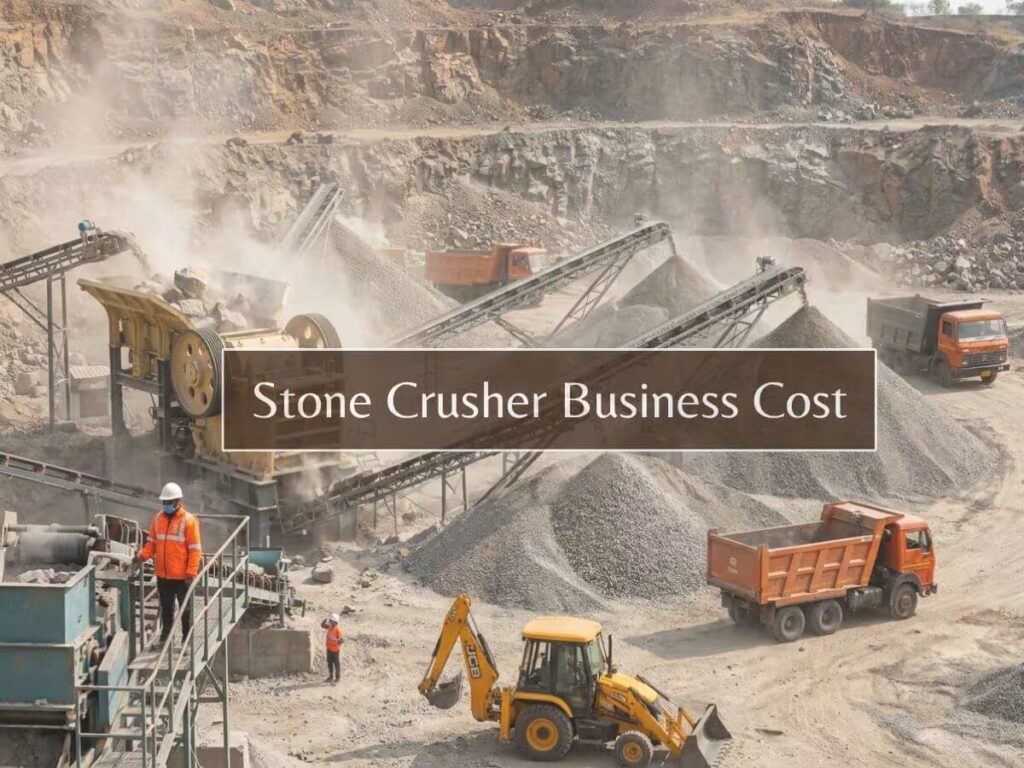
But before you put your money in, you need to understand one thing clearly, this is not a small investment. It is a capital-heavy business, and if you don’t plan the costs properly from day one, the numbers can surprise you — and not in a good way.
So let us break it all down. Every rupee. Every expense. Every licence.
The Demand for Stone Crusher Business
Stone crushing is a ₹5,000 crore industry in India. The demand for crushed aggregates — used in roads, bridges, buildings, and drainage systems — has been growing steadily, driven by government-led infrastructure projects under schemes like PM Gati Shakti and Bharatmala.
Whether it is a contractor building a village road in Rajasthan or a developer constructing a residential complex in Pune, everybody needs crushed stone.
The product is always in demand. That is the fundamental strength of this business.
Investment Required to Start a Stone Crusher Business
Let’s get straight to the number everyone wants to know.
To set up a small-to-mid-size stone crusher plant in India, you are looking at a total investment ranging from ₹37 lakh to ₹71 lakh for a standard setup.
If you are planning a larger, more automated plant with higher capacity, the figure can go up to ₹1.5 crore to ₹2 crore or even beyond.
This wide range exists because the cost depends heavily on your plant’s capacity (measured in Tonnes Per Hour, or TPH), your location, the type of machinery you choose, and the size of land you acquire. Let us go category by category.
Land Cost
You will need 1 to 2 acres of land as a minimum. This land should ideally be close to a quarry (your raw material source) and not too far from the construction market you plan to serve.
Land costs vary dramatically by state and district. In rural parts of Madhya Pradesh, Rajasthan, or Chhattisgarh, land can cost ₹10 lakh to ₹30 lakh per acre. In semi-urban zones near major cities, the same could cost you ₹30 lakh to ₹50 lakh or more.
Many entrepreneurs lease land instead of buying it outright. This significantly reduces upfront capital and keeps your working capital healthier in the early months.
Machinery Cost
This is where most of your money goes, and rightly so. The machines you pick will decide how much you produce, how efficiently you run, and how often you face breakdowns.
A standard stone crusher plant includes:
- Jaw Crusher (primary crushing)
- Impact Crusher or Cone Crusher (secondary crushing)
- Vibrating Screen (for sorting different sizes)
- Conveyor Belts
- Vibrating Grizzly Feeder
- Dust Suppression System (now mandatory)
For a small plant of 50–100 TPH capacity, machinery costs typically fall between ₹10 lakh and ₹30 lakh.
For a medium plant of 100–200 TPH, you are looking at ₹40 lakh to ₹1 crore.
A large-scale plant capable of 200–300 TPH can cost ₹1 crore to ₹2.5 crore in machinery alone.
Many manufacturers in India — especially from Ahmedabad, Pune, and Ranchi — offer turnkey plant setups where they handle design, supply, and installation as a package. This is often more cost-effective than buying each machine separately.
Civil Construction and Site Development
Once land is sorted and machines are ordered, you need to prepare the site. This includes building the plant foundation, equipment platforms, a control room, a basic office, boundary walls, and internal roads within the plant.
For a small-scale plant, civil construction can cost ₹5 lakh to ₹15 lakh.
A larger setup may require ₹20 lakh to ₹50 lakh. Do not underestimate this — proper civil work directly impacts machine stability, operational safety, and long-term maintenance costs.
Working Capital Required
A common mistake new investors make is calculating only the setup cost. Working capital — the money required to keep the business running day-to-day before revenue starts flowing in — is equally important.
For the first three to six months, you will need to cover:
✔️ Raw material (stone boulders): ₹3 lakh to ₹8 lakh per month, depending on your plant size
✔️ Diesel and electricity: ₹1.5 lakh to ₹4 lakh per month
✔️ Labour wages: 8 to 20 workers are typically required; budget ₹1.5 lakh to ₹4 lakh per month
✔️Maintenance and spare parts: ₹50,000 to ₹1.5 lakh per month
✔️Transportation (if you own trucks): Additional cost; otherwise, you can outsource initially
Keep a working capital reserve of at least ₹8 lakh to ₹15 lakh before you start operations.
Licences and Permits Required
This is the part most entrepreneurs underestimate — both in terms of time and money. Getting your approvals in order is non-negotiable. Operating without proper clearances can get your plant shut down overnight.
The key approvals you need include:
- Mining Licence / Quarry Lease (if you own the quarrying operation)
- Consent to Establish (CTE) and Consent to Operate (CTO) from the State Pollution Control Board (SPCB)
- Environmental Clearance under the Environment Protection Act
- Noise Control Compliance Certification
- GST Registration
- Factory Licence under the Factories Act
- Fire Safety Certificate
The cost of obtaining all these licences, including consultant fees, documentation, and government fees, can range from ₹1 lakh to ₹5 lakh, depending on your state and plant size. More importantly, it can take 3 to 9 months. Start this process before you even order machinery.
The Central Pollution Control Board (CPCB) has strict norms on dust suppression, green belt development, and noise levels. Non-compliance carries heavy penalties and risks of plant closure.
Monthly Operating Cost Summary
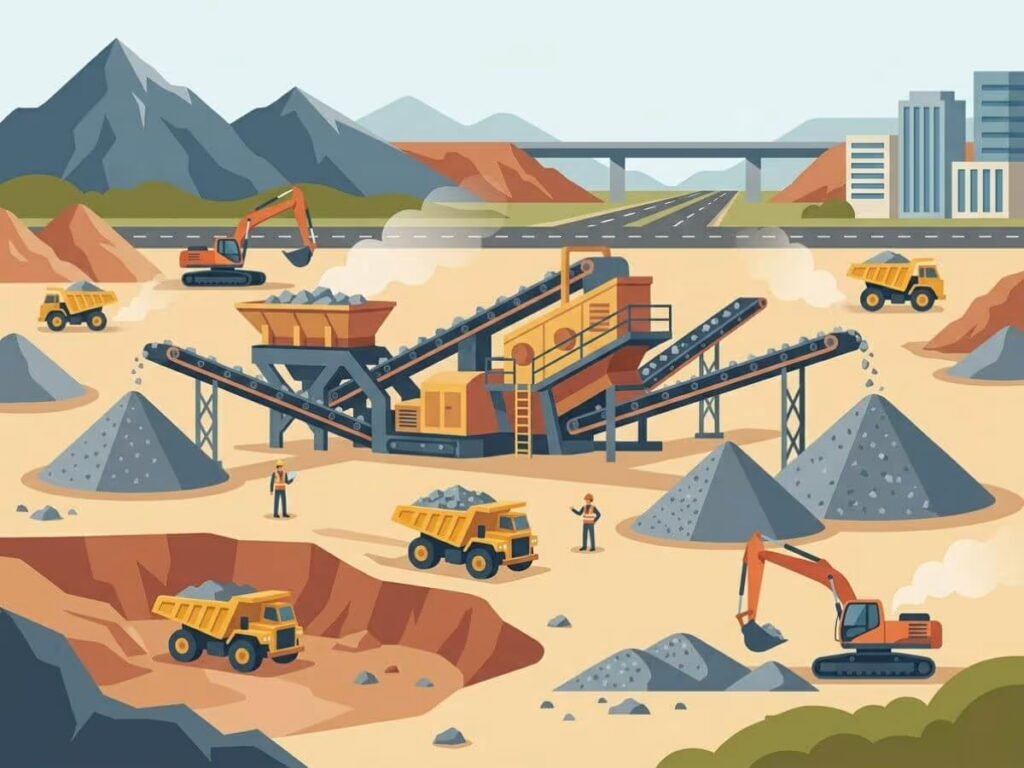
Once you are up and running, here is what a typical 100 TPH plant’s monthly expenses look like:
| Expense Head | Approximate Monthly Cost |
| Raw Material (Stone Boulders) | ₹4 – ₹8 lakh |
| Diesel & Electricity | ₹2 – ₹4 lakh |
| Labour (10–15 workers) | ₹2 – ₹3 lakh |
| Maintenance & Spares | ₹75,000 – ₹1.5 lakh |
| Transportation | ₹1 – ₹2 lakh |
| Miscellaneous | ₹50,000 – ₹1 lakh |
| Total | ₹10 – ₹19.5 lakh/month |
Profit Margins and Payback Period
With efficient operations, a stone crusher plant can deliver a profit margin of 20% to 25% after all operating expenses.
In high-demand zones near large infrastructure projects, margins can push towards 30% or more.
A well-run 100 TPH plant selling crushed aggregate at the market rate of ₹600–₹900 per tonne can generate ₹15 lakh to ₹30 lakh in monthly revenue.
After deducting operating costs, a net monthly profit of ₹3 lakh to ₹7 lakh is realistic.
This means the payback period is typically 1 to 2 years — which is quite attractive for a capital-heavy business.
Tips to Start a Stone Crusher Business
A few things that experienced plant owners will tell you:
Choose the right location.
A plant close to a quarry and close to an active construction market cuts your transportation costs significantly. That single factor can be the difference between 15% and 30% profit margin.
Machinery quality matters.
Cheap machines lead to frequent breakdowns, higher maintenance costs, and production loss. Invest in reputed brands — the savings on breakdown losses will more than make up for the higher upfront cost.
Environmental compliance is not optional.
With state governments increasingly cracking down on dust and noise pollution, plants without proper systems get shut down. Budget for a proper dust suppression system from day one.
Secure your raw material supply early.
Long-term agreements with quarry owners for stone supply at a fixed rate protect you from price fluctuations and supply disruptions.
The stone crusher business in India is a solid, demand-driven opportunity — but only for those who go in with eyes open. The investment is significant, the licensing process is lengthy, and operational discipline matters every single day.
If you plan well, secure your approvals, pick the right location, and invest in quality machinery, this business can be genuinely rewarding. The infrastructure boom in India is not slowing down anytime soon. The question is whether you are ready to take your position in it.
Start with a detailed project report, consult a local machinery manufacturer, and speak to your State Pollution Control Board before anything else. That groundwork will save you far more money than any shortcut will.

Suraj Shetty
Suraj Shetty has over 8 years of experience in small business, startups, and business consulting. He shares practical insights and proven strategies to help entrepreneurs discover new opportunities and grow their businesses sustainably.

Ravi Shankar
28 years of experience in business consulting across diverse industries