You are looking at a construction site near your city and thinking — tiles. Every floor, every bathroom, every kitchen wall. Someone is supplying all of that. And you want it to be you.
RAK Ceramics is one name that comes up quickly for anyone researching the premium tile segment in India.
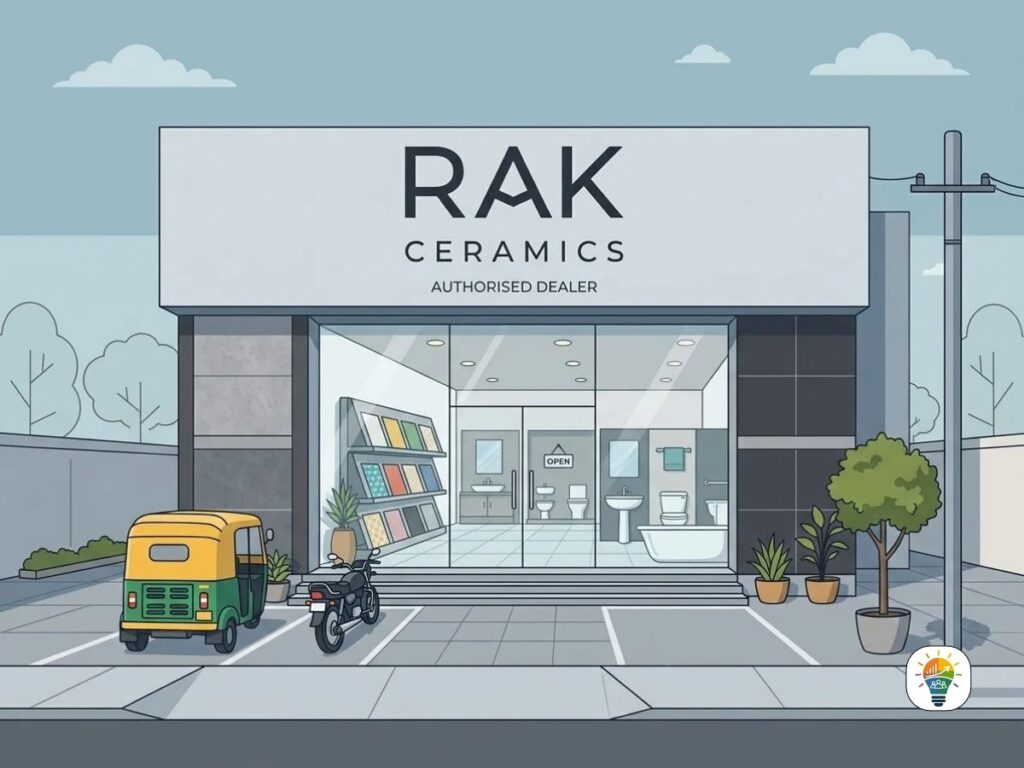
The brand has been operating here since 2006, runs manufacturing units in Andhra Pradesh, Gujarat, and North India, and sells through a network of over 800 dealers across the country. For an aspiring small business owner in the building materials space, becoming a RAK Ceramics dealer is one of the more credible routes to entering this market.
But before you approach the company, you need to understand what the investment looks like, what the margins are, and what this business demands from you day to day.
In this post,
What Does a RAK Ceramics Dealer Do?
A RAK Ceramics dealer runs a retail showroom that sells tiles, vitrified flooring, and sanitaryware under the RAK brand to homeowners, builders, contractors, and interior designers. Depending on the format you operate, you could be an Exclusive dealer (primarily RAK products), a Privilege or Select dealer (RAK alongside other building material brands), or part of a Multi-Brand Outlet network.
The company offers over 850 SKUs in vitrified tiles and more than 1,600 ceramic tile options, along with 250-plus sanitaryware products. This range gives you enough to serve both affordable housing buyers and premium residential or commercial projects.
RAK has been actively expanding its dealer network in India and recently tied up with Birla Pivot for broader distribution, which signals continued focus on growing through retail partnerships rather than only company-owned stores.
RAK Ceramics Dealership Cost
Getting the investment figure right is the most important step before you take a single meeting with any brand.
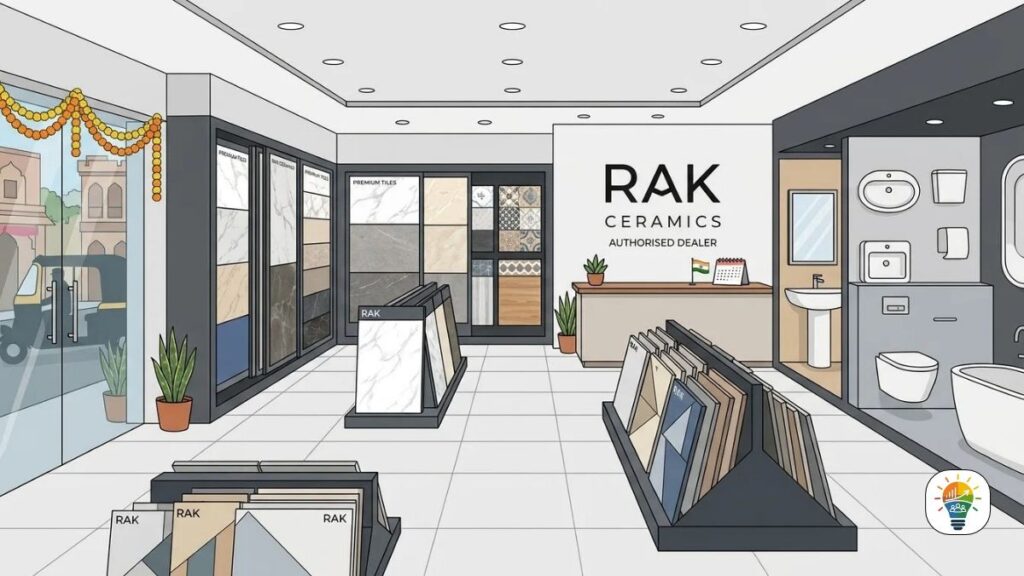
For a brand dealership in the tile segment, the total starting investment falls between ₹20 lakh and ₹50 lakh for a mid-sized showroom. A smaller setup in a Tier 2 or Tier 3 city can start at ₹15 lakh, while a well-fitted exclusive showroom in a metro or Tier 1 city can easily cross ₹60 to ₹70 lakh when you include all costs.
Here is how that money breaks down:
| Cost Head | Estimated Range |
|---|---|
| Showroom rent deposit (3–6 months) | ₹1.5 lakh – ₹5 lakh |
| Interiors, display racks, lighting | ₹3 lakh – ₹10 lakh |
| Brand setup and signage | ₹1 lakh – ₹3 lakh |
| Opening inventory (tiles + sanitaryware) | ₹8 lakh – ₹20 lakh |
| Working capital buffer | ₹3 lakh – ₹8 lakh |
| Staff, billing setup, miscellaneous | ₹1 lakh – ₹3 lakh |
These are ballpark planning numbers. Actual figures vary significantly based on city tier, showroom size, and how deeply you stock the product range. A 1,000 sq ft showroom in Nashik and a 3,000 sq ft exclusive outlet in Bengaluru are structurally different investments.
The biggest variable is inventory. Tiles are heavy on working capital — you tie up money in stock, and that money only comes back when you sell. New dealers sometimes underestimate this and find themselves short on cash within the first few months.
The Monthly Running Costs
Once you are operational, the recurring monthly expenses on a mid-sized tile showroom run to roughly ₹1.5 lakh to ₹3.5 lakh. This includes:
Showroom rent at ₹30,000 to ₹1,20,000 depending on location. Staff salaries for one or two salespeople and a helper, which adds another ₹30,000 to ₹70,000. Delivery vehicle or transport arrangement, electricity, internet, and miscellaneous office expenses together come to ₹20,000 to ₹50,000 a month. Stock replenishment is on top of all this and depends on how fast inventory moves.
The bill for tile breakage during handling and delivery is one cost that most new dealers do not budget for. In this trade, some breakage is inevitable — boxes get dropped, tiles crack during unloading. Plan for 1 to 2 percent of stock value as breakage cost annually.
Profit Margin in RAK Ceramics Dealership
Profit margins in branded tile dealerships sit in the range of 10 to 18 percent on gross sales. The net margin — after rent, staff, delivery, and other running costs — lands closer to 6 to 12 percent depending on your sales volume and expense structure.
On a showroom doing ₹5 lakh in monthly sales, you might net ₹30,000 to ₹60,000 per month. Once monthly sales cross ₹8 to ₹10 lakh, the business starts feeling commercially meaningful.
A few things directly affect where your margins land. The credit you extend to contractors and builders can strain cash flow — if 40 percent of your sales are on 30-day or 60-day credit, you need that extra working capital buffer.
Branded dealerships also give you less pricing flexibility than unbranded tile trading, so your margins are partly set by the brand’s scheme structure. The quarterly schemes RAK and other tile brands offer can effectively change your cost price after the quarter closes, which is something to factor in when quoting customers.
Premium and large-format tiles carry better margins than standard ceramic tiles. Stocking some sanitaryware alongside tiles also improves the ticket size per customer.
How Long to Break Even?
For a mid-sized RAK Ceramics dealership, a break-even period is around 18 to 30 months. Showrooms in high-growth cities or near large residential projects can reach break-even faster — sometimes within 12 to 18 months. A showroom in a less-active market or one that gets off to a slow start might take three years.
The fastest path to break-even is consistent monthly sales above ₹7 to ₹8 lakh and tightly managed inventory so money is not locked in slow-moving stock.
How to Start a RAK Ceramics Dealership
RAK Ceramics does not operate a standard franchise model with a fixed fee. It appoints dealers after evaluating location, showroom setup, investment capacity, and local market potential.
To get started, visit the RAK Ceramics India website and look for the dealer or business partnership enquiry form. You can also reach out to the regional sales team in your area. Be ready to share details about your proposed location, available space, investment capacity, and any prior experience in building materials or retail.
The company evaluates territory availability, which means some cities or localities may already have existing dealers, and your area may or may not be open. It is worth having a clear answer on this early.
Once appointed, RAK provides display material, product catalogues, scheme support, and training. What you bring is the showroom, the investment, and the relationship-building with local contractors, builders and architects.
The Hidden Costs and Risks
The tiles business has a few pain points that new dealers discover only after they are already in.
Dead stock from odd production lots is the highest silent cost. RAK tiles, like all ceramic tiles, are manufactured in batches, and each lot can differ slightly in shade. If a customer orders tiles and you deliver two batches from different lots, the shade variation on a laid floor becomes your problem. Always track lot numbers and ship one job from one lot. Leftover lots that nobody will buy for a full room become stock that ties up cash for months.
Credit to contractors is the second risk. Builders and contractors often expect 30 to 60 days of credit. If you stretch this too far across too many buyers, your cash flow suffers even when your sales look healthy.
GST registration is mandatory if your annual turnover crosses ₹40 lakh (for goods-only businesses in most states). Most tile dealers register early regardless, because builders and contractors need GST invoices to claim input tax credit.
Can You Start Smaller?
If ₹20 to ₹50 lakh feels like too large a commitment to begin with, there are lighter ways to enter the tiles business. You can start as a select or multi-brand dealer with a smaller showroom of 500 to 700 sq ft, stock only the high-moving RAK lines alongside one or two other brands, and build up inventory gradually as sales come in.
A display-led model — where you hold samples and order against confirmed customer bookings rather than maintaining deep stock — keeps your initial capital requirement closer to ₹10 to ₹15 lakh. The trade-off is thinner margins and longer delivery times for customers.
The tile industry in India is estimated to be worth close to ₹39,000 crore per year and continues to grow steadily on the back of urbanisation, residential construction and renovation demand. A well-run RAK Ceramics dealership in a market that is still being served by local unorganised players can build a solid business over three to five years.
That said, this is not a business where you can put in money and wait. It rewards dealers who actively build relationships with contractors, architects and builders, manage their stock turn diligently, and stay on top of customer credit.

Suraj Shetty
Suraj Shetty has over 8 years of experience in small business, startups, and business consulting. He shares practical insights and proven strategies to help entrepreneurs discover new opportunities and grow their businesses sustainably.
Anoop Dewan
20 years of experience in Entrepreneurship