Every month, thousands of apartments, offices, and hotels across India get new tiles fitted. Someone is supplying those tiles. That someone could be you.
Varmora is one of India’s top five tile brands by revenue, with over 300 exclusive showrooms across the country and a product range that spans glazed vitrified tiles, polished vitrified tiles, ceramic wall tiles, and bathware.
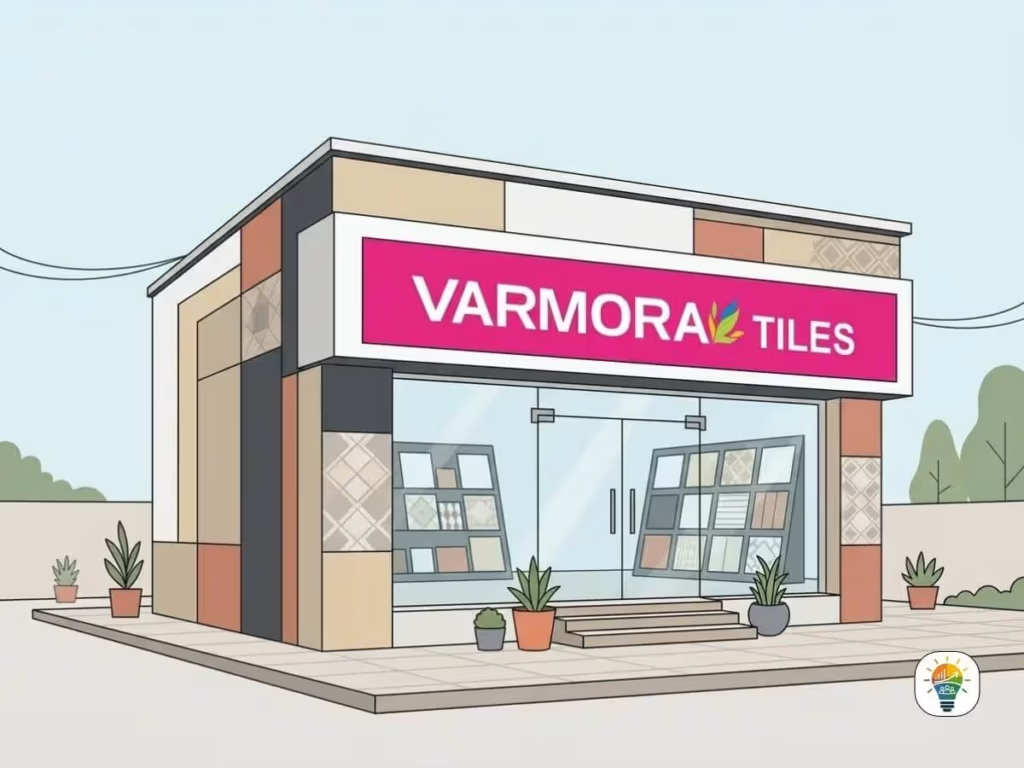
It has strong recall among architects, interior designers, and homeowners who want a premium look without fully stepping into the luxury price bracket.
If you have been considering a tiles dealership, Varmora is a serious option worth examining closely. This article covers the full investment picture, what it actually costs to set up and run a Varmora dealership, and what kind of money you can realistically expect to make.
In this post,
What Is a Varmora Tiles Dealership?
A Varmora dealership is an exclusive brand outlet (EBO) where you sell Varmora products under the brand’s name and visual identity. You are not a franchise in the traditional sense where you pay a franchise fee upfront. Instead, you invest in the showroom setup, stock the inventory, and sell to end customers — homeowners, builders, architects and contractors.
Varmora offers six showroom formats to suit different city sizes, budgets and ambitions. Each format comes with a defined space requirement, an annual sales target and a structure of incentives called TOD (Target Oriented Discount). Hitting your targets unlocks rebates that improve your effective margin.
The six formats are Galaxy, Universe, Universe Plus, Infinity, Smart Stone and one additional entry-level format. For most first-time dealers in Tier 2 and Tier 3 cities, Galaxy and Universe are the better starting points.
Varmora Tiles Dealership Cost
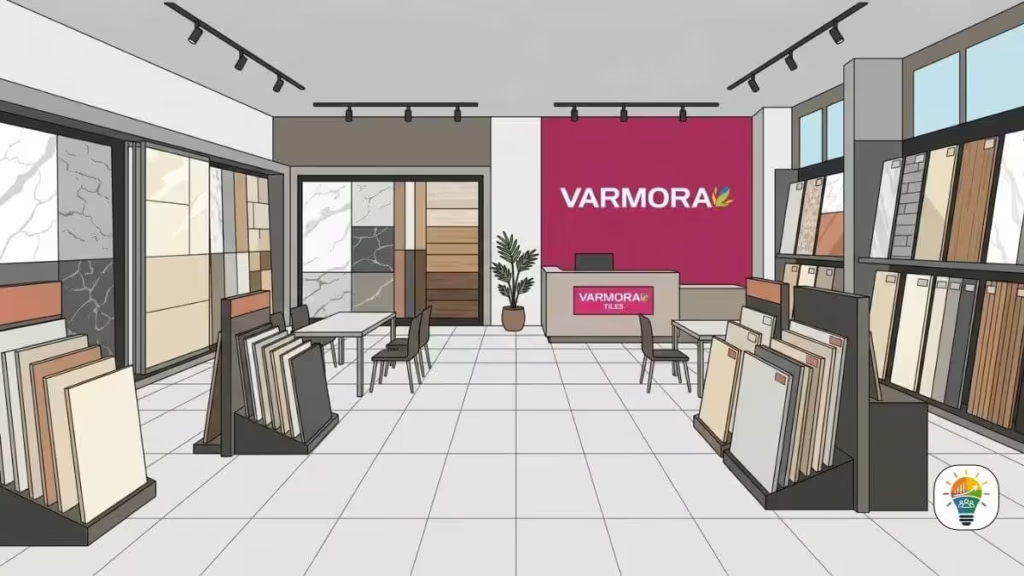
The total investment depends heavily on the format you choose and whether you own the space or rent it. Here is an approximate range for the two most common formats.
Galaxy format (1,500 to 2,500 sq ft, suited for semi-urban markets). Total investment range: ₹20 lakh to ₹40 lakh
Universe format (2,500 to 3,500 sq ft, suited for cities with higher footfall). Total investment range: ₹40 lakh to ₹70 lakh
Universe Plus and Infinity formats (3,500 to 5,000+ sq ft, metro or high-visibility locations). Total investment range: ₹70 lakh to ₹1.5 crore or more
These figures cover showroom fit-out, initial inventory, rent deposits, and working capital. If you own the property, your upfront cash need drops by roughly ₹5 to ₹15 lakh depending on city and location. Most dealers in smaller cities start with the Galaxy format and expand later.
Varmora Dealership Cost Breakdown
Here is where your money usually goes, using a Galaxy format in a Tier 2 city as the base example.
| Cost Head | Estimated Amount |
|---|---|
| Showroom interior fit-out and displays | ₹5 lakh – ₹12 lakh |
| Rent deposit (2 to 3 months) | ₹1.5 lakh – ₹4 lakh |
| First month rent | ₹50,000 – ₹1.5 lakh |
| Opening tile inventory | ₹8 lakh – ₹15 lakh |
| Bathware and adhesive stock | ₹1 lakh – ₹3 lakh |
| Branding, signage and display panels | ₹1 lakh – ₹2 lakh |
| Billing software and POS setup | ₹20,000 – ₹40,000 |
| Licences and GST registration | ₹10,000 – ₹25,000 |
| Working capital buffer | ₹3 lakh – ₹5 lakh |
The biggest variable is interior fit-out. Varmora has specific display standards for its EBOs and provides design guidance, but the cost of execution — tiles on the demo walls, lighting, furniture, and brand panels — falls on the dealer. Good showroom lighting alone can cost ₹1 to ₹2 lakh, but it directly affects customer conversion, so skimping is a false saving.
Inventory is the second-largest cost. You need enough depth across sizes and finishes to show variety, but holding too much slow-moving stock is a trap many first-time dealers fall into.
Monthly Running Costs
Once the showroom is open, here is what a Galaxy-format dealer in a Tier 2 city can expect to spend each month.
| Expense | Monthly Amount |
|---|---|
| Shop rent | ₹50,000 – ₹1.2 lakh |
| Staff salaries (2 to 3 people) | ₹35,000 – ₹70,000 |
| Electricity | ₹8,000 – ₹15,000 |
| Transport and delivery costs | ₹10,000 – ₹20,000 |
| Inventory replenishment | Variable, ~₹3–6 lakh |
| Marketing and local promotion | ₹15,000 – ₹25,000 |
| Miscellaneous (packaging, maintenance) | ₹5,000 – ₹10,000 |
Total fixed monthly overhead typically runs between ₹1.2 lakh and ₹2.5 lakh for a Galaxy-format showroom, not counting inventory purchases.
A Universe-format dealer in a metro or large city could face monthly fixed costs of ₹3 lakh to ₹5 lakh, with rent alone accounting for the bulk of it.
Profit Margin in Varmora Dealership
Varmora’s Galaxy format carries a stated annual sales target of ₹80 lakh. The Universe format targets ₹1 crore annually. The Infinity format targets ₹2.2 crore per year. These are the benchmarks the brand works with — not guarantees.
For a Galaxy dealer hitting ₹80 lakh annually (roughly ₹6.5 to ₹7 lakh per month in sales), the economics look roughly like this.
Dealers on branded tile lines usually earn a gross margin of 12 to 18% on their sales price, before operational costs. On ₹7 lakh in monthly sales, that gross margin translates to about ₹84,000 to ₹1.26 lakh.
After accounting for ₹1.2 to ₹1.8 lakh in monthly overhead, a first-year dealer may find margins tight. Net profit typically settles in the 5 to 10% range once the showroom is running smoothly and the TOD incentives start kicking in. On ₹7 lakh monthly revenue, that is roughly ₹35,000 to ₹70,000 per month in net profit.
The TOD structure (Target Oriented Discount) is important here. Galaxy dealers earn an HV (High Value) rebate of 2% and an MV (Mid Value) rebate of 1% on achieving their targets. These rebates, paid quarterly or annually, can add ₹1.5 to ₹2 lakh per year to your bottom line.
Break-even timeline:
Most dealers operating at a Galaxy level recover their initial investment within 3 to 4 years at moderate sales performance, and potentially in 2 years if the location is strong and sales hit target from the second year onwards.
Also Read:
Kajaria Tiles Dealership Cost & Profit Margin – Complete Guide
Somany Ceramics Dealership Cost & Profit Margin – Complete Guide
Hidden and Overlooked Costs
Several costs catch new dealers off guard.
Breakage and damage:
Tiles are fragile. During transport, unloading, and in-store handling, some breakage is inevitable. Budget around 1 to 2% of your inventory value annually for this. It is a running cost, not an accident, and experienced dealers factor it in from day one.
Shade variation and dead stock:
A tile design arrives in lots. Two different lots of the same design can have slight colour variations. If you over-order one shade, it may not match the next delivery for a customer’s additional requirement. You end up with unsellable pieces that tie up capital. New dealers often misjudge quantities on premium SKUs.
Customer credit:
In the tiles trade, builders and contractors often buy on 30 to 60-day credit. If you extend credit freely, your working capital gets stretched quickly. Budget an additional ₹2 to ₹5 lakh as a buffer for trade receivables.
Display refresh costs:
Tile designs go out of fashion or get discontinued. Varmora updates its collections, and your display panels need to keep pace. Refreshing samples and display setups can cost ₹50,000 to ₹1.5 lakh every year or two.
GST compliance costs:
Tiles attract 18% GST. Keeping input credits aligned with your purchases and matching them with sales needs either a competent accountant or good billing software. Budget around ₹8,000 to ₹15,000 per month for this.
Also Read:
RAK Ceramics Dealership Cost & Profit Margin – Complete Guide
H&R Johnson Dealership Cost & Profit Margin – Complete Guide
How to Apply for a Varmora Dealership
Varmora has a dealer enquiry form on its official website (varmora.com/become-dealer) where you choose a showroom format and submit your details. Their regional team typically contacts you within a few days.
They will evaluate your proposed location, the space available, your financial readiness and your market potential. A site visit by their representative usually follows.
Documents you will need at that stage include proof of the shop space (ownership or rental agreement), identity and address proof, a bank statement or ITR showing financial capacity, and a GST registration or the willingness to register one.
There is no franchise fee as such. You are essentially making a commitment to meet display standards, hit purchase targets, and maintain the brand’s retail norms in exchange for being listed as an authorised dealer and receiving the TOD incentives and promotional support that come with it.
Risks to You Should Know
The tiles business looks solid from the outside, but a few realities can surprise you.
The business is working capital intensive.
You buy inventory, sell on credit to builders, and wait 30 to 60 days to get paid. This cycle means your cash can be tight even when sales are good. Underestimating your working capital need is the most common reason new tile dealers struggle in their first year.
Location drives everything.
A showroom on a busy road near a cluster of building material shops can outsell a better-designed showroom on a quiet street by 3x. Foot traffic and proximity to hardware clusters matter more than the city’s overall size.
The Competition.
In most cities, you will compete with Kajaria, Somany, Asian Granito, Orient Bell, and a dozen local brands. Varmora’s premium positioning helps, but it also means your customer is someone with higher expectations. You need staff who can explain product differences and guide customers to the right choice.
How to start smaller:
If the full Galaxy investment feels steep, contact Varmora about their Smart Stone format, which focuses on large-format premium stone tiles and can be set up in a smaller space. You could also start as a multi-brand outlet first, add a Varmora corner, and then convert to a full EBO once you understand the market in your area.
For someone who has the right location, the capital to sustain the first year and the patience to build a contractor and architect network, a Varmora dealership is a credible long-term business. The brand has real market pull, a growing product range and a structured support system for its dealers.
The numbers work best when you keep overhead lean, avoid over-extending credit, manage inventory tightly, and build relationships with local architects and builders who give you repeat orders. Going after only walk-in customers will slow your growth; B2B project sales are where the volume comes from.
Start by visiting an existing Varmora showroom in a nearby city, spend an hour with the dealer, and understand how their business actually runs before you commit your capital.

Suraj Shetty
Suraj Shetty has over 8 years of experience in small business, startups, and business consulting. He shares practical insights and proven strategies to help entrepreneurs discover new opportunities and grow their businesses sustainably.

Ravi Shankar
28 years of experience in business consulting across diverse industries